
Unveiling Linguistic Tapestry: Exploring the Diversity and Evolution of Languages in Our World
A Journey through the Multifaceted Origins, Development, and Future of Human Language

Why do we have so many differents languages in the World?
The existence of numerous languages in the world can be attributed to several factors:
Historical Development: Languages evolve over time through various processes such as cultural interactions, migrations, conquests, and separations. As different communities and populations interact and diverge, their languages also undergo changes, leading to the emergence of new languages or distinct variations of existing ones.
Geographic Isolation: Geographical barriers such as mountains, oceans, and deserts can isolate human populations, preventing regular contact and communication. Over generations, these isolated groups may develop their own unique languages, resulting in linguistic diversity.
Cultural and Ethnic Diversity: Human societies have diverse cultures, traditions, and identities. Language often serves as an essential aspect of cultural expression and identity. Different communities, ethnic groups, and tribes may develop their own languages to reflect their distinct ways of life and worldview.
Linguistic Variation and Adaptation: Languages naturally vary and adapt to meet the needs and preferences of their speakers. Different dialects, accents, and regional variations emerge within languages due to factors such as geographical distance, social factors, and historical influences.
Language Standardization: Some languages have gone through a process of standardization, where a particular variety is adopted as the standard form for writing, education, government, and media. Standardization can lead to the divergence of languages and the emergence of new variations.
Political and Historical Factors: Colonialism, imperialism, and political divisions have also influenced the distribution and preservation of languages. When different powers colonized or occupied territories, they often imposed their languages on the local populations or suppressed indigenous languages. This has contributed to the decline or extinction of many languages, while others have persisted.
Overall, the existence of multiple languages in the world is a reflection of human diversity, historical processes, and the complex interplay between culture, geography, and social factors. Languages are an integral part of human identity, communication, and cultural heritage, and they continue to evolve and change over time
How many languages does it exist?
The exact number of languages spoken in the world is difficult to determine with absolute precision. The Ethnologue, a widely referenced catalog of world languages, currently lists around 7,139 living languages. However, it's important to note that this number is an estimate and subject to some degree of variation.
It's worth mentioning that language identification and classification can sometimes be challenging. Distinguishing between dialects and separate languages can be subjective, as there is no universally agreed-upon criterion for differentiation. Additionally, some languages may be endangered or have very few remaining speakers, making it difficult to gather accurate data on their status.
Furthermore, languages can change or become extinct over time. Some languages are at risk of disappearing due to factors such as language shift, globalization, and cultural assimilation.
In summary, while estimates suggest there are thousands of languages in the world, the precise number is subject to ongoing research and can vary depending on classification methods and the dynamic nature of language.
Will new langauges be made in the future?
It is possible for new languages to emerge in the future, although predicting the exact number or nature of these languages is challenging. Language creation or "conlanging" (constructed language) is a deliberate process of inventing a new language. People create constructed languages for various reasons, such as artistic expression, fictional worlds (e.g., Tolkien's Elvish languages), or international communication (e.g., Esperanto).
However, naturally occurring languages can also emerge over time due to social, cultural, or historical factors. For example, languages may develop as a result of cultural blending, population migrations, or the formation of new communities with distinct communication needs.
Technological advancements and the influence of global connectivity may also play a role in language evolution. With the internet, social media, and increased cross-cultural interactions, linguistic innovations, borrowings, and hybridizations could occur, leading to the development of new language varieties or even new languages.
Moreover, as society changes, new concepts, technologies, and cultural phenomena may require linguistic adaptations. Existing languages may incorporate new vocabulary, grammar structures, or semantic shifts to accommodate these changes. Over time, these linguistic adaptations can potentially result in significant changes or the emergence of distinct language forms.
While it is difficult to predict the specifics of future language creation or evolution, the dynamic nature of language and the ever-changing human experiences suggest that new languages or language variations may continue to emerge in response to societal developments and cultural shifts.
About the Creator
Keep reading
More stories from William Bergström and writers in Earth and other communities.
"Brushstrokes of Hope: Maya's Journey to Empower Through Art"
Once upon a time, in the bustling city of New York, there lived a young woman named Maya. Maya was an aspiring artist, with a deep passion for capturing the essence of life through her paintings. She believed that art had the power to reflect the world's beauty and inspire change.
By William Bergström3 years ago in Art
The Giant Beneath the Ceiling
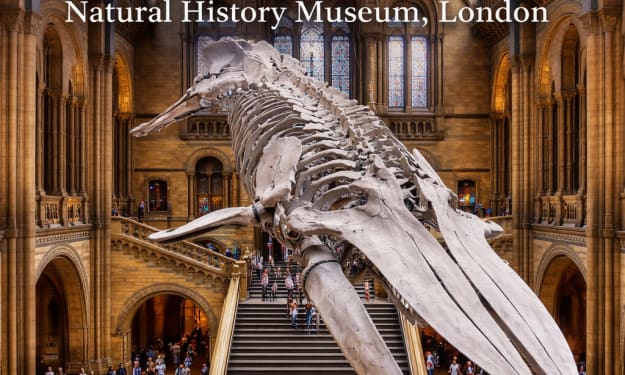
At the heart of the Natural History Museum in London, visitors entering the magnificent Hintze Hall are greeted by a breathtaking sight: the enormous skeleton of a blue whale suspended from the ceiling. This remarkable display, known as “Hope,” represents not only the largest animal ever known to have lived on Earth but also a powerful message about conservation and humanity’s relationship with nature.
By Irshad Abbasi about 10 hours ago in Earth



Comments
There are no comments for this story
Be the first to respond and start the conversation.