
Unraveling the Melting Glaciers
Investigating the Ecological Impact of Anthropogenic Influences on Glacier Retreat

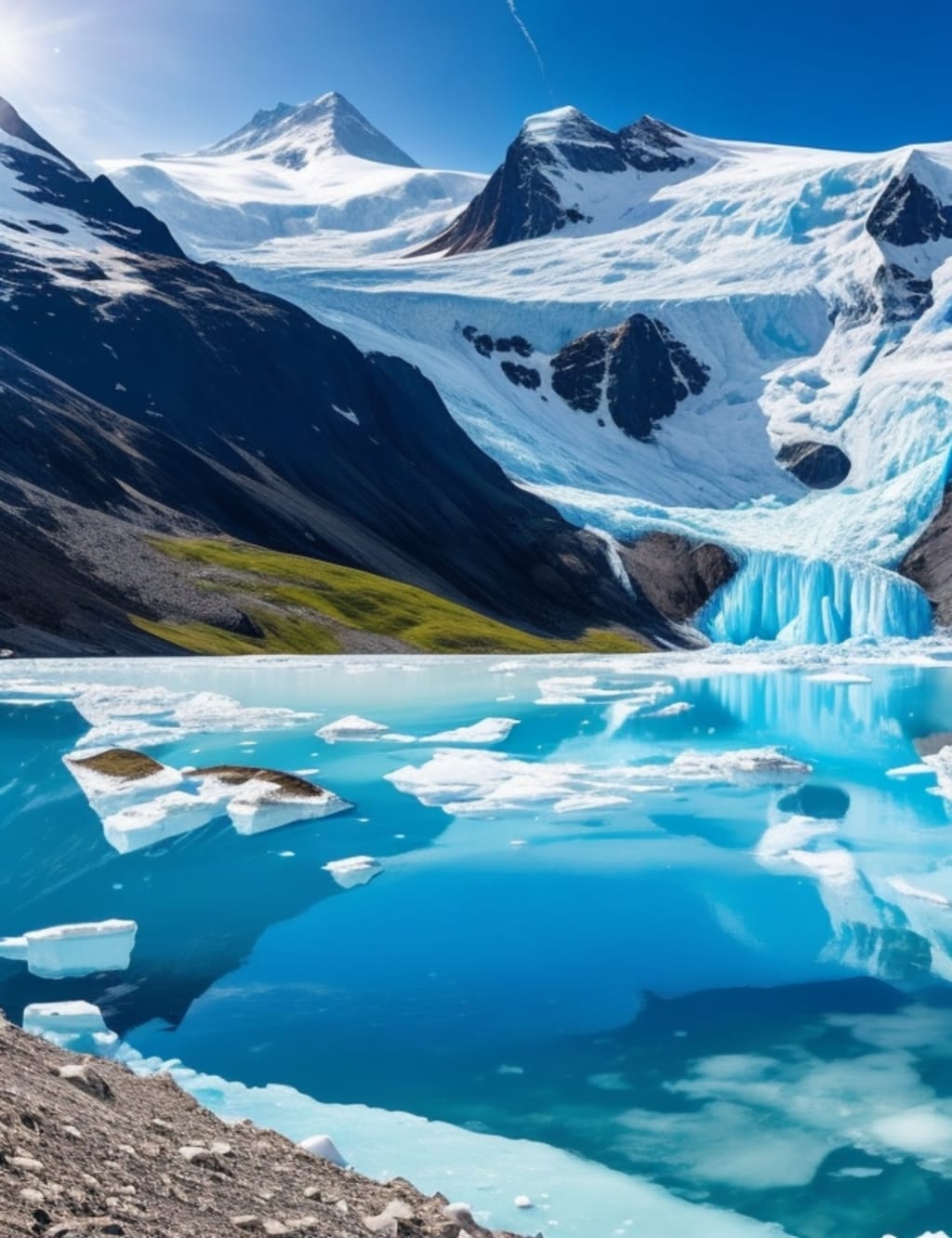
Glacier melting is a complex phenomenon that profoundly impacts the global climate, hydrological systems, and ecosystems. The acceleration of glacier melting over the past century has become a pressing concern, with significant implications for sea-level rise, water availability, and ecological balance. This comprehensive review aims to explore the multifaceted causes and drivers of glacier melting, focusing on both natural and human-induced factors. We delve into the interplay between climate change, deforestation, and industrial activities, unraveling their respective contributions to the observed glacial retreat. Through an interdisciplinary approach, we synthesize the latest scientific findings, observational data, and climate models to shed light on this critical environmental issue. This review seeks to enhance our understanding of the mechanisms driving glacier melting, providing essential knowledge to support sustainable strategies for mitigating its impacts.
Glaciers, vast bodies of ice formed by the accumulation and compaction of snow over centuries, have played a crucial role in shaping Earth's landscapes and hydrological systems. However, the rapid increase in global temperatures over the past century has led to accelerated glacier melting and retreat. This paper investigates the primary causes and drivers behind this alarming phenomenon, with a focus on the role of climate change, deforestation, and industrial activities.
One of the most significant factors contributing to glacier melting is anthropogenic climate change. The buildup of greenhouse gases, such as carbon dioxide and methane, in the atmosphere traps heat, leading to a rise in global temperatures. The impact of climate change on glaciers is profound, with rising temperatures directly affecting ice melt rates and overall glacier volume. We examine the latest climate models and observational data to quantify the link between increasing temperatures and glacier retreat.
Climate change triggers feedback mechanisms that further exacerbate glacier melting. The glacier-albedo effect, for instance, plays a critical role in accelerating ice loss. As glaciers recede, they expose darker surfaces beneath the ice, which absorb more sunlight and heat, leading to additional melting. This feedback loop intensifies the process, creating a self-reinforcing cycle of glacier retreat.
Deforestation, driven primarily by human activities such as logging, agriculture, and urban expansion, significantly contributes to glacier melting. Forests play a crucial role in regulating regional climate and precipitation patterns. When forests are cleared, the land's albedo changes, leading to increased absorption of solar radiation and higher temperatures. Additionally, the loss of vegetation reduces transpiration, impacting regional water cycles and potentially affecting glacial melt patterns.
The industrial revolution has led to the release of large quantities of greenhouse gases and aerosols into the atmosphere, contributing to global warming. Industrial activities, including the burning of fossil fuels, industrial processes, and emissions from transportation, have intensified the greenhouse effect. This section examines the role of industrial activities in altering atmospheric composition and its implications for glacier melting.
Glacial meltwater feeds into rivers and contributes to the overall hydrological balance. Changes in the volume and timing of meltwater release impact river flow, which, in turn, affects downstream ecosystems and human communities. The consequences of altered glacial meltwater runoff are examined, including potential water scarcity and conflicts over water resources.
Glacier melting is a major contributor to rising sea levels worldwide. We investigate the contribution of glaciers to sea-level rise and explore the implications for coastal communities, ecosystems, and infrastructure. Predictions for future sea-level rise due to ongoing glacier melting are also discussed.
This section presents case studies from different regions of the world, highlighting the specific impacts of climate change, deforestation, and industrial activities on glaciers. Examples include the Himalayas, Andes, Arctic, and Antarctic regions, where glacier retreat has significant ecological, social, and economic ramifications.
Understanding the causes and drivers of glacier melting is crucial for developing effective mitigation strategies. We explore various policy interventions and international agreements aimed at reducing greenhouse gas emissions, preserving forests, and promoting sustainable industrial practices.
This comprehensive review provides insights into the causes and drivers of glacier melting, emphasizing the critical role of climate change, deforestation, and industrial activities. To curb the accelerating loss of glaciers, a concerted global effort is needed to address the root causes of this phenomenon. By implementing sustainable policies and promoting climate-conscious practices, we can strive towards a more resilient and ecologically balanced future.
About the Creator
kolitha lokubalasuriya
Kolitha Lokubalasuriya is an engineer, private school teacher, astrologer, and writer living in Sri Lanka. Passionate about blending science and creativity, he excels in diverse fields, guiding minds and exploring the stars.
Keep reading
More stories from kolitha lokubalasuriya and writers in Earth and other communities.
The Honest Child's Gift
Once upon a time, in a small village nestled amidst a dense forest, lived a poor couple with their young son. The village was known for its natural beauty, but it was also isolated from the bustling city life. The couple worked hard to make ends meet, struggling to provide for their family's basic needs. Their only solace was their 12-year-old son, who brought joy to their lives despite their difficult circumstances.
By kolitha lokubalasuriya3 years ago in Proof
M&S Reveals 500 ‘Wish List’ Locations for New Stores as It Unveils Huge Expansion Plans – Could One Be Coming to a Town Near YOU
Marks & Spencer (M&S), the iconic British retailer, has unveiled plans to expand its store footprint dramatically, revealing a “wish list” of 500 potential locations for new shops across the United Kingdom. The move marks one of the most ambitious growth strategies in the retailer’s recent history and signals a renewed confidence in high-street shopping after years of online retail disruption. For shoppers, this announcement raises an exciting question: Could an M&S be coming to a town near you? The expansion strategy suggests that the company is targeting a mix of urban, suburban, and regional locations to strengthen its presence and reach new customer bases. The Expansion Plan M&S has long been a staple of British retail, but the company has faced challenges in recent years, including declining footfall in traditional high streets and competition from online retailers. The 500-location wish list represents a proactive attempt to revitalize the brand and reconnect with communities. Key points of the expansion strategy include: Targeting underserved areas where M&S currently has limited presence Optimizing store size to match local demand, ranging from smaller convenience stores to larger food and clothing outlets Focusing on food-led stores, reflecting the success of M&S’s food offerings and growing demand for premium groceries The company hopes that expanding its footprint will not only boost sales but also strengthen brand visibility across the country. Why M&S Is Betting on Expansion Now Several factors have prompted M&S to take this bold step: Resilience of Brick-and-Mortar Retail: Despite the rise of online shopping, physical stores remain crucial for customer experience, especially for groceries, fresh produce, and clothing. Strong Performance in Food: M&S’s food division has consistently outperformed expectations, driving growth even when other segments lag. Expanding stores with a focus on food could capture new markets and increase footfall. Brand Heritage and Loyalty: M&S remains one of the most trusted and recognized brands in the UK. Expanding stores leverages this brand equity to reach more customers. Post-Pandemic Opportunities: Many towns and cities are seeing renewed interest in high-street shopping, creating openings for retailers willing to invest in local communities. By combining these factors, M&S aims to position itself as both a modern and traditional retailer, appealing to diverse consumer preferences. Potential Locations and Community Impact The company has not yet disclosed the exact towns or neighborhoods for the new stores, but analysts suggest that smaller towns and suburban areas may feature prominently. This is because many larger cities already have significant M&S coverage, whereas smaller communities are underserved. For local economies, an M&S opening can provide several benefits: Job creation in retail, logistics, and support services Boost to high streets, attracting shoppers to nearby businesses Increased choice for consumers, particularly for premium groceries and ready-to-eat meals Communities can expect M&S to adapt store formats to local needs, ensuring that smaller locations focus on food, while larger outlets may include clothing, homeware, and other categories. Customer Excitement and Expectations The announcement has generated excitement among shoppers, especially those in towns that currently lack an M&S presence. Social media platforms are buzzing with speculation, with users asking whether a store might be opening within commuting distance. M&S has acknowledged the curiosity, encouraging communities to stay tuned as it finalizes lease agreements and site preparations. The company has also indicated that it will engage with local councils and residents to ensure smooth openings. Challenges Ahead While the expansion plan is ambitious, it comes with challenges: High Rental Costs: Securing prime high-street locations can be expensive, particularly in urban areas. Competition: Other retailers, including Tesco, Sainsbury’s, and Aldi, are also vying for market share, making it essential for M&S to differentiate through product quality and customer experience. Supply Chain Management: Scaling up to 500 locations requires robust logistics and inventory management to maintain the freshness and quality of food offerings. Changing Shopping Habits: While footfall is recovering, many customers continue to shop online. M&S must balance physical expansion with digital integration to remain competitive. Successfully navigating these challenges will be crucial to turning the expansion wish list into long-term profitable stores. Strategic Focus on Food and Convenience A key feature of the expansion strategy is M&S’s food-first approach. The retailer has seen strong growth in its ready-to-eat meals, premium groceries, and convenience items, which cater to busy lifestyles and local tastes. Smaller-format stores, often located in suburban or high-street settings, are expected to focus primarily on food and everyday essentials, while larger flagship locations will continue offering clothing, homeware, and specialty products. This strategic differentiation allows M&S to tailor offerings to local demographics while maximizing sales potential. Expert Opinions Retail analysts have praised the move as timely and strategic, highlighting M&S’s strong brand recognition and food expertise as competitive advantages. Claire Thompson, a retail analyst, commented: “Expanding into underserved towns and suburbs allows M&S to capture new customers while reinforcing its position in the premium segment. The challenge will be execution — ensuring that new stores meet local needs without overextending resources.” Analysts also note that the expansion could signal renewed confidence in the high street, especially as other major retailers continue to consolidate or reduce their physical presence. Looking Ahead M&S’s ambitious expansion plan demonstrates a clear commitment to strengthening its presence in the UK. With 500 potential locations on the wish list, the company is poised to redefine accessibility and convenience for customers while supporting local economies. Shoppers can expect phased rollouts over the coming years, with announcements on specific towns likely to follow. For communities eager for a local M&S, the future may hold new jobs, new food options, and a boost to the high street experience. Final Thoughts Marks & Spencer’s announcement of 500 potential new store locations represents one of the boldest expansion plans in recent British retail history. By focusing on food-led stores, targeting underserved towns, and leveraging its iconic brand, M&S is betting on a reinvigorated high-street presence. For shoppers across the UK, this could mean a new M&S store just around the corner, bringing convenience, quality, and the familiar British retail experience to towns that have long awaited it. As the company executes its vision, communities and consumers alike will be watching closely — eager to see which locations make the wish list a reality.
By Muhammad Hassanabout 5 hours ago in Earth
Tea of Silence
The snow had covered the hills for days, turning the land into a quiet white world where sound seemed afraid to exist. On the highest of these hills, beneath a dry, leafless tree, a young man sat alone. The tree had long ago lost its strength, its branches thin and broken, but it still stood, as if refusing to disappear. The young man chose this place often, not because it was comfortable, but because it was honest.
By Bilal Mohammadi5 days ago in Earth




Comments
There are no comments for this story
Be the first to respond and start the conversation.