
"Unraveling the Madness"
"The Hidden Truth behind Money Creation"

Title: "Unraveling the Madness: The Hidden Truth behind Money Creation"
Welcome to the enigmatic world of money creation, where the global financial system operates behind closed doors. In this eye-opening journey, we'll uncover the three ways money is brought into existence and how they impact nations worldwide. Prepare to explore real-world examples that shed light on the consequences of this clandestine process, revealing the true origins of wealth inequality.
The Government's Paper Trail the creation of physical money is primarily the domain of governments, carried out through central banks and royal mints. Although only a small percentage of the economy, this money serves vital functions in meeting private banks' obligations and supporting liquidity. Yet, unchecked money printing by politicians can lead to hyperinflation, devaluing the currency and jeopardizing economic stability. Examples from history, such as Zimbabwe and Venezuela, serve as stark reminders of the disastrous consequences of excessive government-driven money creation.
In Zimbabwe, hyperinflation reached astronomical levels, with prices doubling every 24.7 hours at its peak in 2008. The nation's currency became so worthless that people resorted to using it as wallpaper or fuel. Venezuela faced a similar fate, with hyperinflation exceeding 1,000,000% in 2018, causing widespread poverty and economic collapse.
Private Banks' Debt-Driven Economy In the modern financial landscape, private banks play a leading role in money creation, generating a staggering 97% of the money supply. This is accomplished through a peculiar system of fractional reserve lending, where banks can create money out of thin air as debt when issuing loans. The result is an economy dependent on constant growth in debt to maintain its momentum. For instance, Australia's obsession with the housing market led to one of the world's largest property bubbles, leaving countless individuals trapped in unaffordable debt.
One of the most significant examples of this debt-driven economy was the 2008 financial crisis in the United States. The housing market bubble, fueled by easy credit and lax lending practices, eventually burst, leading to a cascading chain of defaults and bankruptcies. The crisis exposed the fragility of a system built on excessive debt, leaving millions of people without homes and triggering a global recession.
Central Bank Digital Money and its Consequences the rise of central bank digital currencies (CBDCs) has brought forth new possibilities and challenges. Quantitative easing (QE), employed by central banks during crises, involves creating money to issue loans directly to the banking sector, large corporations, and even the public. While this may stabilize the economy temporarily, it can lead to an unnatural decoupling of stock markets from economic realities. Japan's massive QE measures and the Federal Reserve's interventions in the 2008 financial crisis exemplify how this practice distorts market forces.
In Japan, the Bank of Japan's aggressive QE measures have kept the economy afloat, but the unintended consequence has been a stock market that no longer reflects the real economy. Similarly, during the 2008 financial crisis, the Federal Reserve's QE measures injected trillions of dollars into the financial system, propping up banks and corporations but doing little to address underlying economic issues.
Global Examples and Future Predictions Around the globe, nations grapple with the consequences of their monetary policies. The Eurozone's debt crisis exposed vulnerabilities within the monetary union, while countries like China and Russia have increased their gold reserves as a hedge against currency risks. As we move forward, some economists advocate for Modern Monetary Theory (MMT), which challenges conventional notions of government debt and spending. However, this approach remains untested and raises concerns about potential inflationary pressures.
In Greece, the debt crisis that started in 2010 exposed the pitfalls of a common currency shared by diverse economies. Greece's inability to devalue its currency to regain competitiveness within the Eurozone led to severe austerity measures and social unrest. Meanwhile, countries like China and Russia have been steadily increasing their gold reserves to diversify away from the US dollar, expressing concern over the long-term stability of fiat currencies.
The world of money creation is a complex and often hidden realm, influencing the well-being of individuals and nations alike. As we confront the madness within our monetary system, there are lessons to be learned from history and opportunities for innovative financial solutions. Whether through investment diversification, exploring digital currencies, or supporting wealth creation in productive sectors, individuals can take proactive steps to safeguard their financial well-being.
In the pursuit of a more equitable future, global communities must encourage transparency and accountability within their monetary systems. The consequences of unchecked money creation and wealth inequality are too grave to be ignored. Only through collective action, informed decision-making, and a willingness to challenge outdated norms can we hope to reshape the world's financial landscape for the better. Let us embark on this journey together, shedding light on the hidden truth behind money creation and working towards a more sustainable and inclusive global economy.
About the Creator
Keep reading
More stories from JAMIL MAYANJA and writers in Earth and other communities.
The Symphony of Life:
Life is a mesmerizing symphony, and the human body ages are its soul-stirring movements. From the enchanting beauty of youth to the poignancy of old age, this journey through time unravels the intricacies of existence. Every phase has its own unique charm, offering valuable lessons and wisdom. Let us embark on a sweet mellow but true story that explores the symphony of human aging.
By JAMIL MAYANJA3 years ago in Earth
Is the Ukraine–Russia War Pushing the World Toward World War III?
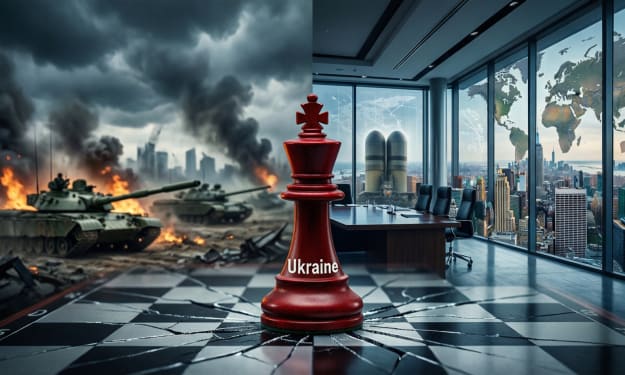
Is the Ukraine–Russia War Pushing the World Toward World War III? The war between Ukraine and Russia began as a regional conflict, but over time it has grown into something much larger. While it is not officially World War III, many experts, analysts, and ordinary citizens are asking the same question: is the world moving dangerously close to a global war?
By Wings of Time 3 days ago in Earth
Trump, 79, Revives Greenland Fantasy With Absurd AI Post
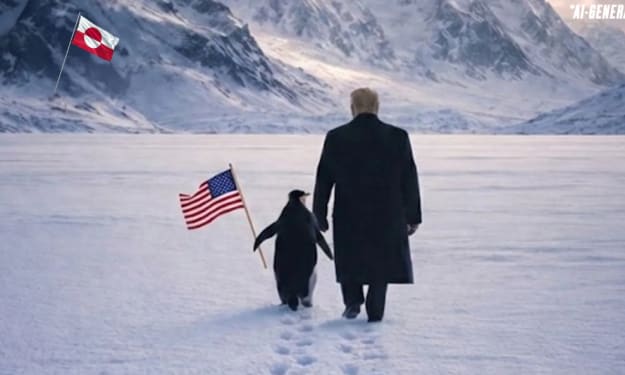
In early 2026, a seemingly strange social media post reignited a discussion that many had hoped was behind us: Donald Trump, now 79, posted an AI-generated image referencing Greenland. The image went viral, sparking laughter, criticism, and a flurry of international commentary. While the post appeared absurd on the surface, it also highlighted deeper issues about political messaging, digital media, and the ongoing fascination some U.S. leaders have with Greenland. The AI-generated post showed Trump marching toward Greenland, holding an American flag, accompanied by a penguin — an animal that, scientifically speaking, has no connection to Greenland. The bizarre imagery immediately caught the public’s attention. Many observers viewed the penguin as a humorous metaphor for the mismatch between the symbolic post and geopolitical reality. Critics questioned whether the post was a serious attempt at commentary, an intentional meme, or a sign of how AI is being used in modern political communication. The Social Media Storm The post, captioned “Embrace the penguin”, appeared on the official White House X account. Within hours, it became the subject of viral memes, news reports, and expert analyses. Internet users were quick to point out the geographic error — penguins live in the Southern Hemisphere, nowhere near Greenland. While the comedic aspect dominated social media, analysts noted that the post reflected a long-standing pattern of Trump using bold or unconventional messaging to capture public attention. The use of AI-generated imagery represents a new layer in this strategy, blending political content with internet culture. Many critics argued that this approach, while attention-grabbing, risks confusing the public and undermining the credibility of official communication. Trump and Greenland: A Longstanding Obsession Trump’s fascination with Greenland is not new. In 2019, he proposed that the United States could purchase Greenland from Denmark, an idea that was widely ridiculed and rejected by Danish leaders. Despite the public backlash, the notion persisted in Trump’s rhetoric and continued to appear in informal discussions about U.S. strategic priorities. Greenland holds significant geopolitical value: it is rich in minerals, occupies a strategic Arctic location, and is home to vast natural resources. For Trump, the island has long symbolized a geopolitical prize — a potential point of influence for the U.S. in the Arctic region. The AI post, absurd as it was, reignited global attention to these strategic questions, reminding the world that some leaders still see Greenland as a focal point of American ambition. AI and Politics: A Strange Combination The viral AI image is part of a broader trend of using artificial intelligence to create content for political messaging. AI allows leaders and communicators to produce highly visual, shareable content at scale. However, it also introduces challenges: Accuracy: AI can generate visually striking content that may be factually incorrect, as with the penguin in Greenland. Interpretation: Viewers may misinterpret AI-generated imagery, assuming it represents reality or policy intent. Credibility: Official use of memes and AI art can blur the line between serious communication and entertainment, potentially undermining authority. In Trump’s case, the AI post highlighted both the power and pitfalls of digital media in politics. It reached millions of people worldwide, but the absurdity of the imagery also drew ridicule and raised questions about the seriousness of the message. The International Response European leaders and diplomats responded cautiously, recognizing the post as part humorous, part symbolic. Danish officials, who oversee Greenland’s defense and foreign policy, reiterated that the island is not for sale. Some analysts suggested that while Trump’s AI post is unlikely to affect formal negotiations, it does shape public perception and keeps Greenland in the spotlight as a topic of U.S. interest. The global reaction underscores the influence of social media on diplomacy. In an era where viral content spreads instantly, even symbolic or absurd posts can have real-world implications, influencing discussions, media coverage, and public opinion. Why the Penguins Matter While the image of Trump marching alongside a penguin seems nonsensical, many commentators see it as a metaphor for the disconnect between digital imagery and practical geopolitics. Penguins, being out of place in Greenland, symbolize the absurdity of claiming influence over a sovereign region through symbolic gestures. The penguin also illustrates how modern politics blends serious issues with entertainment and internet culture. Leaders are increasingly aware of the viral potential of online content, and AI-generated visuals provide a new way to capture attention — for better or worse. The Role of AI in Political Communication Trump’s AI post demonstrates both the potential and limits of artificial intelligence in politics: Engagement: AI-generated visuals can capture attention and create shareable moments. Creativity: AI allows for imaginative ways to communicate ideas, blending humor and symbolism. Risk: Misrepresentation or absurdity can undermine credibility and invite international criticism. As AI tools become more common in politics, officials will need to carefully weigh creativity against clarity, ensuring that symbolic content does not overshadow substantive policy discussions. What This Means for the Future The Greenland AI post is more than a viral meme; it reflects trends in modern political messaging: Leaders increasingly use AI and digital media to communicate directly with the public. Absurd or humorous content can attract attention, but may blur the line between entertainment and diplomacy. Symbolic posts can reignite interest in longstanding geopolitical debates, even when they seem playful. For observers, the post offers a lens into how social media, AI, and politics intersect — a mix of strategy, humor, and unintended consequences that will likely shape political communication for years to come. Final Thoughts Donald Trump’s AI-generated Greenland post is absurd, humorous, and viral — but it also underscores the enduring fascination some political figures have with strategic regions like Greenland. Beyond the comedy, it illustrates the power of AI in shaping political narratives, the challenges of modern digital diplomacy, and the importance of understanding how viral content influences public perception. Whether one laughs at the penguin or ponders the implications, the post reminds the world that politics today is as much about perception and digital storytelling as it is about policy. In Trump’s case, a single AI-generated image can revive decades-old geopolitical fantasies, spark global discussion, and turn a playful meme into a moment of serious reflection.
By Muhammad Hassana day ago in Earth
The Summer I Was Chosen by a Northern Mockingbird
During the long, suspended days of the pandemic, a wild mockingbird began visiting my driveway and chose me, again and again. What started as a strange encounter became a brief, meaningful connection that I still carry with me.
By Erica Roberts 5 days ago in Petlife


Comments
There are no comments for this story
Be the first to respond and start the conversation.