
"Unleashing the Power of the Sun: Is Sunlight Reflection the Key to Cool Our Planet?"
Exploring the Promise and Perils of Solar Geoengineering"

Unleashing the Power of the Sun: Is Sunlight Reflection the Key to Cool Our Planet?
The eruption of Mount Pinatubo in the Philippines in 1991 was one of the largest volcanic eruptions of the 20th century. Its ash plume rose above the atmosphere and spread a layer of aerosol particles across the globe, creating a solar umbrella that reflected sunlight and caused global temperatures to drop by almost half a degree Celsius for nearly two years. This phenomenon was not unique to Mount Pinatubo, as other large volcanic eruptions have also had a cooling effect on global temperatures.
Major volcanic eruptions such as El Chichón in 1982 have also caused significant drops in global temperatures by about half a degree Celsius, similar to other major eruptions in the past century. Today, scientists are investigating the possibility of replicating this phenomenon using a technology called solar geoengineering to combat global warming. Proponents argue that given the worsening effects of climate change, it is important to explore all potential solutions to alleviate suffering. However, opponents contend that the risks associated with this technology are too great and should not be considered as a viable response to global warming.
While technological advancements have undoubtedly brought about many benefits, there
are also inventions that some may wish had never been created. This raises an important question when it comes to solar geoengineering: should we be exploring this option? Given the high stakes of the survival of humanity on Earth, I interviewed a range of experts, including scientists, lawyers, and indigenous leaders, who hold strong opinions on both sides of the debate. Despite differing views, scientists agree that solar geoengineering has the potential to cool down the planet by reflecting sunlight away from the Earth and preventing heat from becoming trapped in the atmosphere. One approach involves injecting aerosols into the stratosphere, mimicking the effects of volcanic eruptions. This approach is currently the most commonly researched method.
Scientists are exploring various methods for solar geoengineering, including brightening marine clouds and deploying reflective shields in outer space. However, these technologies are still in the research phase and would require massive intervention in our complex climate system to achieve large-scale cooling effects. Solar geoengineering is supported by some scientists because we are currently on a concerning path with rising carbon dioxide emissions. While reducing emissions is essential in the long run, it is not sufficient to eliminate climate risk because the risk stems from accumulated emissions.
University of Chicago Professor David Keith argues that in order to mitigate the worsening impacts of climate change, we must move beyond just reducing emissions. Extreme weather has already resulted in a significant percentage of global deaths, and heat-related deaths are on the rise. Supporters suggest that we should explore climate processes, use computer modeling, and develop technologies to determine if and how we could safely deploy them globally, alongside other solutions. However, meddling with the global climate is a complicated issue as the whole system is interconnected. Adding new elements into our atmosphere or stratosphere could create unpredictable changes in the way the climate system responds and potentially exacerbate extreme weather events caused by climate change. Despite the risks, there is a need to understand the benefits and risks of solar geoengineering. Nevertheless, we cannot answer the most significant questions about the climate system response unless we undertake a full-scale deployment, which would require unprecedented global cooperation in terms of scale and time. Moreover, even if we stop emitting greenhouse gases, the warming effect of the carbon dioxide we have emitted since the industrial revolution will persist for thousands of years.
The proposed solar geoengineering techniques have a short lifetime in the atmosphere and require constant deployment for continued cooling effect, which poses an unprecedented burden on future generations to adhere to treaties and institutions for thousands of years. In case of an international disagreement, war, or sudden termination, the world could face rapid warming known as termination shock. Critics view solar geoengineering as ungovernable and unsustainable, given the unpredictability and drastic changes it might awaken in climate, weather, and biodiversity. Sweden's rejection of a solar geoengineering project in 2021 highlights concerns raised by environmental and indigenous groups. Most solar geoengineering research takes place in labs with models and simulations due to opposition like this, turning the debate into one about the extent of research. In January 2022, 400 scientists called for a non-use agreement on solar geoengineering
The proposed solar geoengineering techniques have a short atmospheric lifespan, which means they would need to be continuously deployed for centuries to have a long-term cooling effect. This would require future institutions and treaties that can be upheld for thousands of years, an unprecedented burden on future generations. In the event of war, global depression, or sudden termination of solar geoengineering, rapid warming, also known as termination shock, could occur, posing a significant risk to the planet. Despite the opposition from environmental and indigenous groups, some scientists are in favor of low-risk research, such as fundamental climate processes, computer simulations, and modeling. However, research that develops technology leading to full-scale deployment is opposed by many scientists, as they fear it could be ungovernable and unsustainable. Some scientists call for a robust international scientific assessment that includes experiments to advance solar geoengineering technology. Still, they stress that research does not imply support for its use and that we cannot prevent future generations from using the technology.
I spoke with Sarah Doherty, a researcher at the University of Washington who studies marine cloud brightening, about the significance of ongoing research in this area. According to her, it is crucial to conduct this research now to make informed and equitable decisions in the future, as the knowledge about these options is already widespread. Some advocate for immediate deployment of these technologies, indicating the likelihood of their use in the future. However, both sides agree that solar geoengineering could negatively impact efforts to reduce carbon emissions, as it may serve as an excuse for continued fossil fuel use. While there is a political concern that these technologies may be exploited, it should not serve as an ethical basis to restrict potentially risk-reducing research. Mexico is currently the only country that has banned solar geoengineering experiments, whereas the US is developing a research plan in this area. Climate-focused global organizations are now conducting assessments and issuing recommendations, but there is no clear consensus on the path forward. Despite this, everyone I spoke to on both sides of the issue is deeply invested in preserving our planet's future. The tension between opposing views can lead to more thoughtful and rigorous solutions to the problems we face. For instance, volcanic eruptions like Mount Pinatubo's in 1991 have shown that aerosol particles in the stratosphere can lower global temperatures by half a degree Celsius for almost two years, as was the case with other eruptions in the past century.
Scientists have been investigating the possibility of replicating the cooling effects of massive volcanic eruptions through solar geoengineering, a technology that some believe could help mitigate the impacts of global warming. While some see solar geoengineering as a valuable tool in the fight against climate change, others argue that its potential risks outweigh its benefits. The benefits and risks of solar geoengineering were explored by speaking with scientists, lawyers, and indigenous leaders who hold opposing views on the matter. While solar geoengineering could potentially cool the planet by reflecting sunlight away from Earth through the injection of aerosols into the stratosphere or brightening marine clouds, its large-scale deployment could interfere with the complex climate system and lead to unintended consequences. Nevertheless, some scientists argue that we must explore solar geoengineering as we currently face a dire situation with rising emissions and continued climate change impacts, which could worsen even if emissions are cut to zero.
According to a recent study, extreme weather is responsible for almost 10% of global deaths, with an increase in heat-related deaths. Supporters of mitigating these effects argue that we need to explore climate processes, use computer modeling, and develop technology to safely deploy solutions. However, solar geoengineering, which involves interfering with our global climate, is very complex and could create unpredictable changes in the way the climate system responds. Adding new elements to our atmosphere or stratosphere could worsen the extreme weather caused by climate change. Additionally, a full-scale deployment of solar geoengineering would require unprecedented global cooperation and commitment for thousands of years, which is a burden to put on future humanity. Critics argue that solar geoengineering is ungovernable and unsustainable due to the risk of rapid warming caused by termination shock. Opposition to solar geoengineering has led to most research taking place in labs with simulations, and in 2022, 400 scientists called for a non-use agreement on solar geoengineering. They supported low-risk research on fundamental climate processes that doesn't lead to deployment.
Critics of solar geoengineering are concerned that increased modeling could lead to full-scale deployment, but they admit that some simulations are useful and cannot be eliminated. They are opposed to research that could lead to technology development and deployment. However, some scientists support research into solar geoengineering, including experiments that could advance technology, but they do not support the use of the technology itself. They acknowledge that we cannot prevent people from using these technologies in the future, but we can make more informed and equitable decisions through research. Solar geoengineering could have negative impacts on decarbonization efforts and may be used as an excuse for continuing fossil fuel sales. However, restricting research based on political concerns is not an ethical approach. Mexico has banned solar geoengineering experiments, while the US is developing a research plan. Climate organizations are making assessments and recommendations, but there is no clear path forward. Both sides of the issue care deeply about the future of our planet, and the tension between them can lead to more thoughtful and rigorous solutions to our current environmental challenges.
About the Creator
Keep reading
More stories from writers in Earth and other communities.
I Spoke to Astrophysicists About Starlink’s Expansion: The Doomsday Scenario Keeping Them Up at Night
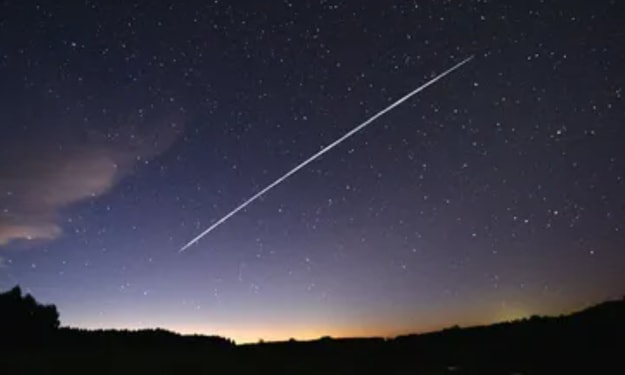
SpaceX’s Starlink project has captured headlines for its ambitious goal: provide high-speed internet across the globe by deploying thousands of low-Earth orbit satellites. While the idea of connecting remote communities is exciting, astrophysicists and space experts are sounding the alarm about a growing doomsday scenario that could threaten both space exploration and our ability to observe the night sky. After speaking to several astrophysicists, it’s clear that Starlink’s expansion, if unchecked, could dramatically alter Earth's orbital environment, disrupt astronomical observations, and even increase the risk of space debris collisions. Here’s what experts are warning the public about. The Scale of Starlink’s Expansion As of now, SpaceX has launched over 4,000 Starlink satellites, with plans to deploy tens of thousands more in the coming years. Each satellite orbits at altitudes between 340 km and 1,200 km, which places them in the low-Earth orbit region used by countless other satellites and scientific missions. Astrophysicists point out that this rapid proliferation is unprecedented. Dr. Lisa Montez, an astronomer specializing in satellite impacts on optical telescopes, told me, “We are looking at a situation where the density of satellites is increasing faster than anyone has fully planned for. This is uncharted territory.” The problem isn’t just the sheer number of satellites—it’s the concentration in specific orbital bands, which makes collisions more likely and complicates orbital management. The Night Sky Is at Risk For centuries, humanity has marveled at the stars, studying the cosmos to better understand our place in the universe. But astrophysicists warn that Starlink is dramatically altering the night sky, making it more challenging to conduct research and enjoy unpolluted stargazing. Every time a telescope captures an image, the reflective surfaces of Starlink satellites can leave streaks of light, masking or distorting the data. “Even a single bright satellite passing through a telescope’s field of view can ruin an entire night of observation,” Dr. Montez explains. Observatories around the world are already noticing the impact. The Vera C. Rubin Observatory in Chile, set to be one of the most advanced facilities for studying dark matter and the evolution of galaxies, may see thousands of Starlink satellites crossing its field of view nightly, potentially reducing the quality of its data and increasing processing costs. The Doomsday Scenario: Space Debris Beyond observations, astrophysicists are increasingly concerned about space debris, which could trigger a cascading chain reaction known as Kessler Syndrome. This occurs when collisions between satellites produce debris that then hits other satellites, creating more debris in an accelerating feedback loop. Professor Rajesh Patel, a space environment specialist, told me, “If a few hundred Starlink satellites collide, it could create tens of thousands of fragments. That would threaten other satellites, international space missions, and even human spaceflight.” Space debris doesn’t just float harmlessly—it travels at speeds over 28,000 km/h, enough to destroy functional satellites or damage spacecraft. With tens of thousands of Starlink satellites planned, the potential for catastrophic collisions is growing, especially since low-Earth orbit is already crowded. Mitigation Efforts and Controversies SpaceX has acknowledged these concerns and claims to implement collision avoidance protocols, using automated systems to maneuver satellites out of harm’s way. The company also plans for satellites to deorbit at the end of their lifespan, burning up in the atmosphere. However, experts argue that these measures may not be enough. Automated systems can fail, and human error or unexpected orbital dynamics could still lead to accidents. Furthermore, the sheer number of satellites makes it difficult to track and manage each one effectively, particularly as other private companies and nations plan similar mega-constellations. Dr. Montez adds, “Even if every satellite works perfectly, the night sky is already changing. The aesthetic and scientific impacts are immediate, whereas collision risks are looming but potentially devastating.” Broader Implications for Humanity The expansion of Starlink raises ethical and regulatory questions. Who has the right to fill low-Earth orbit? How much impact on astronomy and scientific research is acceptable for the sake of global internet coverage? International regulatory bodies like the United Nations Office for Outer Space Affairs (UNOOSA) and the Federal Communications Commission (FCC) have some oversight, but critics argue that global coordination is lagging behind corporate launches. Without international agreements and enforceable regulations, the sky could become a congested and hazardous environment, impacting both science and commerce. Astrophysicists emphasize that this isn’t just a matter of aesthetics. The ability to observe celestial phenomena affects climate science, space weather monitoring, and tracking near-Earth objects. If observations are increasingly compromised, our understanding of Earth and space could suffer. What Can Be Done? Experts suggest several strategies to mitigate risks: International Coordination: Global treaties or agreements to regulate satellite density and orbital placement. Reflectivity Reduction: Coating satellites to reduce brightness and their impact on telescopes. Enhanced Tracking Systems: Better monitoring of orbital debris and automated collision avoidance. Selective Deployment: Careful planning to avoid overcrowding specific orbital bands. While SpaceX is implementing some of these solutions, astrophysicists argue that industry self-regulation is insufficient. They advocate for a coordinated international approach to protect both scientific research and long-term orbital sustainability. Conclusion The expansion of Starlink represents a remarkable technological achievement, promising global internet access and unprecedented connectivity. Yet it also highlights the unintended consequences of space commercialization, including the potential for a cluttered sky, disrupted astronomy, and catastrophic space debris collisions. Astrophysicists remain vigilant. They warn that without careful oversight, humanity could face a doomsday scenario in low-Earth orbit, jeopardizing scientific discovery and space safety for generations. As we continue to celebrate innovations like Starlink, it’s crucial to remember that the sky belongs to all of us—scientists, enthusiasts, and everyday observers alike. Balancing technological progress with environmental stewardship of space may be one of the most critical challenges of the 21st century.
By Muhammad Hassan6 days ago in Earth
Turning Waste into Worth: Plastic Pyrolysis in the Circular Economy
Plastic pollution has become one of the defining environmental challenges of our time. From overflowing landfills to microplastics in oceans, the traditional “take–make–dispose” model is no longer sustainable. In response, the concept of the circular economy has gained global attention, aiming to keep materials in use for as long as possible while reducing waste. Among the emerging technologies supporting this transition, plastic pyrolysis stands out as a promising solution.
By Bestonpyrolysis6 days ago in Earth



Comments
There are no comments for this story
Be the first to respond and start the conversation.