
UNIVERSE IS VAST AND EXPANDING
Expanding universe overview

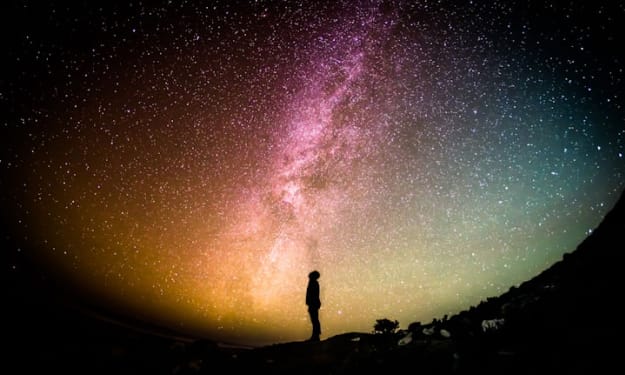
The universe is an incredibly vast and ever-expanding entity, filled with mysteries that continue to captivate scientists and philosophers alike. From the tiniest particles to the largest galaxies, it encompasses everything that exists, spanning billions of light-years in every direction. Our understanding of the universe has evolved over centuries, with each new discovery revealing more about its size, structure, and origins.
At its core, the universe is a vast expanse of space and time, woven together in a fabric that is difficult to fully comprehend. According to the most widely accepted cosmological model, the universe began approximately 13.8 billion years ago with the Big Bang, a colossal explosion that marked the birth of everything we know. This event set into motion the expansion of space, an expansion that continues to this day, driving galaxies apart and creating the large-scale structure of the universe.
The observable universe, which is the portion of the universe that we can see with our current technology, stretches for about 93 billion light-years in diameter. Within this space, there are an estimated two trillion galaxies, each containing millions to billions of stars. These galaxies are not evenly distributed but are clustered together in massive structures called galaxy clusters and superclusters, separated by vast cosmic voids where relatively little matter exists.
One of the most intriguing aspects of the universe is its continuous expansion. This was first observed in the 1920s by American astronomer Edwin Hubble, who discovered that distant galaxies were moving away from us, with their speed proportional to their distance. This observation led to the formulation of Hubble's Law, which states that the universe is expanding uniformly. However, this expansion is not uniform on smaller scales; local gravitational forces can cause galaxies to collide and merge, forming even larger galaxies.
The discovery of dark matter and dark energy has added new layers of complexity to our understanding of the universe. Dark matter is an invisible substance that makes up about 27% of the universe's total mass and energy. It doesn't emit, absorb, or reflect light, making it undetectable by conventional means. However, its presence can be inferred from the gravitational effects it exerts on visible matter, such as galaxies and galaxy clusters. Without dark matter, the observed structure of the universe would not be possible.
Dark energy, on the other hand, is even more mysterious. It is thought to make up about 68% of the universe and is responsible for the accelerated expansion of the universe. While dark matter works to pull things together through gravity, dark energy drives them apart. The nature of dark energy is one of the biggest questions in modern cosmology, with numerous theories attempting to explain its origin and properties.
The fate of the universe is also a topic of great interest and debate. If the current rate of expansion continues, the universe could eventually reach a state known as the "Big Freeze," where galaxies drift so far apart that stars burn out, and the universe becomes a cold, dark, and empty place. Another possibility is the "Big Rip," where the expansion becomes so rapid that it tears galaxies, stars, and even atoms apart. Alternatively, the universe could experience a "Big Crunch," where the expansion slows down, reverses, and the universe collapses in on itself.
Despite these potential outcomes, the universe as we know it still has billions of years of activity ahead. Stars will continue to form, planets will emerge, and perhaps even life will thrive in corners of the cosmos we have yet to discover. As we explore the universe through telescopes, space probes, and theoretical models, our understanding of its vastness and complexity will continue to grow.
In summary, the universe is a vast and expanding realm, filled with countless galaxies, stars, and cosmic mysteries. Its continuous expansion, driven by forces like dark energy, ensures that it remains a dynamic and ever-changing entity. While we have made significant strides in understanding the universe, much remains unknown, leaving us to wonder what secrets this immense and ancient cosmos still holds.
About the Creator
Keep reading
More stories from Sharon Chebet and writers in Earth and other communities.
GRAVITY IN SPACE
The idea that there is "zero gravity" in space is a common misconception, but it's not entirely accurate. Gravity exists everywhere in the universe, including in space. However, the effects of gravity in space differ significantly from those experienced on Earth, leading to the sensation of weightlessness that astronauts often describe.
By Sharon Chebet2 years ago in Earth
The Ongoing Search for Water on Mars
For decades, scientists have been fascinated by the possibility of water on Mars. Known for its dry, dusty landscape and reddish appearance, Mars was once thought to be a completely barren world. However, modern discoveries have revealed that the planet may have once had abundant water—and scientists are still searching for evidence of it today.
By Irshad Abbasi 3 days ago in Earth
The First Rainbow Baby
Pitter-patter, pitter-patter. The rain fell in rhythmic splatters, slowly slowing, but still constant. Mira rolled onto her side pulling the blanket tight against her ears, but still she could hear chitter-chatter and scurrying feet of the creatures that refused to sleep in the lower decks.
By A. J. Schoenfelda day ago in Fiction


Comments (1)
Yes. We are living in a marvellous environment.