
United States Millets Market Size and Forecast 2025–2033
Rising Health Awareness and Demand for Gluten-Free Grains Propel Steady Growth Across the U.S.

United States Millets Market Overview
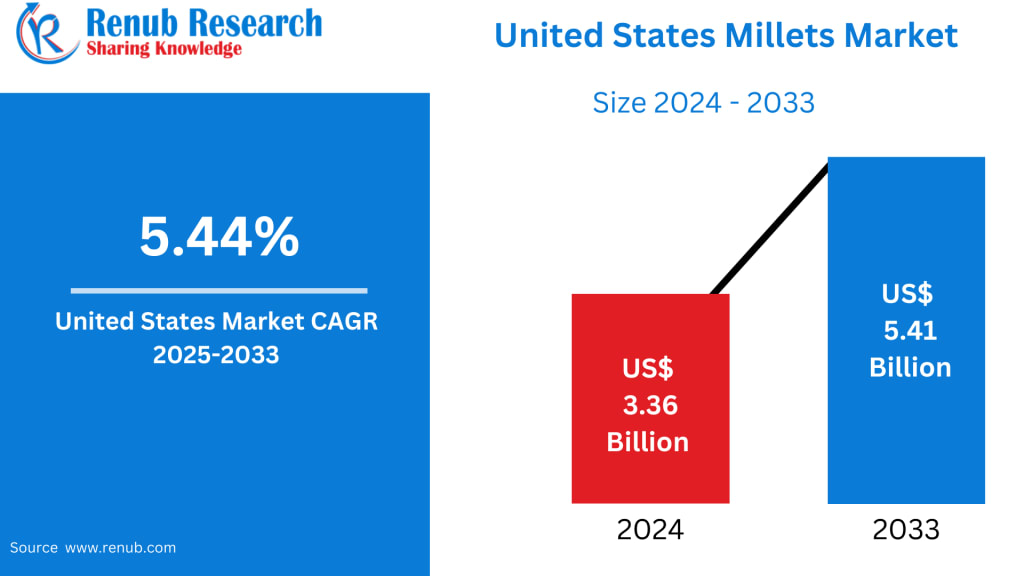
The United States millets market is gaining strong momentum as consumers increasingly seek healthier, sustainable, and functional food options. According to Renub Research, the United States Millets Market is expected to reach US$ 5.41 billion by 2033, up from US$ 3.36 billion in 2024, registering a compound annual growth rate (CAGR) of 5.44% between 2025 and 2033. This steady growth is supported by rising health consciousness, growing demand for gluten-free grains, and expanding applications across food, beverage, and health-focused product categories nationwide.
Traditionally consumed in Asia and Africa, millets are now emerging as a valuable alternative grain in the U.S. food system. Their nutritional richness, gluten-free nature, and adaptability to sustainable farming practices make them particularly attractive to health-aware consumers and environmentally conscious policymakers. As American diets continue to evolve away from refined grains and toward whole, nutrient-dense foods, millets are increasingly positioned as a smart, future-ready solution.
United States Millets Industry Overview
Consumer preferences in the United States are undergoing a significant transformation, driven by rising awareness of nutrition, sustainability, and lifestyle-related health concerns. Millets, known for their high fiber, protein, and essential micronutrient content, are gaining recognition as functional grains that support weight management, digestive health, and metabolic balance.
The increasing prevalence of obesity, diabetes, and cardiovascular diseases has amplified demand for low-glycemic and nutrient-rich food choices. Millets, which digest slowly and help maintain stable blood sugar levels, align well with these dietary priorities. As a result, food and beverage companies are actively incorporating millets into breakfast cereals, baked goods, snacks, beverages, and ready-to-eat meals, making them more accessible to mainstream consumers.
Another important factor driving industry growth is the rising popularity of plant-based and clean-label diets. Consumers are not only focused on nutrition but also on how food is produced. Millets require less water, thrive in challenging soil conditions, and have a lower environmental footprint compared to conventional grains. Their classification as “climate-smart” crops resonates strongly with sustainability-driven consumers and institutions across the United States.
The expansion of e-commerce platforms and specialty health food stores has further strengthened market accessibility. Urban populations, in particular, are embracing millet-based products due to exposure through global cuisines and wellness trends. Although the market still faces challenges related to consumer familiarity and competition from established grains, increasing educational efforts and product innovation continue to strengthen millet’s position in the U.S. food landscape.
Key Factors Driving the United States Millets Market Growth
Rising Health and Wellness Awareness
Health and wellness awareness remains one of the most influential drivers of the U.S. millets market. Consumers are actively shifting toward whole grains that offer functional health benefits without excessive calories or allergens. Millets are naturally gluten-free and rich in dietary fiber, making them suitable for individuals managing weight, digestion, and chronic conditions such as diabetes.
Millennials and Gen Z consumers are particularly influential in shaping this trend. These groups prioritize clean-label, minimally processed foods and are more open to experimenting with alternative grains. In response, food manufacturers are launching innovative millet-based products such as snack bars, cereals, and plant-based meals. Educational campaigns highlighting millet’s nutritional value are also helping reshape consumer perceptions, reinforcing their role as a health-forward dietary staple.
Expansion of Gluten-Free and Functional Food Categories
The rapid growth of the gluten-free and functional food sectors in the United States has created significant opportunities for millet adoption. Beyond individuals with celiac disease, many consumers now choose gluten-free diets for general wellness and digestive comfort. Millets serve as an ideal substitute for wheat-based products, offering versatility without compromising taste or nutrition.
Food manufacturers are increasingly integrating millets into bakery products, pasta, breakfast foods, and beverages. Their rich mineral content, including magnesium and iron, supports their positioning as functional foods that contribute to overall health. As consumers continue to seek foods that deliver added health benefits, millets are becoming an essential ingredient in premium and wellness-focused product portfolios.
Sustainability and Climate-Resilient Agriculture
Sustainability is playing a growing role in shaping consumer and policy decisions within the U.S. food system. Millets are highly resilient crops that require minimal water and inputs, making them well-suited for sustainable agriculture. As concerns over climate change, water scarcity, and food security intensify, millets are increasingly promoted as a viable alternative to water-intensive grains.
Eco-conscious consumers are actively choosing foods that align with their environmental values. Millets offer a unique combination of nutritional benefits and environmental responsibility, making them attractive to both producers and consumers. This alignment with climate-smart agriculture is expected to remain a critical growth driver throughout the forecast period.
Challenges in the United States Millets Market
Limited Consumer Awareness and Acceptance
Despite growing interest, limited consumer familiarity remains a challenge for the U.S. millets market. Many consumers are unfamiliar with different millet varieties, cooking techniques, and flavor profiles. Compared to well-established grains such as rice, oats, and quinoa, millets still lack widespread recognition.
Overcoming this challenge requires sustained investment in consumer education, branding, and product development. Clear labeling, recipe innovation, and targeted marketing can help bridge the knowledge gap and encourage trial among new consumers.
Competition from Established Grains and Supply Chain Constraints
Millets face strong competition from established grains that benefit from robust supply chains and widespread availability. Rice, oats, and quinoa enjoy strong consumer trust and competitive pricing, making market penetration challenging for millet products.
Additionally, domestic millet production in the United States remains limited, leading to reliance on imports in some cases. This can increase costs and affect consistency of supply. Strengthening domestic cultivation, improving distribution networks, and fostering partnerships across the value chain are essential to improving market competitiveness.
United States Millets Market Overview by States
California Millets Market
California leads millet consumption in the United States, driven by its health-conscious population and innovative food industry. Strong demand for gluten-free and plant-based foods has accelerated the integration of millets into cereals, baked goods, and ready-to-eat meals. The state’s focus on sustainability further aligns with millet’s eco-friendly attributes, supporting long-term growth.
Texas Millets Market
Texas is emerging as a significant market due to rising awareness of nutrition and chronic disease prevention. Millet-based bakery products and snacks are gaining traction, supported by urban retail expansion and growing multicultural influences. Texas also offers opportunities for domestic millet cultivation, reinforcing supply-side growth.
New York Millets Market
New York’s diverse population and dynamic food scene make it a rapidly evolving millet market. Health-focused consumers, restaurants, and food startups are introducing millet-based offerings, increasing visibility and acceptance. Strong retail infrastructure and exposure to global cuisines further support adoption.
Florida Millets Market
Florida’s growing interest in low-glycemic and functional foods is driving millet consumption. The hospitality and tourism sectors play an important role by incorporating millet-based dishes into menus. Retail expansion and wellness trends continue to support steady market growth across the state.
Recent Developments in the U.S. Millets Market
In January 2024, the Indo–U.S. Millets Initiative was launched to promote millet production and consumption through education, research, and policy advocacy. The collaboration aimed to increase awareness of millet’s nutritional and environmental benefits while supporting sustainable food systems. Such initiatives are expected to strengthen long-term demand and encourage broader adoption across the United States.
Market Segmentation
By Product
Organic
Regular
By Application
Infant Food
Bakery Products
Breakfast Foods
Beverages
Fodder
Others
By Distribution Channel
Trade Associations & Organizations
Supermarkets
Traditional Grocery Stores
Online Stores
Others
By States
California, Texas, New York, Florida, Illinois, Pennsylvania, Ohio, Georgia, New Jersey, Washington, North Carolina, Massachusetts, Virginia, Michigan, Maryland, Colorado, Tennessee, Indiana, Arizona, Minnesota, Wisconsin, Missouri, Connecticut, South Carolina, Oregon, Louisiana, Alabama, Kentucky, Rest of United States
Competitive Landscape
The U.S. millets market features participation from global agribusiness and food companies focusing on grain processing, sustainable agriculture, and functional foods. Market analysis includes company overviews, key leadership, recent developments, SWOT analysis, revenue trends, and strategic initiatives.
Key Companies Covered:
Archer Daniels Midland Company
Cargill
Bayer Crop Science AG
Nestlé S.A.
NH Foods Ltd
Final Thoughts
The United States millets market is on a steady upward trajectory, supported by rising health awareness, demand for gluten-free and functional foods, and increasing focus on sustainable agriculture. With the market projected to grow from US$ 3.36 billion in 2024 to US$ 5.41 billion by 2033, millets are steadily transitioning from niche grains to mainstream dietary staples.
While challenges related to awareness, competition, and supply chains persist, ongoing product innovation, educational initiatives, and policy support are expected to unlock new opportunities. As consumers continue to prioritize nutrition, sustainability, and diversity in their diets, millets are well-positioned to play a significant role in the future of the U.S. food industry.
About the Creator
Diya Dey
Market Analyst
New Snow and Ice Warning for Friday and Saturday: What You Need to Know
The UK is bracing for another round of disruptive winter weather as meteorologists issue fresh snow and ice warnings for Friday and Saturday. Across England, Scotland, and Wales, residents are being advised to prepare for hazardous conditions, with local authorities urging people to limit travel and stay safe. The latest forecasts indicate a combination of heavy snowfall, freezing temperatures, and icy patches, all of which could affect daily routines, public transport, and emergency services.
By Fiaz Ahmed 2 days ago in Earth




Comments
There are no comments for this story
Be the first to respond and start the conversation.