
United States Agricultural Machinery Market Size and Forecast 2025–2033
Automation, Precision Farming, and Sustainability Reshape American Agriculture


United States Agricultural Machinery Market Overview
The United States Agricultural Machinery Market is entering a transformative growth phase, driven by rapid technological innovation, increasing food demand, and the urgent need for sustainable farming practices. According to Renub Research, the market is expected to grow from US$ 40.20 billion in 2024 to US$ 67.80 billion by 2033, registering a robust CAGR of 5.98% from 2025 to 2033.
Agricultural machinery refers to equipment used to automate farming operations, improve productivity, and enhance efficiency across the agricultural value chain. This includes tractors, harvesters, irrigation systems, planting equipment, sprayers, ploughs, and haying machinery. Over the years, these machines have evolved from purely mechanical tools to highly sophisticated systems integrated with GPS, sensors, automation, robotics, and data analytics.
In the United States, where farm sizes are expanding and labor availability remains constrained, machinery has become the backbone of modern agriculture. From large commercial farms in the Midwest to specialized crop farms in California, agricultural machinery enables farmers to maximize yields, reduce input waste, and improve operational efficiency while meeting sustainability and regulatory requirements.
Market Outlook: Why the U.S. Agricultural Machinery Market Is Expanding
The United States remains one of the world’s largest agricultural producers, supplying grains, oilseeds, fruits, vegetables, meat, and dairy products to both domestic and global markets. This scale of production demands high levels of mechanization.
Several macro and microeconomic factors are supporting the market’s expansion:
Rising global food demand due to population growth
Labor shortages in rural areas
Growing adoption of precision agriculture
Government incentives supporting modern farming technologies
Climate change pressures, requiring efficient water and resource management
Farmers are increasingly investing in machinery that reduces operating costs while improving output quality and yield consistency. As a result, the U.S. agricultural machinery market continues to attract innovation, investment, and competition.
Growth Drivers for the United States Agricultural Machinery Market
1. Sustainable Farming Practices
Sustainability has become a central theme in U.S. agriculture. Farmers are under increasing pressure to reduce water usage, minimize chemical runoff, lower greenhouse gas emissions, and improve soil health. Agricultural machinery manufacturers are responding with equipment designed for precision input application, low-emission engines, and conservation farming.
Precision farming machinery, such as GPS-enabled tractors and variable-rate sprayers, allows farmers to apply fertilizers and pesticides only where needed. No-till and minimum-till equipment helps preserve soil structure, prevent erosion, and retain moisture. Modern irrigation machinery, especially micro-irrigation systems, significantly reduces water waste while improving crop health.
These eco-friendly solutions not only help farmers meet environmental regulations but also align with growing consumer demand for sustainably produced food—making sustainability a powerful driver of machinery adoption.
2. Rising Food Demand
The global population continues to grow, placing increasing pressure on agricultural systems to produce more food from limited arable land. The United States plays a crucial role in global food security, making productivity gains essential.
Advanced agricultural machinery enables farmers to cultivate larger areas with greater accuracy and speed. High-capacity tractors, automated planters, and advanced harvesting machinery significantly increase output while reducing dependence on manual labor. With yield optimization becoming critical, the demand for machinery that supports efficient, large-scale farming operations is accelerating.
3. Technological Advancements in Agriculture
Technology is redefining American farming. Innovations such as automation, GPS guidance, artificial intelligence, robotics, and real-time data analytics are transforming traditional machinery into smart farming solutions.
Automated tractors and harvesters reduce operator fatigue and improve precision. GPS-guided equipment ensures accurate planting and harvesting, reducing overlap and input waste. Sensors and software platforms provide real-time data on soil conditions, crop health, and weather patterns, enabling farmers to make informed decisions.
A notable example of this technological push came in December 2022, when CNH Industrial expanded its AgTech offerings in the United States, including Phoenix, Arizona. Through its Case IH, New Holland, and Raven brands, the company introduced advanced automation, baler automation, and driverless tillage solutions—helping farmers overcome labor shortages and productivity challenges.
Challenges in the United States Agricultural Machinery Market
1. High Initial Costs
One of the biggest barriers to adoption is the high upfront cost of advanced machinery. Automated tractors, harvesting robots, and precision farming systems require significant capital investment, which can be prohibitive for small and medium-sized farms.
While these machines offer long-term savings through improved efficiency and reduced labor costs, the initial expense often delays adoption. Financing constraints and fluctuating farm incomes further compound this challenge.
2. Maintenance and Repair Costs
As machinery becomes more technologically advanced, maintenance and repair requirements grow more complex. Specialized components, software systems, and electronic sensors require skilled technicians and proprietary parts, increasing downtime and service costs.
For farmers, unexpected equipment failures during planting or harvesting seasons can disrupt operations and reduce yields. The shortage of trained maintenance professionals in rural areas further intensifies this challenge, making reliability and service support critical factors in purchasing decisions.
United States Agricultural Machinery Market Segmentation
By Machinery Type
Irrigation Machinery
Tractors
Ploughing and Cultivation Machinery
Harvesting Machinery
Haying and Forage Machinery
Planting Machinery
Sprayers
Irrigation Machinery
Gravity Irrigation
Micro-Irrigation
Sprinkler Systems
Irrigation machinery plays a vital role in U.S. agriculture, particularly in water-stressed regions. Micro-irrigation and sprinkler systems are gaining traction due to their efficiency and ability to conserve water while maintaining crop yields.
Tractors by Engine Power
Less than 40 HP
41 to 100 HP
More than 100 HP
Mid-range and high-power tractors dominate the U.S. market due to their suitability for large-scale farming operations. However, compact tractors are increasingly popular among small farms and specialty crop producers.
Ploughing and Cultivation Machinery
Cultivators and Tillers
Harrows
Ploughs
Others
Conservation tillage equipment is witnessing growing demand as farmers shift toward soil-friendly practices.
Harvesting Machinery
Combine Harvesters
Harvesting Robots
Self-Propelled Forage Harvesters
Automation is rapidly entering the harvesting segment, with robotic harvesters addressing labor shortages and improving efficiency.
Haying and Forage Machinery
Mowers
Balers
Tedders and Rakes
Forage Harvesters
These machines are essential for the livestock sector, supporting efficient feed production across the country.
Company Analysis: Competitive Landscape
The U.S. agricultural machinery market is highly competitive, dominated by global manufacturers with strong dealer networks and innovation capabilities. Key players include:
John Deere
AGCO Corporation
KUBOTA Corporation
Titan Machinery Inc.
CLAAS
Lindsay Corporation
Alamo Group Inc.
Each company is evaluated across five dimensions:
Company Overview
Key Persons
Product Portfolio
Recent Developments
Sales Analysis
Manufacturers are heavily investing in R&D, automation, electrification, and digital farming platforms to maintain competitiveness and meet evolving farmer needs.
Future Outlook: What Lies Ahead
The future of the U.S. agricultural machinery market is strongly tied to innovation and sustainability. As climate variability increases and labor shortages persist, demand for autonomous, efficient, and environmentally friendly machinery will continue to rise.
Electrification, AI-powered machinery, robotics, and data-driven farming solutions are expected to redefine agricultural operations over the next decade. Government support for sustainable agriculture and technological adoption will further strengthen market growth.
Final Thoughts
The United States Agricultural Machinery Market is on a steady growth trajectory, supported by technological advancement, rising food demand, and the shift toward sustainable farming. Despite challenges such as high initial costs and maintenance expenses, the long-term benefits of modern machinery—higher productivity, reduced environmental impact, and improved profitability—continue to drive adoption.
With the market projected to reach US$ 67.80 billion by 2033, agricultural machinery will remain a cornerstone of U.S. agriculture, empowering farmers to feed a growing world while safeguarding natural resources.
About the Creator
jaiklin Fanandish
Jaiklin Fanandish, a passionate storyteller with 10 years of experience, crafts engaging narratives that blend creativity, emotion, and imagination to inspire and connect with readers worldwide.
Keep reading
More stories from jaiklin Fanandish and writers in Earth and other communities.
Malted Wheat Flour Market Size and Forecast 2025–2033
Malted Wheat Flour Market Outlook The Malted Wheat Flour Market is expected to reach US$ 69.17 billion by 2033, rising from US$ 41.22 billion in 2024, registering a CAGR of 5.92% during 2025–2033. This growth is driven by its proven ability to enhance baking performance, rising consumer preference for clean-label and natural ingredients, growing health awareness, and the rapid expansion of convenience and ready-to-eat food segments. In parallel, the global resurgence of artisanal and craft baking is accelerating adoption across both commercial and small-scale bakeries.
By jaiklin Fanandish19 days ago in Earth
Police Warn Against ‘Ridiculous’ Parking at Beauty Spot Amid Snow Disruption
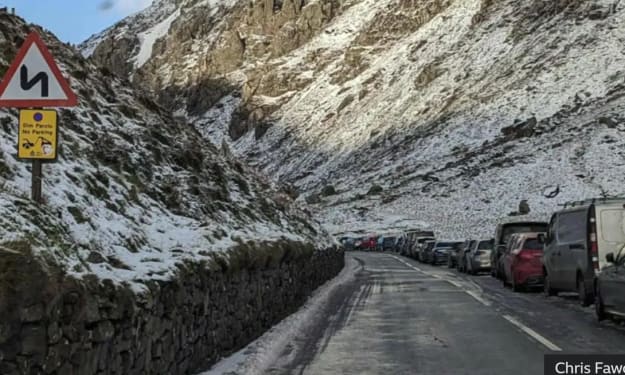
Heavy snowfall may transform beauty spots into winter wonderlands, but it also brings serious risks when visitors ignore basic safety and parking rules. Police have issued a strong warning against what they describe as “ridiculous” parking at a popular beauty spot, after snow disruption led to blocked roads, stranded vehicles, and delayed emergency access. As wintry conditions continue to affect travel, authorities are urging the public to prioritise safety over scenic photographs, reminding drivers that poor parking decisions can have life-threatening consequences during severe weather. Snowfall Turns Scenic into Hazardous The recent spell of snow attracted large numbers of visitors eager to enjoy picturesque landscapes blanketed in white. Hillsides, national parks, and rural viewpoints quickly became hotspots for walkers, families, and amateur photographers. However, police say the surge in visitors coincided with widespread parking chaos. Cars were left abandoned on narrow roads, grass verges, gateways, and even blocking access routes meant for emergency vehicles and local residents. What may appear to drivers as a harmless decision to “park for just a few minutes” can quickly escalate into a major safety issue—especially when snow and ice reduce road space and visibility. Police Response and Public Warning Local police forces have taken to social media and public statements to express frustration at the situation. Officers described some parking behaviour as not only irresponsible but dangerous, particularly given the weather conditions. Police warned that emergency vehicles, including ambulances and mountain rescue teams, were struggling to reach areas due to blocked roads. In severe weather, response times are already under pressure, and illegally parked vehicles can mean the difference between life and death. Authorities have also made it clear that enforcement action will be taken where necessary. Drivers risk fines, towing, and penalty points if their vehicles obstruct roads or endanger others. Impact on Emergency Services One of the most serious consequences of poor parking during snow disruption is its impact on emergency services. Narrow rural roads, already difficult to navigate in icy conditions, become completely impassable when cars are parked irresponsibly. Fire crews, paramedics, and rescue teams rely on clear access routes, particularly in popular beauty spots where accidents such as slips, falls, or stranded walkers are more likely in winter conditions. Police stressed that emergency vehicles do not have the luxury of “finding another way around” when roads are blocked. Delays caused by inconsiderate parking put both responders and the public at risk. Local Residents Left Frustrated It is not only emergency services that are affected. Residents living near popular beauty spots often bear the brunt of snow-related disruption. Driveways are blocked, access to homes becomes difficult, and essential journeys for work, medical appointments, or supplies are delayed. Many locals report feeling ignored by visitors who treat rural communities like seasonal attractions rather than lived-in areas. During winter weather, this frustration is magnified, as residents may already be dealing with power outages, poor road conditions, and limited access to services. Police have echoed these concerns, reminding visitors that beauty spots are often surrounded by working communities, not just open spaces for leisure. Why Snow Makes Parking More Dangerous Snow significantly reduces road safety margins. It narrows carriageways, hides road markings, and makes verges unstable. A car parked partly on a road might seem manageable in normal conditions, but in snow it can create blind corners, force vehicles into oncoming traffic, or cause skidding accidents. Additionally, snowploughs and gritters require space to operate effectively. Poorly parked vehicles can prevent these essential services from clearing roads, prolonging disruption for everyone. Authorities warn that even experienced drivers can underestimate how quickly conditions can change in winter weather. Social Media and the “Snow Day” Effect Police have also pointed to social media as a contributing factor. Viral images of snow-covered landscapes often encourage spontaneous trips without proper planning. People see beautiful photos and head out without considering parking availability, road conditions, or weather warnings. This “snow day” mentality can overwhelm rural infrastructure not designed for large volumes of traffic, particularly during adverse weather. Police urge visitors to check local advice before travelling and to be prepared to turn back if conditions are unsafe. Advice for Safe Winter Visits In response to the ongoing disruption, authorities have shared clear guidance for anyone planning to visit beauty spots during snowy conditions: Avoid unnecessary travel during severe weather warnings Park only in designated areas, never on roads or verges Do not block gateways, tracks, or emergency access routes Check weather and road conditions before setting off Be prepared to leave if parking is unavailable Police emphasise that no photograph or short walk is worth risking lives or causing serious disruption. Enforcement and Accountability While officers prefer to rely on public cooperation, they have confirmed that enforcement will be stepped up if irresponsible behaviour continues. Vehicles may be ticketed or removed, particularly if they pose a danger or obstruction. Authorities stress that enforcement is not about spoiling enjoyment but about ensuring public safety. Winter conditions demand higher levels of responsibility from drivers, not less. A Shared Responsibility Snow transforms landscapes, but it also tests public behaviour. Police warnings against “ridiculous” parking are not just expressions of frustration—they are urgent reminders that safety must come first. Enjoying nature is a privilege, not a right, especially during extreme weather. By parking responsibly and respecting local communities, visitors can help ensure that beauty spots remain accessible, emergency services remain effective, and winter days do not turn into preventable disasters. As snow disruption continues, the message from police is clear: think before you park, or don’t park at all
By Muhammad Hassana day ago in Earth
How Wind Energy Works: A Closer Look with Stanislav Kondrashov
As the world pushes further into the 21st century, the demand for sustainable and clean sources of energy has never been greater. At the heart of this shift is wind energy—a technology as old as the first sailboat, yet as modern as the towering turbines dotting coastlines and countrysides. Stanislav Kondrashov, an independent energy researcher and commentator, has long studied the mechanics and potential of wind power. His insights help demystify what’s often seen as a complex system driven by forces we can’t see.
By Stanislav Kondrashov 3 days ago in Earth
Where's the Glory?
In breaking news, rehabilitated Republican Senator Johnnie Johnson (Pronouns: HE, HIM, HIS) called a press conference from the Men’s room of the New Orleans Louis Armstrong International Airport, Concourse B, across from the Ignatius Reilly’s Lucky Dog stand. The Senator had just returned from a sexual reorientation rehabilitation program in Memphis, TN after being publically disgraced at a Buckee’s Truckstop restroom soliciting sex from an undercover cop three months ago. He is a founding member of the Reformed Christians for Christ, a conservative, pro-family and ex-gay advocacy group. In the spirit of being reborn, Senator Johnson invited reporters to marvel at his plans for a major remodeling of airport bathrooms.
By Cathy Schieffelin5 days ago in Humor



Comments
There are no comments for this story
Be the first to respond and start the conversation.