
Unexplored Seas: Unlocking the Mysteries of Earth's Last Frontier
Challenges and Significance of Exploring Uncharted Seas

Certainly! The unexplored seas, also known as uncharted or undiscovered seas, refer to areas of the world's oceans and bodies of water that have not been fully explored or mapped by humans. Despite advancements in technology and extensive oceanic research, there are still vast expanses of the Earth's seas that remain relatively unexplored.
Here are a few examples of unexplored seas:
The Arctic Ocean: The Arctic Ocean is one of the least explored regions on Earth due to its remote location, extreme weather conditions, and extensive sea ice cover. The region is home to the North Pole and is surrounded by the northernmost parts of North America, Europe, and Asia. As climate change causes the ice to recede, more opportunities for exploration and scientific research are emerging.
The Southern Ocean: The Southern Ocean surrounds Antarctica and is known for its harsh conditions, strong winds, and icy waters. Despite its significance in regulating global climate patterns and supporting unique ecosystems, the Southern Ocean remains largely unexplored. Scientists continue to study this remote and challenging environment to better understand its role in the Earth's climate system.
The deep sea: The deep sea, which encompasses the vast and dark regions below the continental shelves, is one of the most unexplored areas of our planet. The depths of the ocean present extreme pressures, low temperatures, and limited sunlight, making it difficult for humans to explore. New technologies like remotely operated vehicles (ROVs) and autonomous underwater vehicles (AUVs) are enabling researchers to delve deeper into the mysteries of the deep sea.
The Marianas Trench: Located in the western Pacific Ocean, the Marianas Trench is the deepest known part of the world's oceans. It reaches a depth of approximately 36,070 feet (10,994 meters). Despite several manned and unmanned missions to the trench, our understanding of its unique ecosystems and geological features is still limited.
Exploring these uncharted seas presents numerous challenges. The harsh environments, extreme temperatures, limited accessibility, and technical difficulties involved in deep-sea exploration make it a demanding endeavor. However, continued efforts by scientists, researchers, and explorers are expanding our knowledge of these unexplored areas, uncovering new species, geological formations, and advancing our understanding of Earth's oceans.
It's important to note that new discoveries are continually being made, and the information I provided reflects the knowledge available up until September 2021.
Certainly! Here's some additional information about unexplored seas:
The Indian Ocean: While the Indian Ocean has been extensively traversed by trade routes and shipping lanes, there are still regions within its vast expanse that remain relatively unexplored. These unexplored areas include remote islands, deep trenches, and underwater mountain ranges. Scientists are actively conducting research expeditions to uncover the secrets of this diverse and relatively understudied ocean.
The Pacific Remote Islands Marine National Monument: This expansive marine protected area in the central Pacific Ocean consists of several remote and uninhabited islands and atolls. The monument encompasses vast stretches of unexplored waters, providing sanctuary for diverse marine life. Due to its remote location and limited human activity, large portions of this monument remain uncharted, offering opportunities for scientific exploration.
The Sargasso Sea: Located in the North Atlantic Ocean, the Sargasso Sea is characterized by vast floating mats of Sargassum seaweed. This unique ecosystem is known for its distinctive biodiversity, including various species of fish, turtles, and invertebrates. Despite its ecological importance, the Sargasso Sea is still not fully explored, and ongoing research efforts aim to better understand the intricacies of this remarkable marine habitat.
The deep-sea vents and hydrothermal systems: Deep-sea hydrothermal vents are hot springs on the ocean floor that support vibrant ecosystems fueled by chemosynthetic bacteria. These ecosystems are considered some of the most extreme and least explored environments on Earth. Vent fields can be found along tectonic plate boundaries and underwater volcanic regions. Researchers are continuously discovering new vent sites and species, expanding our knowledge of these unique habitats.
The Black Sea: The Black Sea, located between Eastern Europe and Western Asia, is another region with areas yet to be fully explored. The Black Sea has a complex ecosystem, including unique species adapted to its brackish waters. Ongoing research expeditions aim to study its geological features, underwater habitats, and the impacts of human activities on the sea's ecosystem.
Subglacial lakes: Deep beneath the ice sheets of Antarctica and Greenland, there are vast subglacial lakes that remain largely unexplored. These lakes are isolated from the surface and are of great interest to scientists as they may harbor unique microbial life forms and provide insights into the history of the Earth's climate. Drilling projects, such as the Subglacial Antarctic Lakes Scientific Access (SALSA), aim to access and study these hidden ecosystems.
Exploring these uncharted areas not only helps expand our knowledge of marine environments but also contributes to our understanding of biodiversity, climate change, geological processes, and the potential for discovering new natural resources. As technology advances and scientific curiosity continues to drive exploration, we can expect ongoing discoveries and insights into the unexplored seas of our planet.
About the Creator
Keep reading
More stories from prica djokic and writers in Earth and other communities.
The Flat Earth Theory: An Exploration of an Unconventional Belief
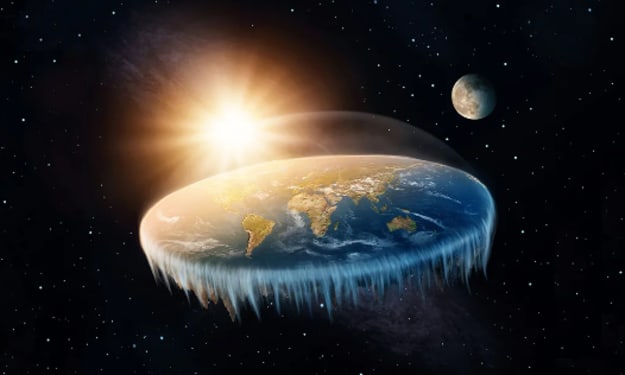
The idea that the Earth is flat is a notion that has persisted throughout history, despite overwhelming scientific evidence proving otherwise. While the overwhelming consensus among scientists, explorers, and even astronauts is that the Earth is a sphere, a small group of individuals continue to advocate for the flat Earth theory. In this article, we will delve into the origins of the flat Earth belief, examine some of the arguments put forth by its proponents, and explore the scientific evidence that refutes this notion.
By prica djokic3 years ago in Earth
Water as Fuel: The Invisible Engine Inside Us
In most health and wellness discussions, the spotlight invariably falls on food. We meticulously track grams of protein, percentages of carbohydrates, types of fats, and the intake of vitamins and minerals. Yet, in our quest to optimize our diet, we often overlook the most fundamental "tool" without which not a single molecule in our body could be utilized. There is a hidden medium, a universal catalyst, and an invisible laborer that transforms the raw materials of food into pure energy: water.
By Pavel Pavlova day ago in Earth
The Light Turns
It's Tuesday 7:13 a.m. A cold and clear November morning awaits Ray on his morning commute. Ray rubs his hands together in the front seat of his Subaru. He turns the air temperature up, but keeps the air on low until the air warms up. He looks at the backup camera screen and reverses the Subaru out of his driveway onto Trimble Road.
By John R. Godwin5 days ago in Fiction


Comments
There are no comments for this story
Be the first to respond and start the conversation.