
UK Elections: Post-War Reforms
The Representation of the People Act 1948 equalized voting qualifications between men and women

The post-war electoral reforms in the UK had a significant impact on the political landscape and the democratic process. Here are some key impacts of the post-war reforms:
1. Expanded Suffrage: The extension of voting rights to women and the lowering of the voting age allowed a larger segment of the population to participate in the electoral process. This led to a more inclusive and representative democracy, ensuring that more voices were heard and considered in political decision-making.
2. Increased Political Participation: The post-war reforms encouraged greater political engagement and participation, particularly among young adults. Lowering the voting age to 18 acknowledged the political awareness and maturity of younger citizens and gave them a say in shaping the country's future.
3. Fairer Representation: Redrawing constituency boundaries and the establishment of the Boundary Commission for England aimed to ensure that electoral districts were more equal in terms of population size. This resulted in a fairer distribution of parliamentary seats, providing a better representation of voters' interests across the country.
4. Enhanced Accessibility: The introduction of postal voting and expanded absent voting provisions made it easier for eligible voters to cast their ballots. This increased accessibility, particularly for individuals who may face physical limitations, live in remote areas or have other circumstances that prevent them from voting in person.
5. Transparent and Regulated Elections: The establishment of the independent Electoral Commission brought transparency and oversight to the electoral process. It regulates political parties, enforces campaign finance rules, and ensures the integrity of elections. This has contributed to maintaining public confidence in the electoral system and minimizing the risk of malpractice.
6. Modernization and Technological Advancements: The exploration of electronic voting trials and other technological advancements has aimed to make the electoral process more efficient and convenient. While implementation has been limited, these efforts demonstrate a commitment to keeping up with evolving technology and exploring innovative ways to enhance the democratic process.
CONS OF POST-WAR REFORMS ELECTIONS IN THE UK
While the post-war reforms in elections in the UK brought numerous benefits, there are also some potential drawbacks to consider. Here are three cons associated with these reforms:
1. Disconnection from Local Communities: The redrawing of constituency boundaries, although aimed at achieving fairer representation, can sometimes result in a disconnection between elected representatives and their local communities. In some cases, redrawn boundaries may combine areas with distinct interests or dilute the sense of community cohesion, making it challenging for elected officials to effectively represent the specific needs and concerns of their constituents.
2. Decreased Voter Turnout: Despite efforts to increase inclusivity, there has been a persistent issue of declining voter turnout in UK elections. While the post-war reforms expanded suffrage and accessibility, voter apathy and disengagement remain concerns. This can undermine the legitimacy of the democratic process if a significant portion of the population abstains from voting, leading to reduced representation and potentially affecting the overall democratic mandate.
3. Dominance of Established Political Parties: The post-war reforms did not necessarily address the issue of the dominance of established political parties. While the reforms aimed to create a more inclusive system, the electoral process still tends to favour larger political parties due to factors like campaign finance, media coverage, and existing voter loyalties. This can limit the representation of diverse political viewpoints and hinder the ability to emerge or smaller parties to gain traction, potentially impacting the diversity of ideas and policy options available to voters.
It is important to note that these cons are not inherent flaws in the post-war reforms themselves, but rather potential challenges or unintended consequences that have been observed in their implementation. Addressing these drawbacks often requires ongoing discussions and potential future reforms to ensure that the electoral system continues to evolve and meet the needs and expectations of the electorate.
Overall, the post-war reforms have played a crucial role in strengthening the democratic foundations of the UK. They have broadened suffrage, increased political participation, promoted fairer representation, improved accessibility, and modernized electoral procedures. However, challenges and debates surrounding electoral reform continue as the country strives to maintain a robust and inclusive democratic system that reflects the evolving needs and expectations of its citizens.
About the Creator
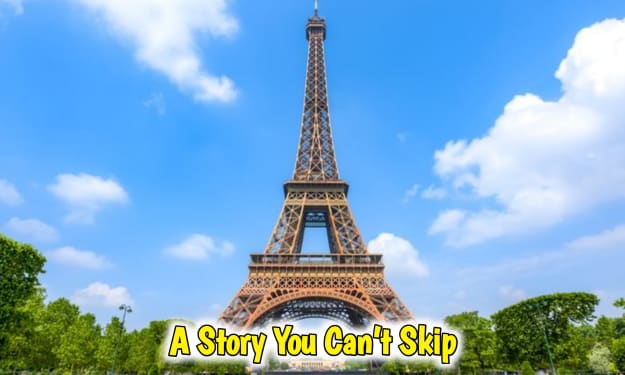
The Eiffel Tower: Paris’s Iron Soul and the Story Behind Its Global Magic
The Eiffel Tower is more than a landmark rising above the Paris skyline. It is a symbol of human imagination, engineering courage, and the timeless romance of France. Millions visit it every year, yet few know the deeper story—how a controversial iron structure built for a temporary event became one of the most beloved monuments on Earth. Standing tall since 1889, the Eiffel Tower has witnessed revolutions, world wars, artistic movements, and generations of travelers who came to Paris searching for beauty, inspiration, or simply a moment they would never forget. 🌍 A Monument Born From a Global Celebration The Eiffel Tower was created for the 1889 Exposition Universelle, a world fair celebrating the 100th anniversary of the French Revolution. The French government held a competition for a monument that would represent modern engineering and national pride. Over 100 designs were submitted, but the winning proposal came from Gustave Eiffel, a renowned engineer whose company specialized in metal frameworks. Construction began on January 28, 1887, and was completed on March 31, 1889—an astonishing achievement in just over two years. When it opened, the tower served as the grand entrance to the exposition, welcoming millions of visitors from around the world. 🛠️ Engineering Genius: How the Tower Was Built The Eiffel Tower was a radical idea for its time. Paris was a city of stone, sculptures, and classical architecture. A 300‑meter iron tower seemed outrageous to many. Yet Gustave Eiffel and his team believed in the power of innovation. Key engineering facts - Height at completion: 300 meters (984 ft), making it the tallest structure in the world until 1930. - Current height: 330 meters (1,083 ft) including antennas. - Weight: About 10,100 tons. - Iron pieces: 18,038 individual components. - Stairs: 1,665 steps to the top. - Construction time: 2 years, 2 months, 5 days. The tower’s lattice design wasn’t just artistic—it was functional. The open iron framework allowed wind to pass through, giving the structure remarkable stability. Gustave Eiffel famously said the tower was “not only the art of the engineer, but also the art of the architect.” 🎨 From Controversy to Cultural Icon When the Eiffel Tower was unveiled, not everyone loved it. In fact, many Parisians hated it. Writers, artists, and intellectuals signed petitions calling it an eyesore. They said it looked like a “giant smokestack” and would ruin the beauty of Paris. But as time passed, the tower won hearts. - It became a symbol of modernity. - It became a symbol of Parisian pride. - It became a symbol of France itself. By the early 20th century, the Eiffel Tower had transformed from a temporary exhibition piece into a permanent global icon. 📡 A Tower That Saved Itself The Eiffel Tower was originally meant to stand for only 20 years. After the exposition, it was supposed to be dismantled. What saved it? Science. Gustave Eiffel allowed the tower to be used for radio experiments. Its height made it ideal for broadcasting signals. During World War I, the tower intercepted enemy communications, helping France in critical moments. Its usefulness ensured its survival. 💑 The Human Side: Why the Eiffel Tower Feels Magical People don’t fall in love with the Eiffel Tower because of its measurements or engineering. They fall in love with how it makes them feel. Standing beneath it, you feel small—but in a good way. Climbing it, you feel connected to history. Seeing Paris from the top, you feel like the world is bigger and more beautiful than you realized. The tower has become: - A symbol of love - A backdrop for proposals - A dream destination for travelers - A muse for artists and filmmakers It is the beating heart of Paris. 🌆 Visiting the Eiffel Tower: What to Expect A visit to the Eiffel Tower is a journey through levels of history, architecture, and breathtaking views. The Esplanade The ground level offers a close-up look at the tower’s massive iron legs and the engineering that holds it together. The First Floor - Transparent floors - Exhibits on the tower’s history - Restaurants and shops The Second Floor This level offers one of the best panoramic views of Paris—close enough to see details, high enough to feel the city’s scale. The Summit At 276 meters, the top floor gives a sweeping view of the entire Paris region. Gustave Eiffel’s private office has been recreated here. 🌙 The Eiffel Tower at Night Every evening, the Eiffel Tower lights up with a warm golden glow. And for five minutes at the start of each hour, it sparkles with 20,000 twinkling lights. This nightly ritual has become one of the most magical sights in the world. 📚 Fun and Surprising Facts - The Eiffel Tower was the tallest structure in the world until the Chrysler Building surpassed it in 1930. - It was originally painted red‑brown, then yellow, and now “Eiffel Tower Brown.” - Gustave Eiffel’s company also built the metal framework for the Statue of Liberty. - The tower sways slightly in strong winds—up to 9 cm. - It is the most visited paid monument in the world. 💬 Why the Eiffel Tower Still Matters The Eiffel Tower endures because it represents something universal: the human desire to create, to innovate, and to leave something beautiful behind. It is a reminder that even the most controversial ideas can become beloved. It is proof that art and engineering can coexist. It is a symbol of Paris, of France, and of the world’s shared cultural heritage. If this story brought the Eiffel Tower to life for you, share it with someone who dreams of visiting Paris. Leave a comment with your favorite Eiffel Tower moment—or the moment you hope to experience someday. And if you’d like to support more human‑centered, deeply researched stories like this, feel free to leave a tip. It helps bring more inspiring content to life.
By Haroon Pasha5 days ago in Earth



Comments (1)
The facts in this...