
Trump’s Middle East Tour: The Untold Strategic Depth Behind the Diplomatic Show
The Middle East of 2025 still bears the imprint of those eight days in 2017. Whether that’s a good or bad thing depends on who you ask—but its impact is undeniable.
Introduction: More Than Just a Photo Op
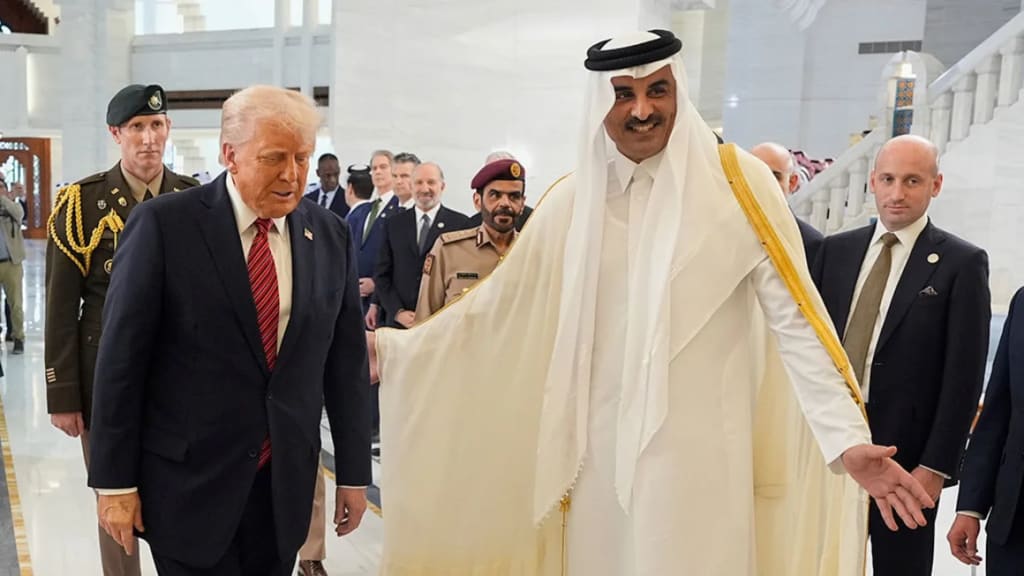
When former President Donald Trump embarked on his first international trip to the Middle East in May 2017, the White House presented it as a ceremonial visit—a gesture of goodwill to Muslim allies and a symbolic stand against extremism. Yet, beneath the carefully choreographed handshakes and grand speeches, the tour was a meticulously planned geopolitical maneuver that reshaped U.S. strategy in the region.
From brokering the largest arms deal in American history to quietly laying the groundwork for the historic Abraham Accords, Trump’s trip was a masterclass in transactional diplomacy. It reinforced old alliances, isolated adversaries, and set in motion policies that continue to define U.S. engagement in the Middle East today.
This article delves into the hidden layers of Trump’s Middle East tour, revealing how what was dismissed by critics as mere spectacle was, in reality, one of the most consequential foreign policy initiatives of his presidency.
Chapter 1: A Strategic Reset with Saudi Arabia – The $110 Billion Gambit
Why Saudi Arabia First?
Trump’s decision to make Riyadh his first overseas stop as president was no accident. It signaled a dramatic shift from the Obama administration’s frosty relationship with the kingdom, which had been strained by the Iran nuclear deal (JCPOA) and perceived U.S. disengagement from the region.
By choosing Saudi Arabia, Trump sent a clear message: The U.S. was recommitting to its traditional Sunni allies and pivoting away from Obama’s outreach to Iran.
The Record-Breaking Arms Deal
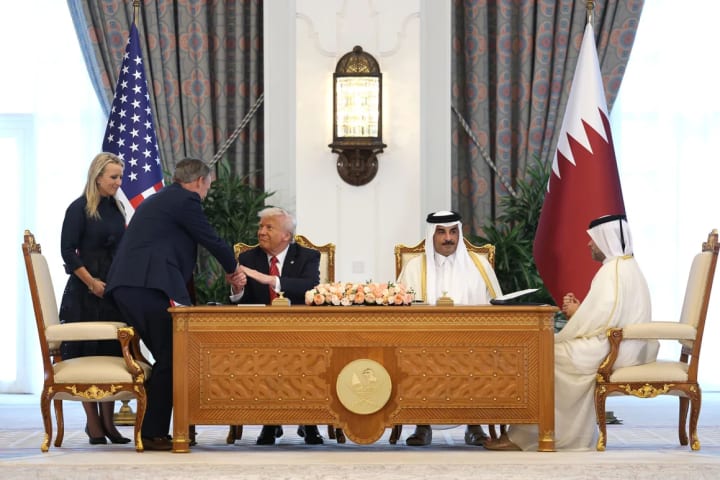
The centerpiece of the visit was the announcement of a $110 billion arms sale to Saudi Arabia—the largest in U.S. history. The deal included:
• Advanced fighter jets (F-15s)
• Missile defense systems (THAAD)
• Naval vessels and intelligence-sharing technology
Beyond its economic impact (supporting American defense jobs), the agreement was a strategic counterweight to Iran’s growing influence. It also locked Saudi Arabia into long-term dependence on U.S. military hardware, ensuring continued leverage.
The Global Center for Combating Extremist Ideology: Symbolism or Strategy?
A lesser-discussed outcome was the launch of the Global Center for Combating Extremist Ideology in Riyadh. While critics dismissed it as a PR stunt, the center served two key purposes:
• Legitimizing Saudi Arabia as a counterterrorism partner (despite its own history of funding radical groups).
• Outsourcing counter-extremism efforts to Gulf states, aligning with Trump’s "America First" doctrine.
Key Takeaway: Trump’s Saudi visit wasn’t just about repairing relations—it was about restructuring the U.S.-Gulf security architecture to counter Iran and reduce direct American military burdens.
Chapter 2: The Quiet Push for Arab-Israeli Normalization
Israel Visit: More Than Solidarity
Trump’s stop in Israel was framed as a show of support for a key ally. However, behind the scenes, his team was already working on what would later become the Abraham Accords—the normalization agreements between Israel and Arab states.
Breaking Diplomatic Taboos
• Avoiding the "Two-State Solution" Language: In his speech at the Israel Museum, Trump notably refrained from endorsing a Palestinian state, a departure from decades of U.S. policy. This signaled to Arab leaders that Washington was no longer prioritizing Palestinian demands over regional alliances.
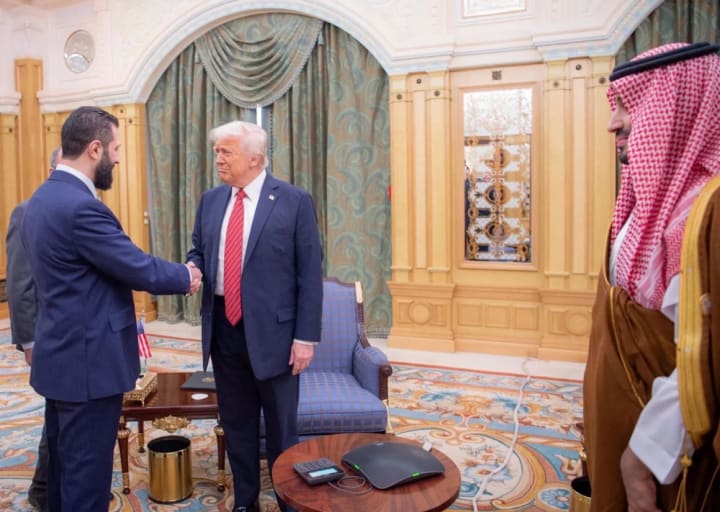
• Private Talks with Arab Diplomats: Sources later revealed that Jared Kushner and other envoys had been quietly gauging Arab states’ willingness to normalize ties with Israel, leveraging shared anti-Iran sentiment.
The Seeds of the Abraham Accords
Though the UAE and Bahrain wouldn’t formally recognize Israel until 2020, Trump’s 2017 trip planted the ideological and political groundwork. By elevating anti-Iran solidarity over the Palestinian issue, he made normalization palatable for Sunni leaders.
Key Takeaway: The Israel leg of the tour wasn’t just ceremonial—it was the first step in a calculated, long-term strategy to realign Middle East alliances.
Chapter 3: Countering Iran – The Unifying Theme
The "Drive Out Terrorists" Speech
In Riyadh, Trump delivered a fiery address to Muslim leaders, urging them to "drive out" terrorists—a thinly veiled reference to Iran and its proxies (Hezbollah, Hamas, and Houthi rebels). Three things were accomplished by this rhetoric:
1. Isolated Iran by framing it as the region’s primary destabilizer.
2. United Sunni rivals (Saudi Arabia, Egypt, UAE) under a U.S.-led security umbrella.
3. Set the stage for withdrawing from the Iran nuclear deal (JCPOA) in 2018.
The Birth of the "Arab NATO" Concept
Trump’s team floated the idea of a Middle East Strategic Alliance (MESA), a Sunni-led coalition to counter Iran. While never fully realized, the discussions deepened military cooperation between Gulf states and Israel—another precursor to the Abraham Accords.
Key Takeaway: The trip wasn’t just about rhetoric—it laid the ideological foundation for Trump’s "maximum pressure" campaign against Iran.
Chapter 4: The Unspoken Business Interests
Defense Contracts and Economic Gains
The $110 billion Saudi arms deal wasn’t just geopolitics—it was business. Major U.S. contractors (Lockheed Martin, Boeing, Raytheon) saw stock prices surge, and Trump repeatedly touted the deal as a jobs creator.
Trump’s Private Business Ties?
Critics raised ethical concerns over:
• Trump-branded projects reportedly discussed in Saudi Arabia and Qatar.
• Kushner’s post-White House $2 billion Saudi investment (though denied as a quid pro quo).
Even though there was no evidence of direct corruption, the connection between diplomatic and personal financial interests remained a contentious subtext.
Key Takeaway: The tour blurred the lines between statecraft and commerce, raising questions about diplomacy for profit.
Chapter 5: Lasting Impact – Beyond the Headlines
The Arms Deal Fallout
• Strengthened Gulf militaries but also fueled the Yemen war, creating humanitarian crises.
• Locked in Saudi dependence on U.S. weapons, ensuring long-term influence.
The Abraham Accords Legacy
• Four Arab states normalized ties with Israel by 2021.
• Shifted Middle East dynamics away from the Palestinian issue toward anti-Iran alignment.
Iran’s Isolation
• The JCPOA withdrawal and sanctions crippled Iran’s economy, leading to protests.
• But it also pushed Tehran closer to Russia and China.
Key Takeaway: Trump’s trip wasn’t just a diplomatic tour—it was a strategic realignment with consequences still unfolding today.
Conclusion: A Blueprint for Transactional Diplomacy
Critics criticized Trump's Middle East tour as a show with no substance. Yet, in reality, it was a highly calculated geopolitical play that:
✅ Revitalized U.S.-Saudi ties
✅ Paved the way for Arab-Israeli peace deals
✅ Isolated Iran economically and diplomatically
✅ Boosted U.S. defense exports
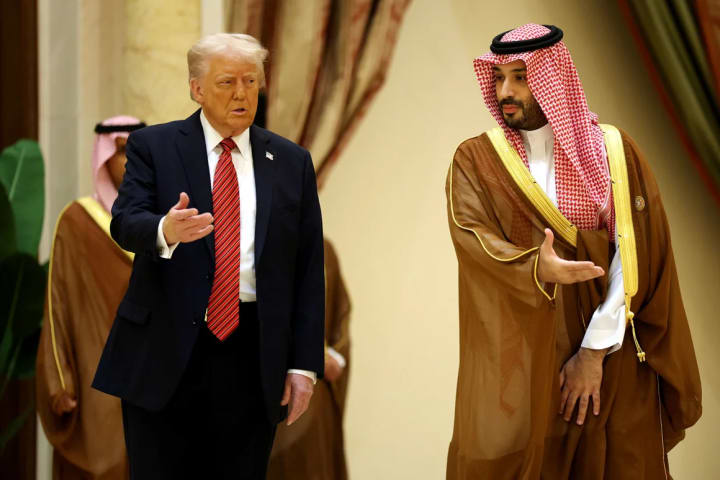
Regardless of how you feel about it, the trip was a masterclass in transactional statecraft, demonstrating that Trump's foreign policy has left a lasting impression despite controversy.
Final Word: The Middle East of 2025 still bears the imprint of those eight days in 2017. Whether that’s a good or bad thing depends on who you ask—but its impact is undeniable.
About the Creator
Keep reading
More stories from writers in Earth and other communities.
True Happiness
On a sturdy apple tree, a mother dove lived peacefully with her tiny baby. The tree provided them with shelter, shade, and a sense of security. Every day, the mother dove would watch over her little one, teaching it to flap its wings, coo softly, and enjoy the calm of the natural world. Life had been simple, quiet, and safe for them, and she felt content in the little world that belonged entirely to her and her chick.
By Sudais Zakwan3 days ago in Earth
Take a Roundtrip to Hell and Back
The Acheron River in Greece got its name from a river in Greek mythology located in the underworld of Hades and associated with woes and pain. The river flows through the region of Epirus in northwestern Greece and flows into the Ionian Sea at Ammoudia.
By Rasma Raisters4 days ago in Earth
🅼🅸🅳🅽🅸🅶🅷🆃 🆂🅽🅰🅲🅺🆂
"It's 10 in Tuscon! We all know what that means... It's Time for Midnight Snacks with your man, Gerald Gee! Ready to spend the night together? Me too! I'm full of snacks and can't wait to regurgitate them all back into your hungry ears. Crack a brew! Pop some corn! Anything to get ready for one hell of a show where the talk maybe cheap but the words cut deep...
By Lamar Wiggins6 days ago in Fiction



Comments
There are no comments for this story
Be the first to respond and start the conversation.