
Trees
and why they are important in the eye of science.
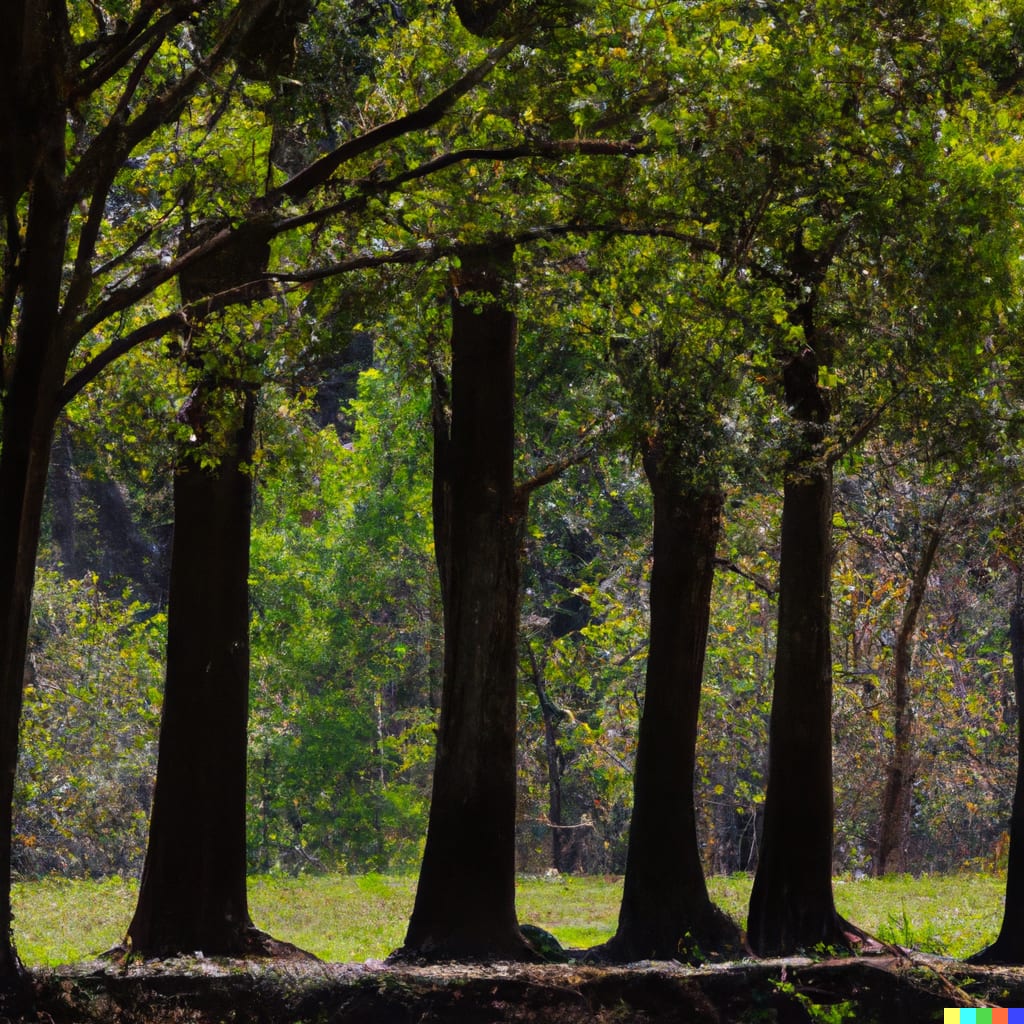
Trees are an integral part of our planet’s ecosystem. They provide a multitude of benefits, ranging from oxygen production to providing habitat for wildlife. Trees have played a significant role in shaping our world and continue to be essential for the survival of both animals and humans alike. This article will delve deeper into the importance of trees in our world, exploring their role in the environment and their impact on human society.
Environmental Benefits of Trees
Trees are vital for maintaining the delicate balance of our planet's environment. One of the most notable benefits of trees is their ability to produce oxygen through the process of photosynthesis. During photosynthesis, trees absorb carbon dioxide from the atmosphere and produce oxygen, which is essential for the survival of all living organisms. Without trees, the amount of carbon dioxide in the atmosphere would increase, leading to a host of environmental problems, including climate change.
Trees also help to mitigate climate change by absorbing and storing carbon. As they grow, trees remove carbon dioxide from the atmosphere and store it in their wood, roots, and leaves. This process is known as carbon sequestration and is critical in reducing greenhouse gas emissions that contribute to climate change.
Trees play an essential role in regulating local temperatures and reducing the urban heat island effect. By shading buildings and streets, trees reduce the amount of heat absorbed by buildings and pavement, which can lead to lower cooling costs and improved air quality. Trees also help to reduce the amount of water runoff, which can prevent flooding and erosion.
Finally, trees provide habitat for wildlife, ranging from small insects to large mammals. Trees offer food, shelter, and nesting sites for a variety of species, making them an essential part of any healthy ecosystem. By protecting forests and planting trees, we can help to preserve biodiversity and ensure the survival of a range of species.
Social and Economic Benefits of Trees
Trees provide a range of social and economic benefits. They are an integral part of our natural environment, and their beauty and majesty are a source of inspiration for many people. Trees also provide a range of economic benefits, including the production of timber, pulp, and paper.
In addition, trees can increase property values and improve the livability of communities. Studies have shown that properties with mature trees and well-maintained landscaping can increase property values by as much as 20 percent. Trees also provide shade and a natural barrier to noise, making them an essential part of any urban or suburban landscape.
Finally, trees provide a range of health benefits. Exposure to green spaces has been shown to reduce stress, improve mental health, and lower blood pressure. Trees also help to filter pollutants from the air, which can lead to improved respiratory health.
Conclusion
Trees are an essential part of our planet’s ecosystem, providing a range of environmental, social, and economic benefits. They are critical in reducing greenhouse gas emissions, mitigating climate change, and providing habitat for wildlife. Trees also offer a range of social and economic benefits, including increased property values, improved livability, and improved health outcomes. As we continue to face a changing climate and environmental challenges, it is more important than ever to recognize the value of trees and the critical role they play in our world. By protecting forests and planting new trees, we can ensure a sustainable future for generations to come.
About the Creator
Keep reading
More stories from Muhammad Bilal and writers in Earth and other communities.
Depression
In recent years, there has been an alarming increase in the number of students experiencing depression. According to studies, students today are more likely to suffer from depression compared to previous generations. In this article, we will discuss the reasons why this generation of students is more prone to depression and what can be done to address this issue.
By Muhammad Bilal3 years ago in Education
The Weather Tomorrow Feels More Personal Than Ever
Every night before going to bed, I check the weather for tomorrow. It used to be a small, mechanical act — like setting an alarm or brushing my teeth. Now it feels almost existential. I tap into the forecast app and stare at those color-coded icons as though they’re tarot cards trying to tell me something about what kind of day I’ll wake up to.
By Trend Vantage2 days ago in Earth
The Collapse of a Brazilian Bank Ensnares Politicians and Judges
Brazil is grappling with one of the most shocking financial scandals in recent history: the collapse of a major bank that has sent tremors through the economy, the political system, and the judiciary. What began as a financial crisis quickly transformed into a story of political entanglement, judicial scrutiny, and public outrage, raising questions about oversight, accountability, and the fragile trust that binds citizens, bankers, and politicians. The implications of this collapse are vast, affecting not just shareholders and depositors, but also shaking the foundations of governance in Brazil. The Collapse: A Perfect Storm of Mismanagement The bank in question, a significant player in Brazil’s retail and corporate banking sectors, reportedly faced years of mismanagement, risky lending practices, and opaque financial dealings. For years, internal audits hinted at irregularities, but these warnings were either ignored or covered up. When the collapse finally occurred, thousands of customers lost access to their accounts, and businesses relying on the bank for loans and credit lines faced immediate disruption. The ripple effect extended beyond the banking sector, affecting real estate, commerce, and public confidence in financial institutions. Politicians in the Crossfire As investigations unfolded, authorities discovered that several politicians had deep financial ties to the bank. Allegations include preferential loans, insider deals, and the use of political influence to shield executives from scrutiny. These revelations have sparked outrage among the public, who see the situation as yet another example of how money and power intersect in ways that harm ordinary citizens. Brazil’s history of corruption scandals — including Operation Car Wash — has made the public wary of politicians’ involvement in business, and this banking collapse appears to confirm those fears. Some politicians are now under formal investigation, facing charges ranging from corruption to conflict of interest. Legal experts predict that the case could lead to resignations, trials, and possibly convictions. Judges Under Scrutiny The crisis has also ensnared members of the judiciary. Reports indicate that some judges may have overlooked warning signs, delayed investigations, or facilitated questionable transactions involving the bank. While it is unclear whether these actions were deliberate or a result of systemic inefficiencies, the optics are troubling. Public confidence in the judiciary is essential for democracy, yet this scandal highlights the vulnerability of institutions when financial and political interests collide. Brazilian citizens are now demanding transparency, calling for independent oversight to ensure justice is applied equally — whether to bankers, politicians, or judges. Economic and Social Fallout Beyond politics and the courts, the bank’s collapse has real-world consequences for everyday Brazilians. Customers report frozen accounts, lost savings, and halted payments. Small business owners face canceled loans and delayed contracts. Even those not directly affected worry about contagion in the financial system, fearing a broader economic downturn. Experts warn that if regulatory systems fail to prevent similar crises, Brazil’s economic growth could slow, foreign investment could decline, and public trust in institutions may erode further. The social cost — protests, strikes, and political unrest — is already visible in major cities. Why Oversight Failed The collapse raises important questions about regulation in Brazil. Financial watchdogs and central bank authorities are under pressure to explain how such a significant failure went unnoticed. Analysts suggest several systemic issues: Weak regulatory enforcement — audits and compliance checks were reportedly insufficient. Political interference — pressure from powerful politicians may have delayed corrective measures. Opaque financial practices — complex corporate structures and hidden liabilities masked the bank’s instability. This combination created a perfect storm, allowing risky practices to continue unchecked until the bank could no longer operate. Lessons for Brazil and Beyond The scandal is more than a national story — it is a cautionary tale for emerging economies worldwide. Financial institutions, no matter how large or influential, cannot be above scrutiny, and political entanglements must be carefully managed. Transparency, independent oversight, and robust regulatory frameworks are essential to prevent similar disasters. In countries where finance and politics overlap too closely, the risk of systemic failure is amplified, with devastating consequences for ordinary citizens. What Happens Next? Brazilian authorities are now facing immense pressure to act swiftly. Investigations will likely continue for months, if not years. Some potential outcomes include: Trials and convictions of bank executives and politicians Reforms in banking regulations and financial oversight Strengthened judicial accountability mechanisms Measures to restore public confidence in the financial system Meanwhile, citizens and businesses are left to navigate uncertainty, hoping for clear answers and protections against further damage. Final Thoughts The collapse of this Brazilian bank is more than a financial event — it is a story about the fragility of systems where money, politics, and justice intersect. It serves as a stark reminder that trust is the foundation of both banking and governance. When that trust is broken, the consequences are profound and far-reaching. For Brazil, this is a moment of reckoning. For the world, it is a cautionary tale about the need for transparency, oversight, and accountability in every institution that touches the lives of millions.
By Muhammad Hassana day ago in Earth




Comments
There are no comments for this story
Be the first to respond and start the conversation.