
Transforming the Sahara
From Arid to Vibrantly Fertile

Nearly all of Northern Africa is covered by the Sahara, the largest desert in the world. Three thousand miles are covered. The Sahara is bounded by the Atlantic Ocean on its western side, the Atlas Mountains in the Mediterranean Sea on its northern side, the Red Sea on its eastern side, and the Sahel on its southern side. The Sahel is a region of semi-arid land that lies between the Sahara to the north and the belt of humid savannas to the south. Land management practices like overgrazing and localized droughts continue to pose a threat to the advancement of the Sahara desert.
It is quickly losing all certification.
However, the African Sahara nation of Niger has made some astounding agricultural advancements, converting sizable areas suffering from desertification into agricultural fields. This land loss is a driver of many other issues, including hunger, poverty, unemployment, forced migration conflict, as well as an increased risk of extreme weather events. Over 200 million trees have been planted on 5 million hectares of land in Niger, and this improved use of the land has benefited 215 million people. Any country that only receives an average of 6.5 inches of rain per year can consider this transformation to be a major accomplishment.
Niger is a landlocked nation in west Africa that is officially a republic and named after the Niger river. Saharan desert covers more than 80% of its surface area. Poor soil, unpredictable rainfall, and protracted droughts are common obstacles for those trying to grow crops in the Sahel region. Due to drought, cropland expansion, and human pressure, farmers experienced significant tree losses in the 1970s and 1980s because there were few trees still present on the fields. The wind erosion frequently caused newly planted crops to be destroyed by farmers. This results in Africa losing 4 million hectares of forest annually, despite having more than 700 million hectares of degraded land that could be restored.
Farmers can meet the continent's expanding food needs without having to clear more forest by restoring degraded land.
This will help feed Africa's expanding population.
A huge opportunity exists for Africa in restoring degraded land to productive health. As well as helping to combat climate change and bringing technology to enhance traditional knowledge, it has significant social and economic benefits for rural farming communities.
Farm Managed Natural Regeneration (FMNR), is one of the main initiatives for regeneration. By boosting food and timber production as well as climate resilience, FMNR is a low-cost land restoration technique used to fight poverty and hunger among subsistence farmers. In the difficult growing conditions of Africa's Sahara, FMNR boosts the productivity and toughness of crop fields and pasture lands. It is a technology that has emerged as one of the most revolutionary in agriculture. Tony Ronaldo, an Australian agronomist widely regarded as the "forest maker" for having lived and worked in African countries for many years, founded FMNR in Niger in 1983. He has discovered and put into action a remedy for the severe deforestation and desertification of the Sahara region. FMNR is a form of coppicing and pollarding drawing on traditional practices and sensitive to local variations. Farmers can encourage plants to develop into trees by selecting the right plants, pruning them appropriately, and protecting them in specific ways. Growing trees and forests sustainably can restore degraded lands, increase resilience, and aid individuals and societies in adapting to climate change. Farmers can regenerate and protect existing local vegetation, improving the livelihoods of millions. A crucial component of the fight against climate change is preserving and improving forests. About 2 billion tons of carbon dioxide can be absorbed annually per forest. Compared to tree planting programs, which are notoriously ineffective, FMNR is a huge success. Scarcely 10 of the seedlings survive the heat and dust storms of Niger and the surviving ones would be eaten by goats or cut down by people for firewood. Success came when Tony Ronaldo noticed that the millions of small bushes in the savannah were actually stumps of trees growing back the shoots from the new stumps just needed to be managed, pruned, and cared for in order to grow into a tree. At that time, Tony Ronaldo created the idea of Farmer Managed Natural Regeneration (FMNR), a very straightforward set of actions that farmers can use to regreen their land.
First, farmers survey the land and choose among the existing local species, the right ones to regenerate. Second, farmers select the few stems that they want to grow while cutting the rest to be used as fodder, mulch, or similar. Then, the selected stems are pruned to halfway of the trunk. Finally, the farmer marks the regrowing trees and protects them. The procedure is repeated every two to six months, and due to its ease of use, FMNR has been a huge success in Niger.
In Niger, 5 million hectares of land with over 200 million trees have been restored this way with 2.5 million people benefiting from the improved use of land, and at least 25 countries mainly in Africa, are already using this method. FMNR is so important due to the fact that it's using these natural techniques to solve agricultural issues instead of favoring more quick alternatives that use harmful chemicals.
The results of FMNR have been astounding. Fertile land has almost doubled since the 1980s, creating improved food security and better nutrition for millions of people, increasing household gross incomes by an average of 18 to 24. Environmental degradation and desertification have also been reversed across some 5 million hectares of land. Tree density has improved 10x since its all-time low in the 1980s. Around 200 million new trees have grown with a production value of over 260 million and it's no surprise that this innovative, yet simple technique is spreading all over Africa and making positive changes to the environment and the people who live there. Local adaptability, low cost (about 20 usd) per hectare, easy combination with agricultural methods, and quick results. The methods spread through peer-to-peer learning among farmers with limited need for outside intervention.
Credit to: https://www.youtube.com/watch?v=QXQrvT23rPw&ab_channel=LeafofLife
About the Creator
Keep reading
More stories from Nicoleen McKenzie and writers in Earth and other communities.
The World Changing Slime
One of the most peculiar plants you'll ever see grows all over these Mexican mountains. It is a peculiar kind of 20-foot-tall giant maize. Its roots, which resemble unsettling fingers and are a few meters above the ground, ooze with a mysterious mucus that has the potential to feed the world and eliminate the use of harmful chemical fertilizers in agriculture. As long as researchers can decipher its code, this is the Holy Grail. South of Mexico, there is a town called Tatanta Peck. The local farmers have meticulously maintained this maize for hundreds, possibly even thousands of years.
By Nicoleen McKenzie3 years ago in Earth
The Problem with Invasive Plants: Identification and Responsible Removal
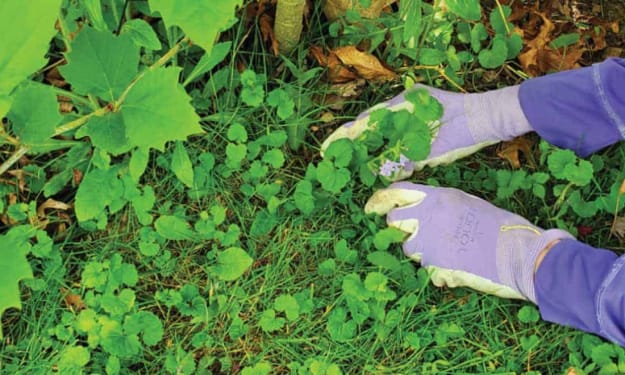
This scenario plays out in gardens across the continent. Many invasive plants started as intentional garden introductions, valued for their beauty, vigor, and ease of growth. Those same qualities—rapid spread, adaptability, and resilience—make them ecological threats when they escape cultivation.
By Emma Wallaceabout 14 hours ago in Earth



Comments
There are no comments for this story
Be the first to respond and start the conversation.