
Titanic: Triumph of Human Ingenuity
Titanic: Triumph of Human Ingenuity and the Lessons That Endure
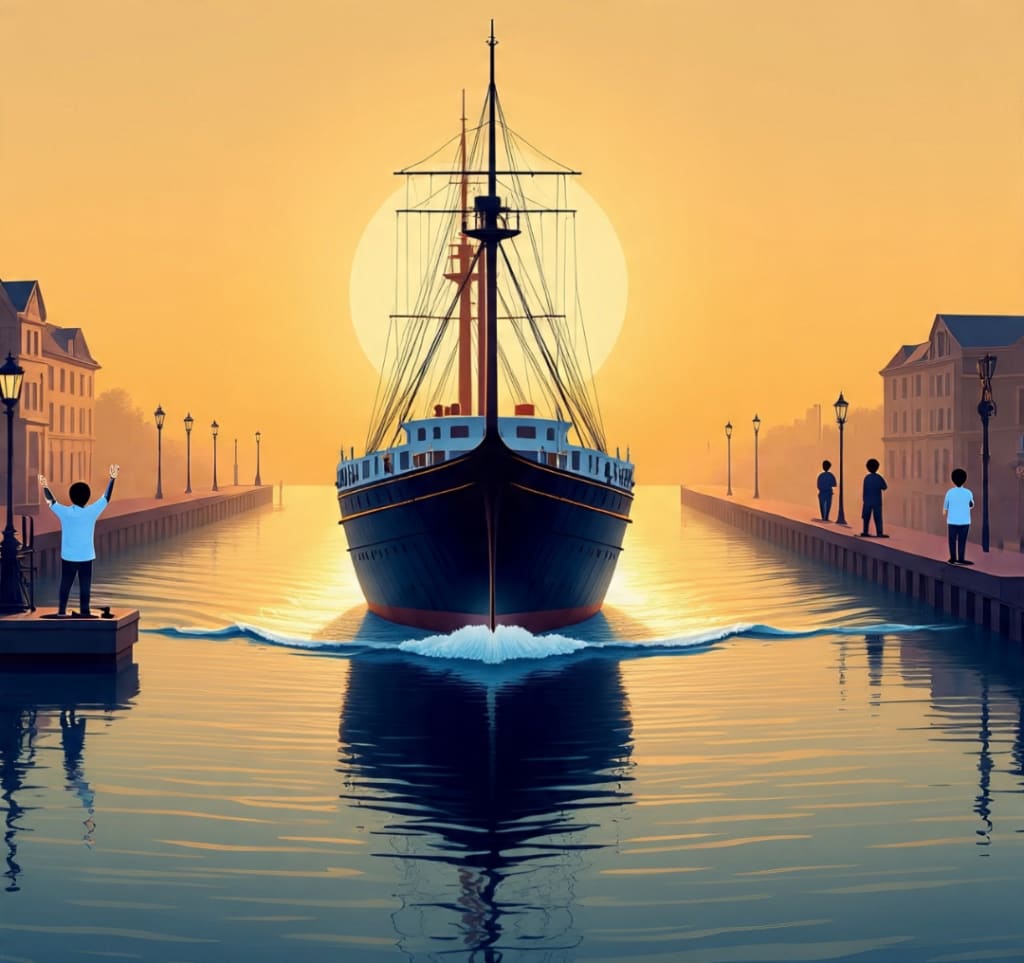
Titanic: A Dream Built on Water, a Legacy Built on Humanity
On April 10, 1912, a ship like no other stood at the dock in Southampton, England. With four towering smokestacks and a hull that stretched nearly 900 feet, the RMS Titanic was hailed as the pinnacle of human innovation. Labeled "unsinkable" by the press and admired around the world, it was more than just a ship — it was a symbol of hope, progress, and bold ambition.
The Titanic was the largest moving object ever built at the time. Inside, it was a floating palace — complete with a grand staircase, luxurious dining rooms, a swimming pool, and even a squash court. It carried over 2,200 passengers and crew, including some of the richest people in the world, as well as immigrants chasing a dream of a better life in America.
But the Titanic was not just about luxury. It was a marvel of engineering. Its construction involved over 3 million rivets, 2,000 workers, and took more than two years to complete. The ship featured the latest in maritime technology, including watertight compartments and electronic communication systems.
As the Titanic sailed across the Atlantic, there was excitement in the air. For many, it was a journey toward new beginnings. For others, it was a demonstration of mankind’s progress. But just four days into the voyage, on the night of April 14th, everything changed.
At 11:40 PM, the Titanic struck an iceberg in the frigid waters of the North Atlantic. The collision tore open the side of the ship, and within hours, the once-proud liner began to sink. There were not enough lifeboats for everyone — a decision based on outdated safety regulations and the belief that they wouldn't be needed.
What followed was one of the most tragic maritime disasters in history. More than 1,500 lives were lost.
Yet, amidst the tragedy, stories of courage and humanity emerged — stories that continue to touch hearts more than a century later.
There was Wallace Hartley, the ship’s bandleader, who led his fellow musicians in playing calming music as passengers boarded lifeboats. They played until the very end. There was Molly Brown, later known as “The Unsinkable Molly Brown,” who took charge of Lifeboat No. 6 and demanded the crew go back to search for survivors. And there were countless crew members who gave up their own chances at survival to help others escape.
The Titanic disaster led to massive changes in maritime law. Ships were now required to carry enough lifeboats for all on board. 24/7 radio monitoring became standard. The International Ice Patrol was established to warn ships about dangerous icebergs. In many ways, the Titanic's loss helped save countless lives in the decades that followed.
But perhaps what keeps the Titanic alive in our collective memory is not just the scale of the tragedy — it's the deeply human stories behind it. It’s the reminder that even in moments of unimaginable loss, bravery, kindness, and hope can rise to the surface.
In 1985, over 70 years after it sank, the Titanic was discovered lying 12,500 feet below the ocean’s surface. The world watched in awe as images of the ship’s remains were broadcast — the bow still eerily intact, like a ghost frozen in time. The discovery sparked renewed interest in Titanic’s story, not just as a disaster, but as a symbol of human ambition and resilience.
Today, the Titanic lives on through museums, films, books, and memorials. It continues to inspire questions about engineering, ethics, and human nature. It reminds us of the limits of technology — and the power of compassion.
More than a century later, people still ask why Titanic captures our imagination. The answer may lie in its complexity. It was a triumph — and a failure. A ship of dreams — and of lessons. A tragedy — and a testimony to human courage.
The Titanic teaches us that greatness is not just in building something powerful, but in how we respond when that power is tested. In every story of sacrifice, survival, and change, the Titanic lives on — not just at the bottom of the sea, but in the hearts of millions.
About the Creator
Keep reading
More stories from Muhammad Saad and writers in Earth and other communities.
"Heart of the Deep: Unleashing the Power of the Pacific"
Heart of the Deep: Unleashing the Power of the Pacific Stretching across more than 63 million square miles, the Pacific Ocean is the largest and most powerful body of water on Earth. From its deep trenches to its towering waves, from tropical islands to icy northern shores, the Pacific isn’t just vast — it’s alive. Its moods, movements, and mysteries shape not only coastlines but climates, cultures, and life itself. This is the story of the Pacific Ocean: the heart of our planet’s blue soul. The name “Pacific” means peaceful, a title given by Portuguese explorer Ferdinand Magellan in 1521. But the ocean’s surface calm was deceptive. Beneath its tranquil waves, immense forces churn. The Pacific is home to the Ring of Fire — a horseshoe-shaped zone of frequent earthquakes and volcanic eruptions — making it one of the most geologically active regions in the world. Along its seafloor lies the Mariana Trench, the deepest point on Earth, plunging nearly 36,000 feet. It’s a realm darker than night, where strange creatures live under crushing pressure and scientists are only beginning to explore its secrets. But the Pacific’s influence reaches far beyond its depths. Its waters regulate the Earth’s climate through powerful systems like the El Niño and La Niña cycles, which can bring droughts, floods, and temperature shifts to continents thousands of miles away. The ocean’s currents act like conveyor belts, distributing heat and nutrients across the globe, influencing everything from hurricane formation to fisheries. The Pacific is also a cultural cradle. For thousands of years, it has been home to civilizations whose lives are deeply intertwined with the ocean. The Polynesians, among the greatest navigators in human history, traveled thousands of miles across the Pacific using only the stars, ocean swells, and bird patterns to guide them. They settled the scattered islands of Hawaii, Easter Island, and New Zealand long before European ships ever set sail. To the people of the Pacific, the ocean is not a barrier, but a bridge. It’s a provider, a protector, and a living ancestor. Indigenous traditions speak of the ocean’s spirit, its songs, and its teachings. Even today, communities rely on it for food, transport, and spiritual connection — fishing in its waters, surfing its waves, and honoring it in ceremonies passed down for generations. Ecologically, the Pacific is a jewel of biodiversity. It hosts the Great Barrier Reef, the largest coral reef system on Earth, teeming with thousands of species. Migrating whales sing through its vastness, giant squids lurk in its depths, and remote atolls buzz with seabirds and turtles. Yet, like many natural wonders, the Pacific faces modern threats. Plastic pollution, overfishing, coral bleaching, and rising sea levels caused by climate change are challenging its resilience. Island nations, some of the most vulnerable to climate impacts, are raising their voices on the global stage. Places like Kiribati and Tuvalu, with average elevations of just a few meters, are experiencing rising tides that eat away at homes and history. Despite their small size, these nations are leading calls for action, reminding the world that the Pacific’s future is tied to all of ours. But hope still flows through its currents. Across the region, scientists, activists, and Indigenous leaders are working together to protect marine habitats, restore coral reefs, and create vast marine sanctuaries. Traditional knowledge is being paired with modern science to better understand how to care for the ocean’s delicate balance. One such effort is the creation of the Pacific Ocean Peace Park — a network of marine protected areas spanning several countries and cultures. It’s a symbol of unity, resilience, and a shared commitment to preserving the ocean’s health for future generations. Standing on a cliff overlooking the Pacific, it’s easy to feel small. The wind smells of salt and endless space. Waves crash below, timeless and tireless. Yet, in that moment, one also feels part of something much larger — a vast, breathing system that connects continents, cultures, and all living things. The Pacific Ocean is not just water. It’s movement, memory, and mystery. It’s a force that sculpts the Earth and sings to the stars. It holds the past in its depths and the future in its tide. And as we learn to listen, protect, and respect this mighty ocean, we might just discover that the heartbeat of the planet begins in its waves.
By Muhammad Saad 5 months ago in Earth
United States Lawn Mowers Market Size and Forecast 2025–2033
The United States Lawn Mowers Market is expected to reach US$ 15.91 billion by 2033, rising from US$ 9.64 billion in 2024, registering a CAGR of 5.73% during 2025–2033. This strong growth trajectory reflects changing lifestyles, increased spending on home improvement, and rapid technological innovation across outdoor equipment. From battery-powered walk-behind models to autonomous robotic mowers guided by GPS and artificial intelligence, the industry is undergoing a structural shift toward efficiency, sustainability, and user convenience.
By Renub Research6 days ago in Earth
Judge Trump: Courtroom Battles and Public Questions Surrounding Donald Trump
Judge Trump: Courtroom Battles and Public Questions Surrounding Donald Trump Donald Trump’s name has been repeatedly linked with judges, courts, and major legal decisions over the past several years. As a former president and a high-profile political figure, Trump has faced intense legal scrutiny, making judges central figures in news coverage and public debate. The phrase “Judge Trump” has come to reflect public curiosity about the judges who oversee Trump-related cases, their rulings, and how these legal battles may affect his political future. Understanding this topic requires looking at the legal landscape, the role of the judiciary, and the most common questions people ask. Judge Trump: Courtroom Battles and Public Questions Surrounding Donald Trump
By America today 6 days ago in Earth


Comments
There are no comments for this story
Be the first to respond and start the conversation.