
Tips to protect against the cold weather ahead.
Protecting Livestock During Freezing Conditions: Expert Advice for Farmers
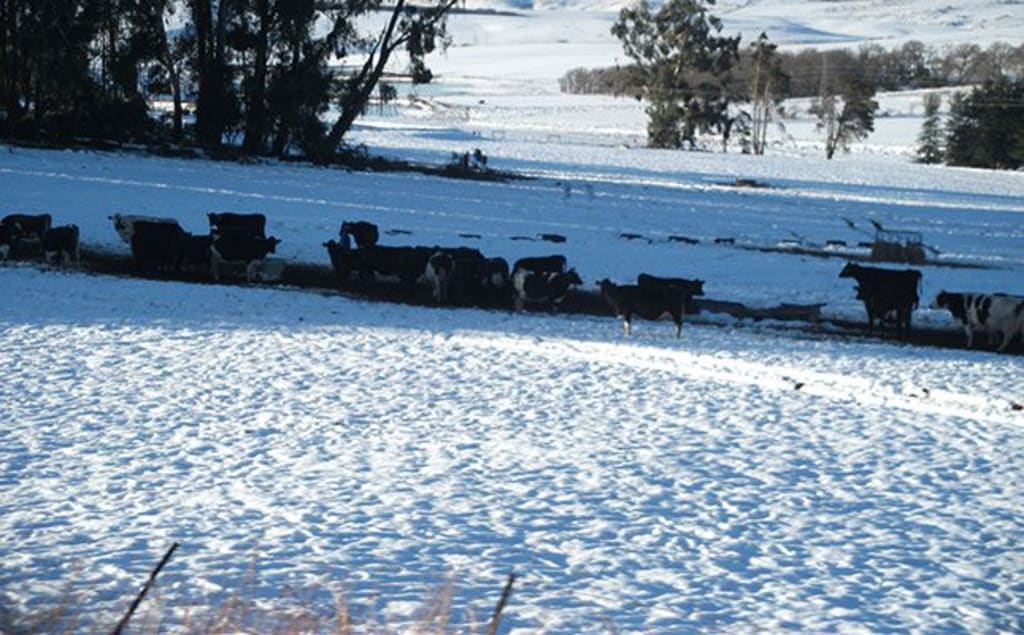
A strong cold front, moving eastwards from the south-western parts of the Western Cape on Friday evening towards KwaZulu-Natal and Mpumalanga on Sunday, has caused a significant drop in temperatures. The front brought rain, strong winds reaching near gale force along the coast, and even snow in high-lying areas, according to the South African Weather Service.
A significant drop in temperatures occurred in Gauteng on Monday, where the maximum temperatures reached 13°C in the northern areas and snow fell over Johannesburg and its surrounds.
How can farmers protect their livestock from freezing conditions?
According to Prof Gareth Bath, chairperson of the Livestock Welfare Coordinating Committee, they should first identify the most vulnerable animals, as they require more protection.
These include young animals, such as lambs and calves, as they have less body fat than adult animals to keep them warm, and certain species such as goats, which also have little body fat.
Certain breeds of cattle are less able to cope with low temperatures than others. “Brahman cattle might look [handsome], but they don’t tolerate the cold as well as Northern European breeds such as the Aberdeen Angus. These are much better suited to areas that get very cold,” says Bath.
Thin animals are also more likely to die than animals in good condition, especially during wet cold snaps. The combination of wet and cold can be fatal, stresses Bath, as the moisture causes the animal to lose body heat more rapidly.
Recently shorn sheep and goats are particularly vulnerable. “Sheep and goats should not have been shorn recently. If they have been, they’ll need extra protection.”
Environmental circumstances should be considered when deciding where the animals should be taken, according to Bath.
“The key is to find shelter from the wind and cold, but not the sun, in order to keep female animals and their offspring protected. Bushes and high grass might generally be sufficient. Lowlands might be out, as these are usually the coldest areas on the farm, whereas some higher lying [areas] might be too exposed to the wind.”
Livestock should also have adequate access to food and clean water. Animals particularly require more high-energy feed, such as maize, during cold spells, as they need more energy to maintain their body heat. However, the cold does not affect the animal’s protein requirements, so feeding more protein would be a waste.
Bath points out that farmers over the years have devised their own strategies to help animals weather the cold. In the Eastern Cape, for instance, many Angora farmers keep their goats in sheds during extremely cold weather and after shearing to help keep them dry and out of the cold. Some even use hay bales to protect livestock against the wind.
Bath advises new farmers to ask more experienced neighbors to share their strategies with A powerful cold front, originating from the southwestern regions of the Western Cape, swept across South Africa, impacting various provinces with rain, strong winds, and even snow in higher areas. With plummeting temperatures, farmers face the challenge of safeguarding their livestock from the freezing conditions. Prof Gareth Bath, chairperson of the Livestock Welfare Coordinating Committee, provides valuable insights on protecting vulnerable animals and shares the wisdom of experienced farmers
Identifying Vulnerable Animals:
To effectively protect their livestock, farmers must first identify the most vulnerable animals. Young animals, like lambs and calves, are particularly susceptible as they possess less body fat to generate warmth. Additionally, certain species, such as goats, also have limited body fat reserves, making them more prone to the cold.
Understanding Breeds and Conditions:
Different cattle breeds exhibit varying tolerances to low temperatures. While Brahman cattle may have an appealing appearance, they struggle to withstand cold weather compared to Northern European breeds like the Aberdeen Angus. Bath advises selecting breeds better suited for colder regions.
Managing Thin Animals:
Thin animals face a higher risk of succumbing to freezing conditions, especially when accompanied by wet weather. The combination of cold and moisture leads to faster heat loss. Bath emphasizes the importance of maintaining animals in good condition and avoiding recent shearing of sheep and goats, as their lack of fleece leaves them particularly vulnerable. Extra protection is necessary for recently shorn animals.
Providing Shelter:
When determining where to relocate animals, farmers should consider the environmental circumstances. Bath suggests finding shelter from wind and cold while ensuring exposure to sunlight for the protection of female animals and their offspring. Bushes and high grass can often serve as sufficient natural shelters, whereas lowlands should be avoided due to their tendency to be colder. Similarly, higher lying areas may be too exposed to wind.
Access to Food and Water:
During cold spells, livestock require ample access to high-energy feed, such as maize, to sustain their body heat. However, protein requirements remain unaffected by cold temperatures. Therefore, increasing protein intake is unnecessary. Bath emphasizes the importance of providing clean water and sufficient food supply to the animals.
Learn from Experienced Farmers:
Over the years, farmers have developed their own strategies to help animals endure the cold. In the Eastern Cape, for example, Angora farmers house goats in sheds during extreme cold or after shearing to keep them dry and sheltered. Some even utilize hay bales to create windbreaks for livestock. Bath advises new farmers to seek advice from experienced neighbors who can share their effective strategies.
Conclusion:
Protecting livestock during freezing conditions requires proactive measures from farmers. By identifying vulnerable animals, understanding breed variations, and providing suitable shelter, farmers can mitigate the risks posed by low temperatures. Adequate access to food, water, and information-sharing among experienced farmers further contribute to the well-being of livestock during challenging weather conditions.
About the Creator
Keep reading
More stories from Ramon Marais and writers in Earth and other communities.
Hope and resilience in the face of environmental challenges
Once upon a time in a small coastal town named Harmony Bay, a community faced a daunting challenge. Rising sea levels and intensifying storms threatened to engulf their beloved homes and wipe away the picturesque beauty they had cherished for generations. But amidst the fear and uncertainty, the people of Harmony Bay found solace in their unwavering spirit and determination to protect their beloved town.
By Ramon Marais3 years ago in Earth
New Study Issues Dire Warning About Worsening Conditions in Major US River: ‘The Outlook … Does Not Look Good’
A recent study examining one of the United States’ most critical waterways has raised alarm bells for environmentalists, policymakers, and communities that rely on it for drinking water, agriculture, and commerce. The research, conducted by a consortium of scientists from leading universities and federal agencies, indicates that the river’s health is deteriorating at an unprecedented pace, and without immediate intervention, the consequences could be catastrophic.
By Fiaz Ahmed Brohi5 days ago in Earth




Comments
There are no comments for this story
Be the first to respond and start the conversation.