
Thirsting for Relief: Unraveling Droughts and Their Far-Reaching Consequences
The world's intricate web of ecosystems, agriculture, and human societies depends on the delicate balance of water availability.


**Introduction**
The world's intricate web of ecosystems, agriculture, and human societies depends on the delicate balance of water availability. However, the relentless force of droughts can disrupt this equilibrium, causing widespread devastation and impacting lives on a massive scale. Droughts, prolonged periods of below-average precipitation, challenge us to rethink water management, conservation, and preparedness. In this article, we explore the causes, types, consequences, and strategies to mitigate the impact of droughts.
**Droughts: A Natural Challenge**
Droughts are a recurring natural phenomenon that have been a part of Earth's history for millennia. They can manifest in varying degrees of severity and duration, affecting regions from local to global scales. Understanding the drivers behind droughts is crucial for developing effective strategies to cope with their consequences.
**Causes of Droughts**
1. **Meteorological Droughts:** These occur when a region experiences a prolonged period of below-average precipitation. Meteorological droughts can stem from various factors, including changes in atmospheric circulation patterns, shifts in the jet stream, and natural climate variability.
2. **Hydrological Droughts:** These arise when there is a deficiency of water in rivers, lakes, and groundwater reserves due to a lack of precipitation. Hydrological droughts can have cascading effects on water availability for agricultural, industrial, and domestic use.
3. **Agricultural Droughts:** These occur when there is insufficient soil moisture to support crops. Agricultural droughts can have devastating effects on food production, leading to crop failures, food scarcity, and increased prices.
4. **Socioeconomic Droughts:** These result from the interplay of meteorological, hydrological, and agricultural factors, impacting water resources, ecosystems, and human populations. Socioeconomic droughts can lead to water shortages, reduced hydropower generation, and ecological imbalances.
**Consequences of Droughts**
1. **Water Scarcity:** Reduced precipitation and diminished water resources result in water scarcity, affecting both human and natural systems. Agriculture, industry, and domestic water supply are all compromised, leading to economic losses and social challenges.
2. **Crop Failures:** Droughts can cause severe damage to crops, resulting in reduced yields and economic losses for farmers. This disruption in the food supply chain can lead to malnutrition and food insecurity.
3. **Economic Impact:** Droughts reverberate through economies, affecting sectors such as agriculture, energy, tourism, and manufacturing. Reduced agricultural output, energy generation, and water-dependent industries contribute to economic decline.
4. **Ecosystem Stress:** Natural ecosystems, including forests, wetlands, and rivers, suffer from reduced water availability. Plant and animal species can struggle to survive, leading to habitat degradation and loss of biodiversity.
5. **Health Implications:** Droughts can exacerbate health issues as water scarcity hinders hygiene practices and access to clean drinking water. Waterborne diseases can become more prevalent, impacting human health.
6. **Social Disruption:** Drought-induced crop failures and economic challenges can lead to migration, displacement, and social unrest, particularly in regions heavily dependent on agriculture.
**Mitigating Drought Impact**
1. **Water Conservation:** Implementing water-saving practices, such as efficient irrigation systems, reducing leaks, and practicing responsible water use, can help conserve water resources during periods of drought.
2. **Diversification of Water Sources:** Developing alternative water sources, such as rainwater harvesting, desalination, and wastewater recycling, can provide additional sources of water during droughts.
3. **Improved Agricultural Practices:** Adopting drought-resistant crops, implementing soil moisture management techniques, and practicing crop rotation can help mitigate the impact of drought on agriculture.
4. **Water Infrastructure Investment:** Developing and maintaining resilient water infrastructure, including dams, reservoirs, and water supply networks, can enhance water storage and distribution during droughts.
5. **Drought Preparedness Plans:** Governments and communities can develop comprehensive drought preparedness plans that include early warning systems, water allocation strategies, and contingency plans for different sectors.
6. **Climate Change Mitigation:** Addressing the root causes of droughts involves taking measures to mitigate climate change. Reducing greenhouse gas emissions can help stabilize weather patterns and reduce the frequency and intensity of droughts.
**Conclusion: Forging a Water-Resilient Future**
Droughts are formidable challenges that remind us of the fragile balance between water availability and human needs. The consequences of droughts extend far beyond dry soils and parched landscapes; they touch every aspect of society and the environment. Addressing these challenges requires a collective effort, involving governments, communities, industries, and individuals.
By fostering water conservation habits, investing in resilient infrastructure, and developing innovative solutions, we can build a water-resilient future that can withstand the impacts of droughts. Furthermore, addressing the broader issue of climate change is pivotal in mitigating the frequency and intensity of droughts, ensuring the well-being of current and future generations. As we navigate the complexities of our changing world, a proactive approach to drought management is essential in safeguarding water resources and securing a sustainable future for all.
About the Creator
kathy rich
Welcome to a realm of boundless insights and creative inspiration. Whether you're looking for engaging storytelling, or information, I'm here to be your ultimate source of information. With a vast array of topics at my virtual fingertips.
Keep reading
More stories from kathy rich and writers in Earth and other communities.
Unleashing Nature's Fury: Understanding Tsunamis and Their Catastrophic Causes
**Introduction** The tranquility of coastal areas is often shattered by the sudden and overwhelming force of tsunamis – giant waves capable of causing widespread destruction and loss of life. These natural disasters, born from the depths of the ocean, stem from a complex interplay of geological and oceanographic forces. In this article, we delve into the awe-inspiring phenomenon of tsunamis, exploring their causes, the science behind their formation, and the far-reaching consequences they bring.
By kathy rich3 years ago in Earth
UK must double down on renewables as wars drive up energy costs, experts say
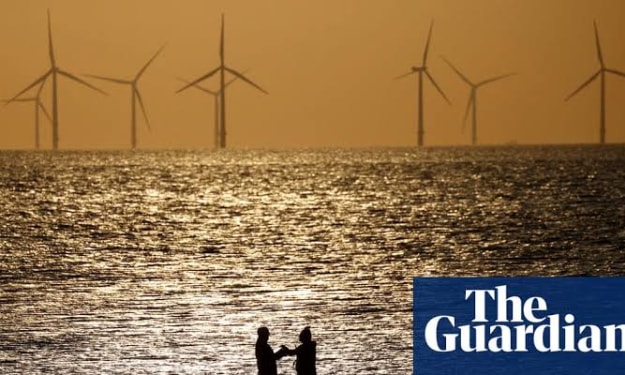
Britain must accelerate its transition toward renewable energy sources as geopolitical conflicts continue to drive global energy prices higher, according to leading energy analysts and climate policy experts. The warning comes as wars and political tensions across key energy-producing regions expose the vulnerability of countries still heavily reliant on imported fossil fuels. In recent years, the United Kingdom has made significant progress expanding renewable energy capacity, particularly in offshore wind and solar power. However, experts argue that the pace of the transition remains insufficient to shield the country from the volatility of international energy markets. Conflicts in the Middle East and Eastern Europe have demonstrated how quickly supply disruptions can translate into rising costs for households and businesses. Energy economists say the lesson from recent global crises is clear: the more dependent a country is on imported oil and gas, the more exposed it becomes to geopolitical shocks. Britain imports a substantial portion of its natural gas and refined fuel products, meaning instability in global supply chains can quickly affect domestic energy bills. During periods of international conflict, oil prices often spike due to fears that shipping routes or production facilities could be disrupted. Even rumors of attacks near key energy chokepoints — such as major pipelines or shipping lanes — can cause markets to react sharply. These fluctuations, analysts say, ultimately filter down to consumers through higher electricity and heating costs. Renewable energy sources offer a potential solution to this problem because they rely on domestic resources such as wind and sunlight rather than imported fuels. Once renewable infrastructure is built, operating costs remain relatively stable because there is no need to purchase fuel on global markets. The United Kingdom already operates some of the world’s largest offshore wind farms, and renewable energy now accounts for a significant share of the country’s electricity generation. Government data indicates that wind power alone has become one of the largest sources of electricity in Britain, particularly during periods of strong weather conditions. Despite this progress, energy specialists argue that further investment is essential. Expanding renewable generation capacity requires not only building more wind and solar farms but also upgrading the national electricity grid. A modernized grid would allow energy produced in remote offshore locations to be transmitted efficiently to cities and industrial centers. Energy storage is another critical piece of the puzzle. Because renewable sources like wind and solar are intermittent, large-scale battery systems or alternative storage technologies are needed to ensure a stable supply of electricity during periods when generation drops. Developing these systems will require both technological innovation and sustained financial investment. Some experts also emphasize the importance of diversifying the country’s renewable portfolio. While offshore wind remains a cornerstone of Britain’s energy strategy, solar power, tidal energy, and green hydrogen could also play important roles in the future energy mix. The government has already announced plans to increase renewable capacity dramatically over the next decade. Officials argue that reducing reliance on fossil fuels will not only strengthen national energy security but also help the country meet its climate targets. However, critics say policy uncertainty and slow planning approvals have sometimes delayed renewable projects. Industry leaders have urged authorities to streamline regulatory processes and provide clearer long-term incentives for investors. For many analysts, the link between energy security and climate policy has never been more obvious. Wars and geopolitical tensions have shown that fossil fuel dependence can create economic vulnerability, while domestically produced renewable energy offers greater stability. “The global energy system is changing,” said one energy policy researcher. “Countries that invest early in renewable infrastructure will be better protected from geopolitical shocks and price spikes.” As international conflicts continue to reshape global energy markets, the debate over Britain’s energy future is likely to intensify. For supporters of renewable power, the current moment represents both a warning and an opportunity — a chance to accelerate the transition toward a more secure and sustainable energy system.
By Fiaz Ahmed 7 days ago in Earth
Becca
"Everything is so... flat." Denille said stupidly as she looked around her new neighborhood. She looked around at the muted desert where even the smallest sign of life seemed to have given up. The plant life was shrubs that were half cooked by the heat and where there should have been a lawn, a mess of white rocks laid glistening in the sun. Even the sky looked stretched thin, like the sun had ironed it smooth. She’d moved from Riverside, where at least there were hills, but here in Barstow, everything felt baked and brittle.
By Sara Wilson8 days ago in Fiction



Comments
There are no comments for this story
Be the first to respond and start the conversation.