
Things That Could Destroy Earth
Exploring the Most Devastating Scenarios for Our Planet's Future

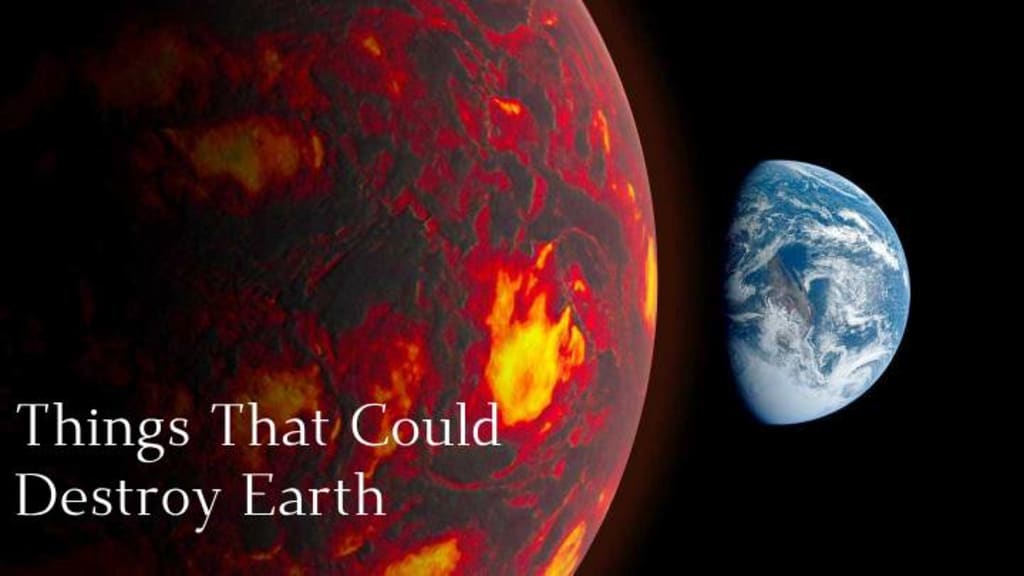
Our planet has survived billions of years of catastrophic events that shaped the world we live on now, but one day, an event so disastrous will destroy this floating rock and end this experiment known as humanity. After considering many possibilities, we've narrowed down our list to the top seven Earth-shattering events. Would we be sucked into an endless void? Could a second star appear and fry our planet? Or is death waiting just below Earth's crust?
Whether it was the breakup of Pangaea or the meteor that took out the dinosaurs, Earth has experienced multiple apocalyptic events. These events changed our planet's geography while ushering in new ages for the life forms that followed, and that includes us, often at the expense of the creatures that were already here. But somewhere in our planet's future lies an extinction event so devastating that it might not simply take out all of humanity but Earth as well. In a matter of time, our world could return to dust. So, what would it take to rip apart the Earth completely?
Stargazing can bring a sense of wonder that calms your mind, but that may be over now because that shooting star you spotted isn't here to grant your wish—you may want to duck.
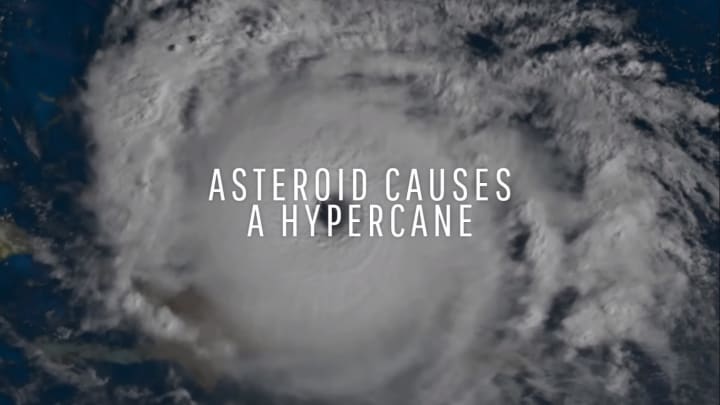
Hurricanes remain one of the most deadly natural events on our planet and leave a trail of death and destruction wherever they land. But if an asteroid hits an ocean with enough force and heat, hurricanes would seem like fluff balls compared to what would come next. A big enough asteroid would superheat the oceans to over 49°, setting off a massive storm known as a hypercane. Winds would move as fast as the speed of sound, and clouds would reach heights of up to 40 km. The winds would shoot water and aerosols into the stratosphere, destroying the ozone layer. So, even if the winds didn't carry you into space, you could get fried by the radiation on Earth's surface.
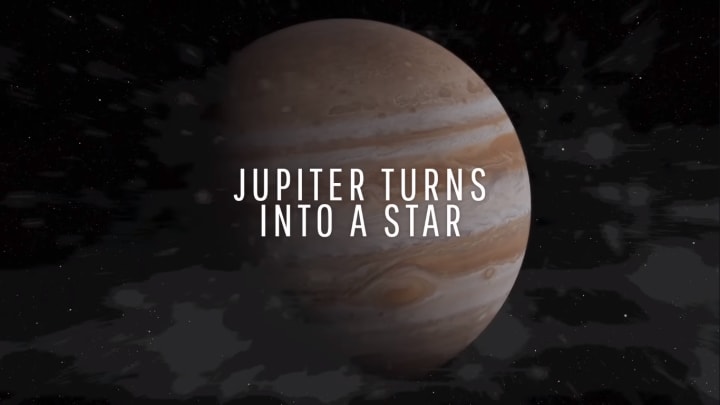
This gas giant has twice the mass of all the planets in our solar system combined, and the gases swirling around inside Jupiter's atmosphere are the same material that makes up the Sun. But if Jupiter became 1,000 times more massive, that distant yellow dot would wreak havoc on our planet. With that much mass, Jupiter would turn into a star. Since this new star would be right in the middle of the solar system, planetary bodies would change their orbits. Earth could get pulled in closer to Jupiter and get scorched by the heat coming off the former planet, or even worse, gravitational forces could make our world a rogue planet. This means we'd be sent away into space, outside the solar system, endlessly roaming the universe in search of a new home. Without the heat of the sun to keep us warm, the surface of the Earth would freeze over, killing all life on our planet.
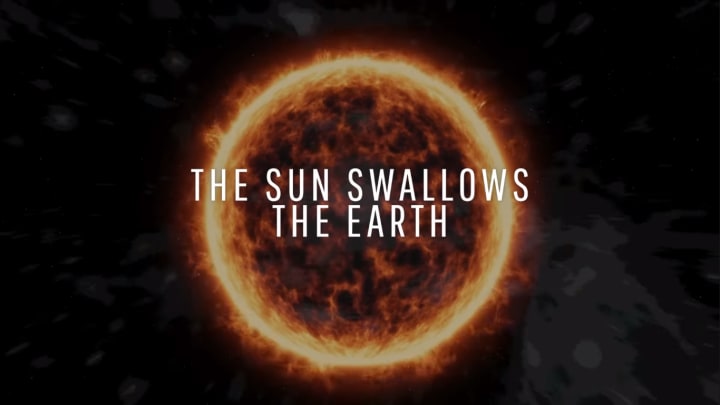
But maybe we shouldn't focus on a star that hasn't formed yet and concentrate on the one we have. After all, this ball of gas makes life possible on our planet. But since it burns through 600 million tons of hydrogen every second, it's only a matter of time before this power source is used up. When that occurs, the sun's core will become saturated with helium and begin to shrink. The increased pressure and temperature would cause the sun to spit out massive amounts of energy. The sun's outer layers would expand, creating a deadly heatwave on Earth. Our oceans would evaporate into thin air, and the radiation would scorch the planet's surface. Finally, the sun, once the giver of life, would swallow up what's left of our molten planet. If the Sun keeps expanding, our solar system would face a new threat.
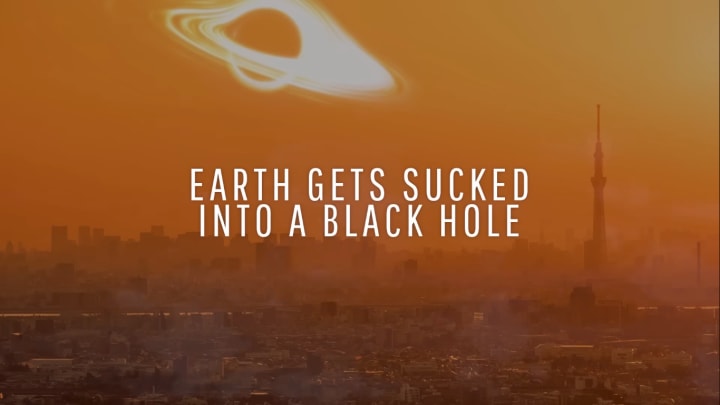
Oh man, it just keeps getting worse. If the Sun gains even more mass before collapsing, you could witness the birth of one of the most mysterious forces in the universe—a black hole. The gravitational pull of this void can rip apart other stars and planets. Right now, the Sun is too small to create one of these catastrophes. But if a black hole appears in front of Earth, the uneven gravitational pull would start deforming the planet. Earthquakes and volcanic eruptions would break out all over the planet, and as you come closer to the black hole's event horizon, this monster might stretch out this world like a rubber band. A black hole sucks in matter by compressing it horizontally, making it look like a noodle. We call this spaghettification. Every bit of our planet would be stretched into a string of atoms and fed into this hungry void.
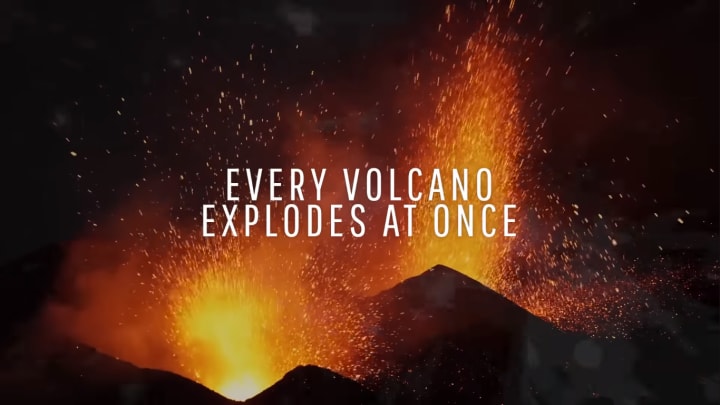
Do you think Earth's future couldn't get any worse? Well, this is a scenario to consider. Right now, 10 to 20 volcanoes are erupting across our planet, spewing ash and gas into the atmosphere. But if every volcano on Earth exploded at once, you couldn't escape the fumes and heat no matter where you live. Rocks reaching 1,000° would travel as fast as 700 km/h. With such a massive amount of molten rock slamming onto the surface, the planet could lose its balance, and the poles could realign. A thick layer of ash and gas would suffocate Earth and eventually block out all the sunlight. While the lava cools, the temperature on Earth would drastically drop, sending us into another ice age. While this event wouldn't necessarily end our entire planet, it would destroy any chance of sustaining life until those clouds clear up.
The Earth makes one full rotation on its axis every 23 hours, 56 minutes, and 4.1 seconds. It's not moving at the same speed everywhere. The rotational speed varies depending on your distance from the poles. If you're at the equator, it moves the fastest at a rate of 460 m/s. At the North or South Pole, it's moving the slowest—technically, it's not moving at all. This rotation makes Earth suitable for life. The diurnal cycle, or the shifting between day and night, helps keep the planet at a habitable temperature. Earth's rotation is the driving force of weather patterns. Even tides are affected by the Earth's spin. So, if we were to accelerate this rotation, would we completely destabilize the climate? If you increased the rotational speed by 0.45 m/s, our days would be shorter by a minute and a half. You might not even notice the change, but even with this slight increase, sea levels would rise by several centimeters. The water around the poles would migrate toward the equator. If you increased this acceleration to 45 m/s, a single day would be about 22 hours. You'd start to feel confused, almost like jet lag. We'd also need to add a few more days to the year, but for sea levels, it would be a dramatic change. The world's oceans at the equator would rise by as much as 9 to 20 meters. Places like New York, Venice, and Mumbai would be submerged. Millions of people would be displaced.
Now, if we doubled the current rotation speed to 920 m/s, disaster would strike. Water would cover everything except for the highest mountains, like Kilimanjaro or the highest summits of the Andes. Satellites orbiting the planet would be out of sync, as they need to orbit at a speed that matches our rotation. This would disrupt communications, television broadcasting, and military operations. You'd notice some significant weather changes. The air would be heavy with moisture, dense fog clouds, and constant rain would be the norm in regions near the equator. If you keep speeding things up, at some point, you could fly off the planet. That's because the centrifugal force of the rotation would be enough to overcome the gravity keeping you on the surface. This would happen at a speed of 7,886 m/s. You'd experience reverse rain, with droplets of water moving upward in the atmosphere instead of falling. If you pushed the speed to 11,000 m/s, the Earth's crust would begin to flatten at the poles and bulge around the equator. Enormous earthquakes would rattle the planet. There would be little chance that anything on Earth could survive. But if you were to crank the velocity up some more, brace yourself. If the Earth rotated at the speed of light, things would get wild. At this extreme speed, time on Earth would slow down so much that it would eventually stop. You'd freeze in time, hopefully caught in a good moment. Earth could become a tiny black hole, as an object moving at the speed of light has infinite mass. Nothing would make it out of this situation alive.
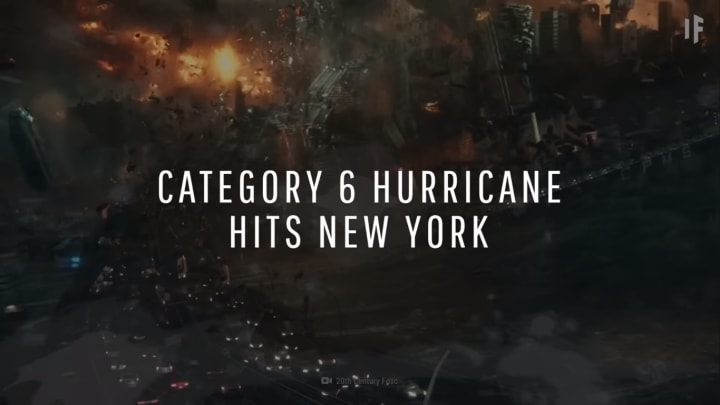
A Category 6 hurricane is about to rock New York. Category 5 is the highest classification a storm can get, with wind speeds of 252 km/h or higher. These storms are catastrophic, destroying homes, rendering large areas uninhabitable, and causing power outages that could last for weeks or even months. But with the warming effects of climate change on our oceans and atmosphere, a whole new classification could be added to the mix—Category 6, a super storm. This strong storm would make a Category 5 storm seem like a windy walk in the park. The very first seed of this tropical storm would form in October, late into hurricane season. It would start as a low-pressure weather system that creates clouds and thunderstorms. Ten days later, this tropical wave, as it's known, would evolve into a tropical storm in the Caribbean. But it wouldn't stop there. After a few more days, it's officially a hurricane. As it passes over Jamaica and Cuba, it would continue to grow in size and force, climbing from Category 1 to 3, and even up to 5. From New York, you'd see the damage it's causing in its path, but you still wouldn't worry. Normally, these storms curve east and out to sea before they hit you. This time, you wouldn't be so lucky. Three weeks after it began, the storm
About the Creator
Sheko
Unlock Attraction Mastery with Sheko! Discover powerful strategies to exude confidence, stay curious, uphold your principles, and embrace abundance. Attract genuine love and admiration effortlessly. Join me and magnetize hearts!
UK Exposed to ‘Serious Harm’ by Failure to Tackle AI Risks, MPs Warn
The United Kingdom is facing growing warnings from Parliament that its approach to regulating artificial intelligence (AI) could leave citizens and the financial system exposed to serious harm. A recent report by the House of Commons Treasury Select Committee criticizes the government for a “wait-and-see” attitude toward AI risks, especially in financial services.
By Aarif Lashari4 days ago in Earth


Comments
There are no comments for this story
Be the first to respond and start the conversation.