
“The Year I Stopped Saying I’m Fine”
A deeply personal essay about learning to stop performing emotional perfection — about choosing honesty over comfort.
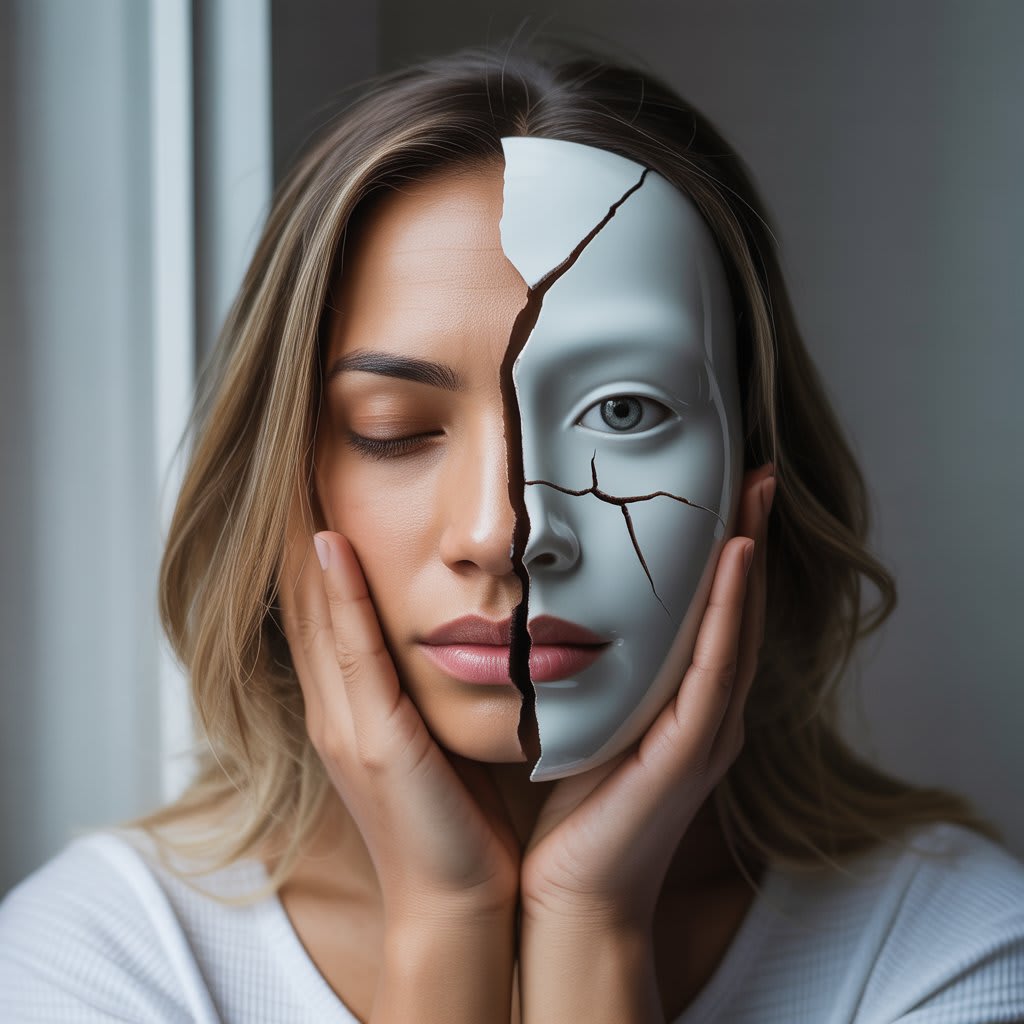
The Year I Stopped Saying I’m Fine
It happened quietly — not in some grand, cinematic breakdown, but in the small, unremarkable moments between conversations. The year I stopped saying “I’m fine” didn’t begin with fireworks or resolutions. It began with exhaustion. Not the kind that sleep can fix, but the kind that sits in your bones and makes even breathing feel like an act of performance.
For as long as I can remember, “I’m fine” had been my favorite disguise. It fit every situation. It worked when I was falling apart and when I didn’t know what I was feeling at all. It was my shield — neat, polite, socially acceptable. It let people move on without awkward pauses. It allowed me to keep pretending that everything inside me wasn’t quietly unraveling.
But at some point, pretending became heavier than the truth.
It started one morning at work. A coworker asked, “How are you?” and I opened my mouth to give the usual answer — but the words got stuck somewhere between my throat and my heart. I wanted to say, Actually, I’m tired. I feel invisible. I don’t know what I’m doing anymore.
Instead, I just stood there, blinking, unable to lie, unable to tell the truth. So I shrugged.
“Honestly?” I said, surprising even myself. “I don’t know.”
It wasn’t a confession. It was a small crack in the armor. And once that crack appeared, it started to spread.
That year, I noticed how often people hide behind “I’m fine.” How it slips out like muscle memory. I heard it in my friends’ voices — brittle, rehearsed, too quick. I saw it in my mother’s eyes when she smiled through grief, in my brother’s silence when he didn’t want to talk about his anxiety.
We were all fluent in the same language of emotional evasion.
And yet, the more I listened, the more I realized how much we all longed for honesty. For someone to say, No, I’m not okay. I’m trying, but I’m not okay.
That simple truth — so human, so imperfect — felt like a form of courage.
So I started experimenting with honesty. Small doses at first. When a friend asked how I was doing, I said, “I’ve had better days.” When my mother asked if I was happy, I told her, “I’m figuring it out.” The world didn’t collapse. Nobody ran away.
Instead, something unexpected happened — people started telling me the truth back.
A friend confessed that her marriage was falling apart. My brother admitted that he’d been struggling with panic attacks. Even my boss, who had always been composed and untouchable, shared that she’d been going to therapy after her father’s death.
It was like honesty created this invisible permission slip — an invitation to step out from behind the performance and breathe.
The irony is, the more honest I became about not being fine, the better I actually felt.
Not instantly — not magically — but gradually, like loosening a knot that had been there for years. I realized that pretending to be okay had been its own kind of loneliness. I was surrounded by people but hidden behind my own façade. When I dropped it, I started to feel connected again — to others, yes, but also to myself.
There were still hard days. Days when honesty felt like standing naked in a room full of people. Days when vulnerability felt dangerous. I grew up in a family where emotions were tidied up, not unpacked. We dealt with sadness by cleaning, anger by silence, and fear by avoidance. To admit that you were struggling was to admit failure. So unlearning that conditioning was a slow, messy process.
But something shifted when I began to speak the truth, even in small, trembling sentences.
“I’m lonely.”
“I don’t know what I want anymore.”
“I’m trying to forgive myself.”
Each time I said something real, the world didn’t end — it expanded.
I started noticing beauty in quiet honesty. Like when a friend texts, Today was rough, but I made it through. Or when a stranger online writes about their anxiety, and thousands of people respond with empathy. There’s something profoundly sacred about that kind of openness. It reminds me that imperfection isn’t weakness — it’s what makes us human.
By the end of that year, I stopped performing happiness. Not because I had figured everything out, but because I had finally learned that I didn’t need to. Life isn’t about maintaining an image of emotional perfection; it’s about being real in the middle of uncertainty.
Now, when someone asks me, “How are you?” I pause before answering.
Sometimes I say, “I’m okay, but it’s been a hard week.”
Sometimes I say, “I’m tired, but hopeful.”
And sometimes, when I truly don’t know, I simply say, “I’m still learning.”
Because that’s the truth — I’m still learning how to live honestly, how to let people see the cracks instead of constantly polishing the surface.
And maybe that’s what being human really means — not being fine, but being
About the Creator
Could World War III Be Coming Soon?
The idea of World War III often appears in news discussions, political debates, and public imagination. After the devastating impact of World War I and World War II, humanity has become deeply aware of the catastrophic consequences of global war. Today, when international tensions rise, many people wonder whether the world could again face a conflict on such a massive scale. While no one can predict the future with certainty, understanding the current global situation can help us evaluate whether a third world war is truly likely.
By shaoor afridia day ago in Earth
From ad men to mad men
It's after 2am in the morning when a local police patrol vehicle in Northern New Jersey spots a figure costumed as Quasimodo, The Hunchback of Notre Dame, proceeding southbound on the sidewalk along Lydecker Street. Though the hunchback’s costume stuffing offers added insulation, it's January, and friggin’ freezing. Carefully, the officers slow down, gently question the subject, and offer him a ride home.
By David W. Maury3 days ago in Humor




Comments
There are no comments for this story
Be the first to respond and start the conversation.