
The World’s Most Grueling Race Journeys 1,000 Miles Down the Yukon
In a test of skill and courage, competitors navigate dangerous river rapids, narrow channels and rummaging bears in the wilds of Alaska and Canada

It’s not clear who first discovered the gold.
Even that word “discovered” is a misnomer. The local Tlingit and Tagish tribes were both well aware of its presence along the river decades before Westerners started drawing it from the ground; they’d simply had no use for the stuff. Perhaps it’s better to say it’s not clear who first exploited the gold—who helped inspire some 100,000 prospectors to make the arduous trip to the Yukon Territory in northwest Canada, a migration that became known as the Klondike Gold Rush.
Some say it was George Carmack, an enterprising American who had made a career searching for bullion in Canada and Alaska, who first found this lustrous natural resource along the bed of the Klondike River. Others credit Carmack’s brother-in-law, a Tagish man named Keish (better known to family and friends as “Skookum Jim”), who, some believe, ceded his right of excavation to Carmack out of fear that the Canadian government wouldn’t acknowledge an Indigenous claimant. Whatever the case, in 1896 Carmack staked the first federally recognized claim to the gold in that section of the tributary.
Word of the precious metal’s presence quickly spread through Canada and the United States. By 1897, the gold rush was in full effect, drawing in ramblers the world over, some of whom would go on to achieve phenomenal success and notoriety: people like former Washington governor John McGraw; the scout Frederick Russell Burnham; Frederick Trump, businessman and grandfather of America’s 45th president; and the novelist Jack London, who once wrote of the vast and mountainous region: “There you get your perspective.”
London’s sentiment still rings true, long after that gold-infused stampede has died down. The untouched grandeur of the Yukon is still as intoxicating as ever, and it still attracts thousands—only these days, many are seeking not wealth but pure adventure.
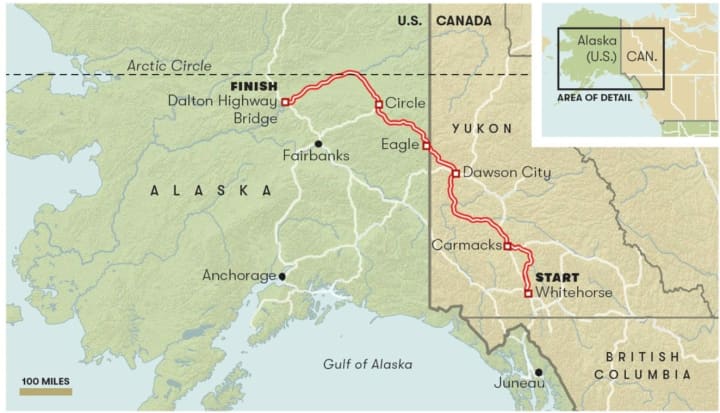
On a balmy July day, I sat with several dozen people in the Sternwheeler Hotel & Conference Center in downtown Whitehorse, a city of 28,000 on the territory’s southern edge, where a group of paddlers had come to break records and write themselves into the history of this landscape. It was here, among the chintzy chandeliers and brown carpeting, that preparations were underway for the world’s longest canoe race, a 1,000-mile odyssey down the Yukon River, and the event’s organizer, Jon Frith, was telling the competitors all the ways they might perish on their journey.
Simply getting a spot in the 2022 Yukon 1000 was more competitive than getting into an Ivy League university. Over 3,500 teams applied; only 40 were deemed fit for the journey, and a mere 24 actually started the race. Participants must demonstrate paddling ability and wilderness acumen, and in Frith’s words, must “be grown up about the whole thing.” That means demonstrating self-sufficiency on the river and showing complete deference to Frith and his handful of volunteers.
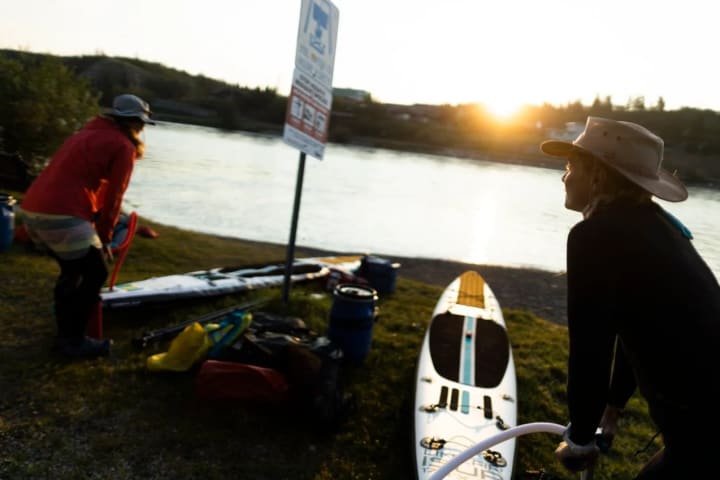
The racers each pay 3,150 Canadian dollars for entrance and come from all over the world. Most of them looked manic. At least, that’s how it seemed to me as I watched them prepare for launch the next morning. On the bank of the Yukon River in downtown Whitehorse, a small contingent of paddle-clutching fiends raced to secure sundry items to their vessels. Food, clothing, water purifiers, bear spray (also apparently effective on moose), maps, satellite phones—all lashed down to their respective conveyances.
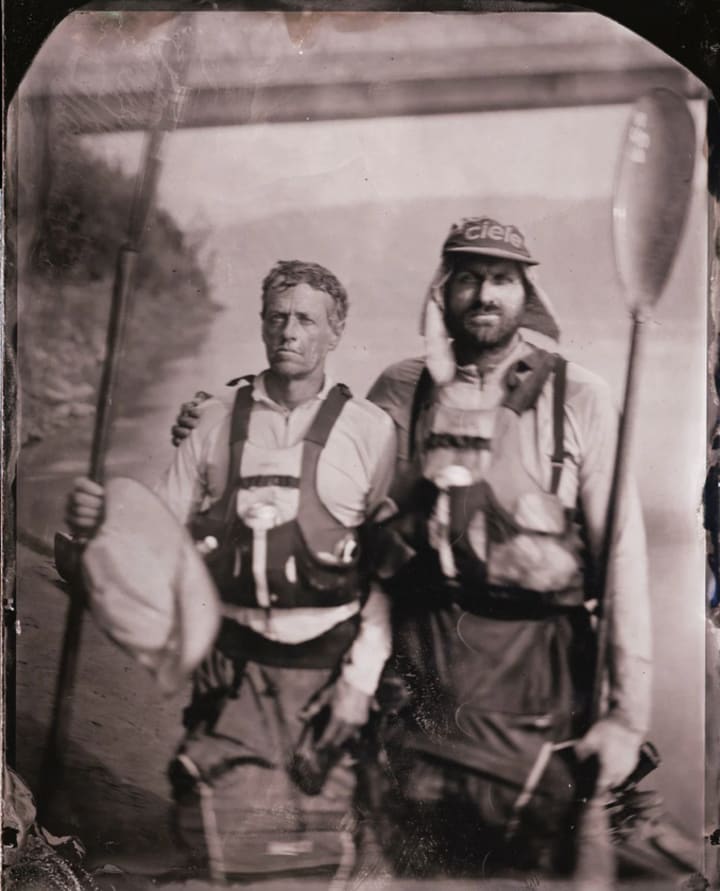
I watched them drift into view around the bend. They landed with little fanfare, just scattered cheering from the volunteers and disqualified racers assembled on the shore, plus the occasional glance from a local fisherman. Frith handed each of the men a beer and a small commemorative coin, the latter of which, in the spirit of his martial days in England, he asked that they only look at later, in a moment of privacy. And that was it. The racers chatted with Frith for a few minutes and quietly hauled their boats out of the water. The victors were humble and affable, a ragtag embodiment of the explorer ethos celebrated in another poem by Robert Service:
About the Creator
Mark Xavier
typing...
Keep reading
More stories from Mark Xavier and writers in Earth and other communities.
Early Apes Lived on Savannahs, Not in Forests
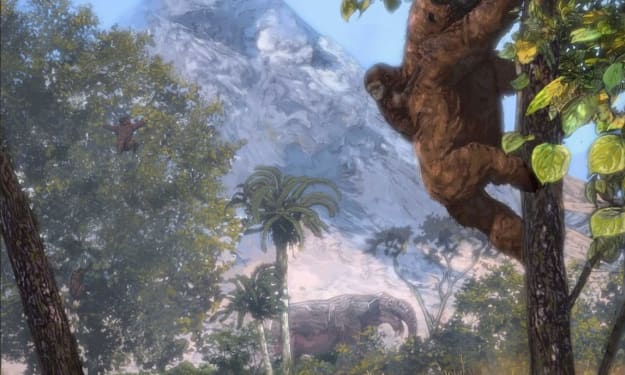
Apes were supposed to be tied to the trees. Around 21 million years ago, during a time paleontologists know as the Miocene, what’s now Uganda was thought to be a lush, humid forest where early apes clambered over canopy branches in search of fruit. But a pair of new studies have overturned the established view, changing the setting in which paleontologists think the first apes evolved.
By Mark Xavier3 years ago in Earth
Birds with Wild Hairdos
Cockatoos are known for their expressive crests, which they raise or lower depending on their mood. The crests can be white, yellow, or pink. These charismatic birds are native to the Australian continent, the islands of the Indo-Australian archipelago, and parts of New Guinea. There are 21 different species of cockatoo, varying in size from the diminutive Galah to the imposing Sulphur-crested Cockatoo. Most cockatoo species are highly social birds, forming strong pair bonds that often last a lifetime. Cockatoos are primarily herbivores, with a diet consisting of seeds, nuts, fruits, roots, and occasionally insects and larvae.
By Rasma Raisters2 days ago in Earth
Regenerative Agriculture's Quiet Revolution
by Futoshi Tachino Regenerative agriculture — a holistic approach to farming that restores soil health, biodiversity, and resilience — has rapidly gained traction in recent years. This shift remains largely underappreciated by the public; in a 2024 survey, around 43% of U.S. consumers had never heard of regenerative agriculture (and another 28% had only minimal awareness) [4]. Despite this low profile, tangible developments in regenerative farming are delivering robust results. Farmers are proving that it’s possible to maintain high yields with fewer chemical inputs, improve profitability, and enhance ecological outcomes — all at once. This article explores the evidence-backed progress of regenerative agriculture across regions, the policies and technologies driving its adoption, and why this overlooked sustainability success story deserves greater recognition.
By Futoshi Tachino7 days ago in Earth


Comments
There are no comments for this story
Be the first to respond and start the conversation.