
The World Map in 2025: Redrawn by Climate, Conflict, and Code
How Three Forces Are Reshaping Our Planet

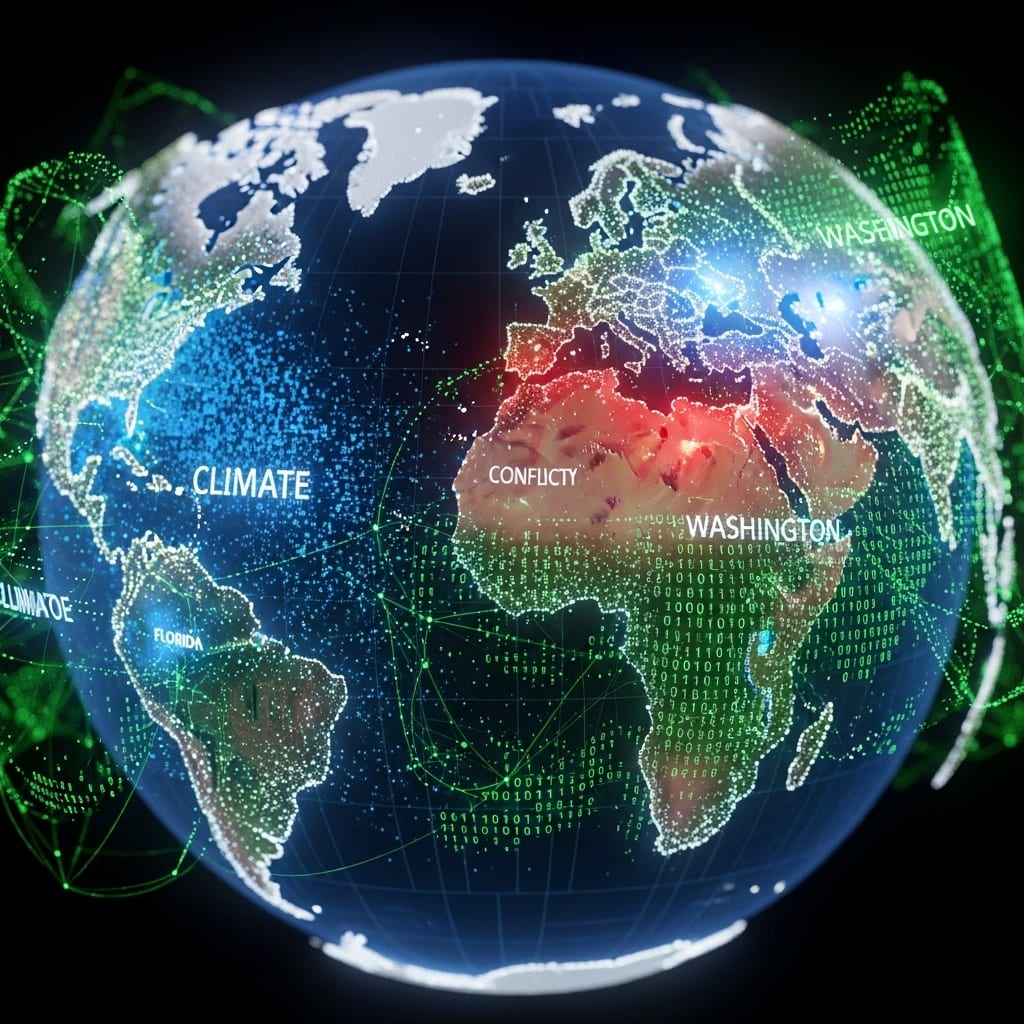
THE WORLD MAP IN 2025: REDRAWN BY CLIMATE, CONFLICT, AND CODE
WRITTEN BY: LEGANCY WORDS
Look at a world map from 1990. Then look at one from today. The differences seem subtle—a new country here, a changed border there. But the map isn't just lines on paper; it's a living document of human ambition, fear, and power. As we speed toward 2025, the forces redrawing our planet are accelerating, creating a new global landscape shaped by three powerful forces: a changing climate, shifting conflicts, and the silent war of technology.
The Coastlines: A Map Eroded by Water
The most dramatic changes to the world map won't come from treaties, but from tides. By 2025, climate change is no longer a future threat; it's a present-day cartographer.
· Sinking Megacities:
Jakarta, Indonesia, is sinking at an alarming rate. While its complete disappearance is further off, 2025 will see the accelerated, controversial relocation of its government functions to the new capital, Nusantara, on Borneo. This isn't just a political move; it's the first major acknowledgment of a climate refugee crisis on a governmental scale. On the other side of the world, maps of coastal Florida and Louisiana will need more frequent updates as shorelines retreat and "100-year floods" become annual events.
· The Arctic Rush:
The most significant territorial changes are happening at the top of the world. As Arctic ice recedes at a record pace, new sea lanes are opening. The Northwest Passage is becoming a seasonal reality, cutting thousands of miles off shipping routes. This has triggered a quiet but intense scramble among Russia, Canada, the U.S., and Nordic nations. Maps will increasingly show extended economic zones and military installations in the Arctic Circle, a new frontier for resource extraction and potential conflict.

The Battlefields: A Map Redrawn by War and Influence
The world's political borders are still shifting in 2025, not with the grand declarations of the past, but through prolonged conflict and economic coercion.
· The War in Ukraine:
The conflict continues to be a brutal line of demarcation between East and West. Every village gained or lost subtly alters the map. More importantly, it has redrawn the map of global alliances. Finland and Sweden's entry into NATO has significantly extended the alliance's border with Russia, a major strategic shift visible on any political map.
· The Shadow of China:
While not conquering nations by traditional war, China's influence is redrawing the map of the Indo-Pacific through its "String of Pearls" strategy. Military and commercial ports in Pakistan, Sri Lanka, and Africa extend its reach. Meanwhile, its unwavering support for Russia and deepening ties in the Middle East and Global South are creating a new world order with two distinct power blocs, a divide more economic and ideological than cartographic, but no less real.
The Digital Frontier: The Invisible Map That Rules Everything
The most profound change to the world map in 2025 is one you can't see. It’s a digital layer superimposed over the physical one.
· The Cyber Sphere:
National borders are meaningless in cyberspace. A hacker in North Korea can destabilize a hospital in Texas. A disinformation campaign from a troll farm can swing an election in Europe. The most important "territories" in 2025 are digital: social media platforms, financial networks, and AI infrastructure. The nations that control these domains control the new high ground.
· The AI Race:
The world is bifurcating into two tech spheres: one led by the U.S. and its allies, and another by China. This is creating a "splinternet" or a "tech cold war." The chips that power AI are the new oil, and access to them is the key to future economic and military dominance. This divide won't show up on a map of continents, but it will define global power more than any border wall.
The Bottom Line
The world map in 2025 is a paradox. It is both more connected than ever through digital networks and more divided by new iron curtains of ideology and technology. The age of simple, static maps is over. We now live in a world of fluid borders, where a coastline can retreat, a cyberattack can be more devastating than a tank, and a new capital city can be built from scratch to escape the water.
To understand the future, you can't just look at a map. You have to look at the data beneath it, the water rising around it, and the silent code that powers it all. The great game of the 21st century is underway, and the board is being redrawn in real-time.
About the Creator
LegacyWords
"Words have a Legancy all their own—I'm here to capture that flow. As a writer, I explore the melody of language, weaving stories, poetry, and insights that resonate. Join me as we discover the beats of life, one word at a time.
Keep reading
More stories from LegacyWords and writers in Earth and other communities.
The 2025 Pakistan Floods: A Nation Underwater Again
Title: The 2025 Pakistan Floods: A Nation Underwater Again Subtitle: A catastrophic monsoon season, amplified by glacial melt and climate vulnerabilities, leads to unprecedented loss of life, property, and economic stability.
By LegacyWords6 months ago in Earth
Man (22) Charged With Murder of English Tourist in Temple Bar
Arrest and Formal Charges A 22-year-old man has been charged with the murder of an English tourist following a fatal incident in Dublin’s Temple Bar area. The charge comes after an intensive Garda investigation into events that unfolded in one of Ireland’s busiest and most popular nightlife districts.
By Aarif Lashari3 days ago in Earth
Flower Bloom 369
FLOWER Bloom 2/25/26 Wednesday By Mariann Carroll Karen had been with Tony for 7 years. Tony started acting strangely after her surgery. He would mow the lawn in the rain and be on his cellphone. He started pushing Karen away. Tony came clean about seeing someone. Karen moved out two months later. Karen moved in with a friend. She felt betrayed.
By Mariann Carroll5 days ago in Fiction




Comments
There are no comments for this story
Be the first to respond and start the conversation.