
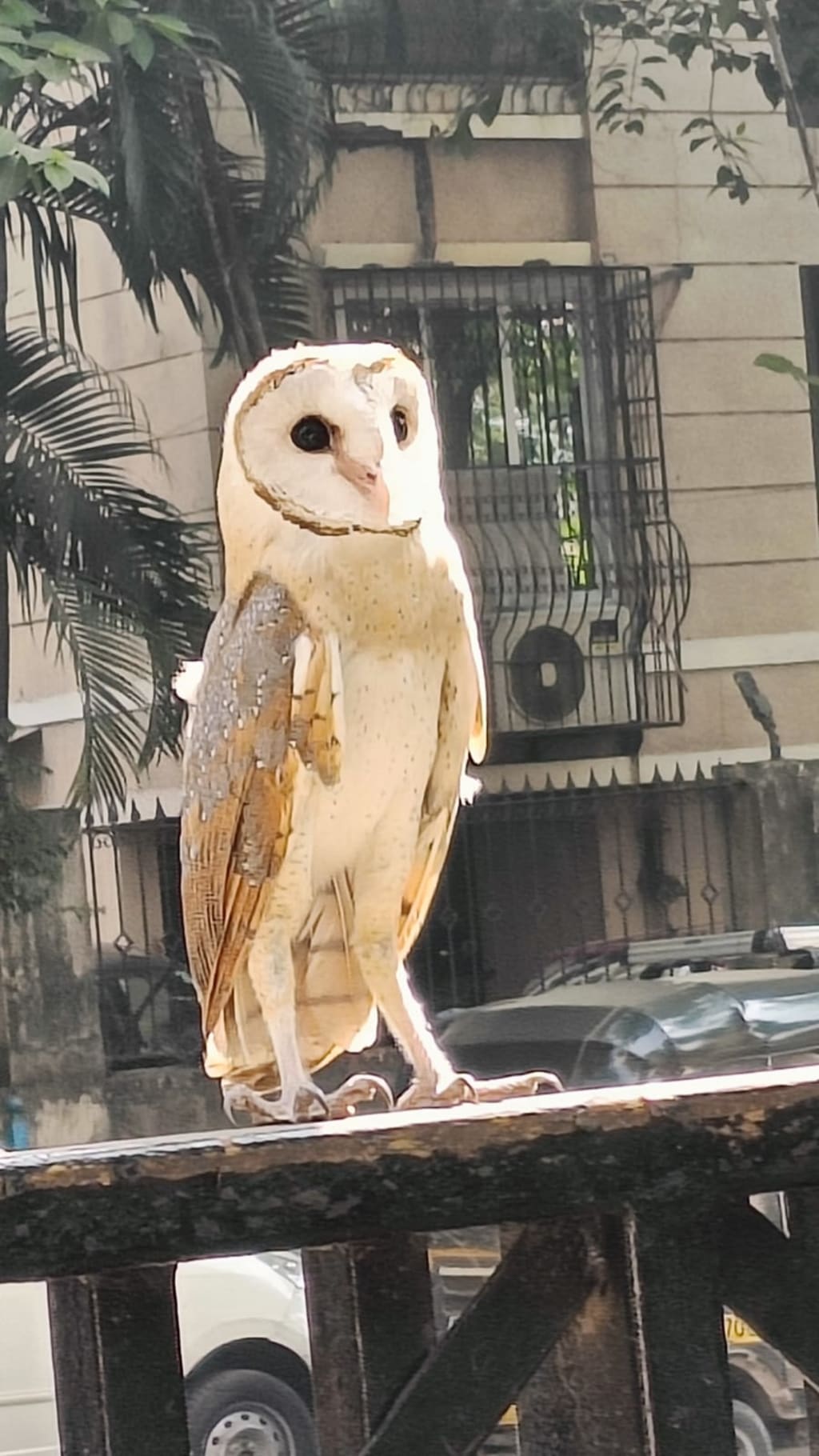
The Indian subcontinent is home to a diverse range of avian species, each with unique ecological roles and cultural significance. Among these, the White Indian Owl, scientifically known as Tyto alba, and commonly referred to as the Barn Owl, holds a special place. With its ghostly appearance, silent flight, and piercing gaze, this nocturnal bird has fascinated humans for centuries—evoking awe, mystery, fear, and reverence.
In this article, we explore the biology, habitat, behavior, ecological importance, cultural significance, and conservation status of the White Indian Owl in detail.
1. Scientific Classification and Physical Description :
- Common Name: White Indian Owl / Barn Owl
- Scientific Name: Tyto alba
- Family: Tytonidae
- Order: Strigiformes
- IUCN Status: Least Concern
The White Indian Owl is easily recognizable due to its striking appearance. Unlike many other owls, it has a heart-shaped facial disc, which is white or light cream in color and framed with a golden or brownish rim. Its eyes are small and dark, contrasting with the pale face. The plumage on its back is typically golden-brown with grey and white specks, while its underparts are pale, ranging from white to light buff.
Adults usually measure 33 to 39 cm in length, with a wingspan of 80 to 95 cm, and weigh between 400 to 700 grams, with females generally being larger than males.
2. Distribution and Habitat
The White Indian Owl has one of the widest distributions of any bird species. It is found across all continents except Antarctica. In India, it is widespread and can be seen in both rural and urban areas.
Preferred Habitats:
- Agricultural fields
- Forest edges
- Villages and farmlands
- Abandoned buildings and old temples
- City outskirts and suburban gardens
Unlike forest-dwelling owls, the barn owl prefers open landscapes, which allow for easy hunting. It also adapts well to human-modified environments.
3. Behavior and Adaptations
a) Nocturnal Nature
The White Indian Owl is primarily nocturnal, being most active during dusk and early night. However, it can occasionally be spotted hunting in the early morning or late afternoon, especially if food is scarce.
b) Silent Flight
A defining feature of this owl is its silent flight, enabled by specialized feathers that reduce sound. The leading edges of the flight feathers have a serrated design, and the rest of the plumage is soft and velvety, which minimizes turbulence.
This silent movement allows it to sneak up on prey undetected, giving it a significant advantage.
c) Exceptional Hearing
One of the most extraordinary traits of the barn owl is its acute sense of hearing. Its asymmetrical ear placement allows it to pinpoint the exact location of prey even in complete darkness.
Researchers have observed that barn owls can catch mice solely by sound, even when the prey is hidden beneath vegetation or snow.
4. Diet and Hunting Strategy
The diet of the White Indian Owl primarily consists of:
- Rodents (especially rats and mice)
- Small birds
- Frogs
- Insects
- Occasionally bats
These owls play a crucial ecological role in controlling rodent populations, especially in agricultural regions. A single barn owl family can consume thousands of rodents in a breeding season, making them natural pest controllers.
Hunting Technique:
Barn owls usually fly low over fields, scanning the ground using their sharp vision and keen hearing. Once prey is detected, they swoop down with great speed and accuracy, capturing it with their strong talons.
5. Breeding and Lifecycle
In India, breeding can occur throughout the year, but peak nesting is often observed during February to May. Unlike some birds that build nests from twigs and leaves, the barn owl uses natural cavities or man-made structures such as holes in buildings or trees.
Nesting Facts:
- Clutch Size: 3 to 7 eggs
- Incubation Period: Around 30 days
- Fledging Period: Young owls leave the nest about 7–9 weeks after hatching.
The female incubates the eggs while the male provides food. After hatching, the chicks grow rapidly and begin practicing flight within two months. Despite producing many eggs, survival rates are often low due to predation, food scarcity, and weather conditions.
6. Cultural Significance in India
The White Indian Owl has a deep cultural and mythological presence in India, often viewed through dual lenses of reverence and superstition.
a) Spiritual Symbolism
- In Hindu mythology, the owl is considered the vahana (vehicle) of Goddess Lakshmi, the deity of wealth and prosperity. In this context, the owl is seen as a symbol of wisdom, wealth, and protection.
- During Diwali, especially in rural areas, white owls are sometimes revered as a sign of blessings and fortune.
b) Superstitions and Misconceptions
- Conversely, owls are often associated with **death, misfortune, or black magic in various Indian superstitions.
- Due to its eerie call and nocturnal habits, the owl has historically been considered a bad omen in some cultures.
- In certain illegal rituals, especially those linked to black magic, owls—especially the white barn owl—have been hunted, despite legal protections.
These beliefs have led to the persecution and poaching of owls in various parts of India, especially around festivals and during certain astrological events.
7. Threats and Conservation
Major Threats:
- Habitat loss due to urbanization and agriculture
- Pesticide poisoning from rodent control chemicals
- Electrocution on power lines
- Illegal wildlife trade for black magic and rituals
- Superstition-led killings
Despite being listed as Least Concern by the IUCN, local populations can be threatened in specific areas.
Legal Protection:
- In India, all owls are protected under the Wildlife Protection Act of 1972.
- Capturing, killing, or trading them is a punishable offense.
Conservation Efforts:
- Educating communities, especially farmers, about the ecological benefits of owls.
- Installing owl nest boxes in agricultural fields.
- Encouraging organic farming to reduce pesticide use.
- Celebrating World Owl Awareness Day (August 4) to promote positive understanding.
8. Fascinating Facts About the White Indian Owl
1. Barn owls don't hoot like other owls. Instead, they produce a long, harsh screech.
2. A barn owl can turn its head up to 270 degrees to look behind it.
3. The heart-shaped face works like a satellite dish, directing sound to the ears.
4. Fossil evidence suggests that barn owls have existed for **over 10 million years.
5. They have excellent low-light vision, though they rely more on sound than sight.
9. Human-Owl Coexistence: A Way Forward
The White Indian Owl, despite its eerie reputation, is a friend to farmers, a marvel of evolution, and an essential part of our ecosystem. Promoting coexistence involves not only legal protection but also changing attitudes through awareness and education.
Community-based conservation programs, ecotourism (like owl-watching), and incorporating owls into school curricula can foster a deeper appreciation for these mysterious birds.
Conclusion
The White Indian Owl, with its ethereal presence and silent wisdom, remains one of India’s most intriguing nocturnal creatures. While surrounded by myths and folklore, its real value lies in the role it plays in maintaining ecological balance. As stewards of nature, it's our responsibility to ensure that this enigmatic bird continues to thrive—not just in the shadows of our buildings, but also in the consciousness of our people.
Let the owl not be a symbol of superstition, but a reminder of the magic and balance of the natural world.
---------------
About the Creator
Subhash C
As a naturalist, I am passionate about conservation and educating others about the importance of biodiversity and ecological balance. My work involves field research, wildlife observation, and environmental advocacy.
Heavy Snow Warning: When Winter Turns Dangerous Overnight
A quiet winter evening can quickly turn into something far more serious. The sky grows darker, the wind sharpens, and snow begins falling faster than anyone expected. What starts as a peaceful snowfall can suddenly lead to closed roads, power outages, and difficult travel conditions. This is when a heavy snow warning becomes more than just a weather alert. It becomes a signal that daily life may soon slow down or even stop. For many communities, these warnings bring both beauty and concern. Snow can cover the world in silence, but it can also create dangerous conditions if people are not prepared. Understanding what a heavy snow warning means and how it affects daily life can help individuals and families stay safe when winter becomes unpredictable.
By Muqadas khan5 days ago in Earth


Comments (1)
Very good