
The Use of Mobile Phones
Understanding Their Influence on Communication, Lifestyle, and Society
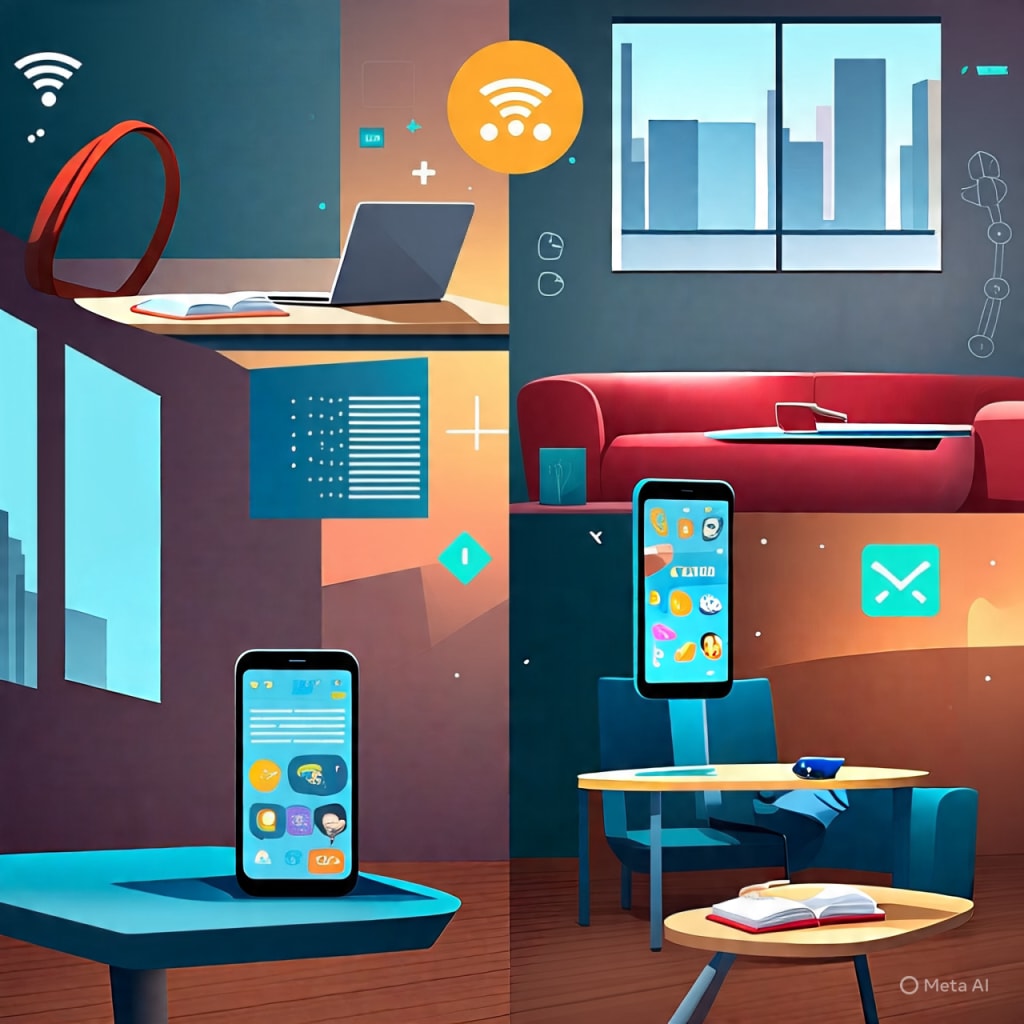
It was 7:00 a.m. when Maya’s alarm rang—an upbeat tune playing from her smartphone. She groaned, reached for it, and hit snooze. Five minutes later, the alarm blared again, and this time, she sat up. She had a full day ahead: classes, errands, and a group presentation to prepare for. Before getting out of bed, she scrolled through her notifications—messages from friends, a reminder from her calendar, and a news update.
This wasn’t unusual. In fact, Maya’s entire day revolved around her phone.
As she got dressed for college, she opened a language-learning app to revise vocabulary. On the way to the bus stop, she called her mother, who lived in another city, and they spoke for a few minutes—a quick check-in. Once on the bus, Maya plugged in her earphones and caught up on a podcast discussing global issues. She felt connected, informed, and somehow, in control.
Across town, Ramesh, a delivery driver in his mid-thirties, checked his route for the day on his phone. Without it, his work wouldn’t be possible. His employer sent customer addresses, and digital payments came through a mobile app. Ramesh often wondered how people managed before smartphones. He used it not just for work, but to talk to his wife during breaks, check cricket scores, and watch short videos to relax.
Meanwhile, in a quiet village 300 kilometers away, twelve-year-old Anjali sat under a tree with her classmates. They crowded around a single smartphone, watching a science lesson downloaded by their teacher the previous evening. The school lacked a computer lab and internet access, but the teacher used his phone to bring in the world outside—a place where rockets launched into space and underwater creatures swam through coral reefs.
For Maya, Ramesh, Anjali, and millions like them, the mobile phone had become more than a gadget—it was a bridge. A bridge between people, opportunities, knowledge, and services.
Later that afternoon, Maya met with her groupmates at the library. They sat together, not with papers and pens, but with phones and laptops. One person gathered research articles, another created slides, and Maya coordinated with a classmate who was joining remotely. The project came together seamlessly.
Yet, not all moments with mobile phones were positive.
That evening, Maya and her friends went out for dinner. They sat around a table, each with a phone either in their hand or next to their plate. The conversation was sporadic—someone paused to reply to a text, another scrolled through social media while waiting for the food. Maya noticed the silence between them. It felt... odd. They were together, but not truly present.
Across the city, Ramesh sat with his son, trying to help him with homework. But his phone buzzed with delivery updates and messages. Each time he looked down at the screen, his son’s frustration grew. “You’re not listening,” the boy finally said. Ramesh sighed, turned the phone over, and promised himself he’d switch it off after dinner.
In the village, Anjali’s teacher held a community session, explaining the benefits—and dangers—of mobile phones. He spoke about how children could be distracted or misled by content online. “It’s a tool,” he said, “and like any tool, it depends on how we use it.”
The next morning, Maya left her phone in her bag during her morning lecture. She found she listened better and took more detailed notes. After class, she sat on a bench outside and watched the campus come to life—students laughing, birds chirping, the soft wind rustling through the trees. She smiled. It felt refreshing.
The world had changed, and so had people. The mobile phone had brought families closer, improved education in remote areas, supported livelihoods, and offered entertainment at one’s fingertips. But it had also blurred the line between personal and digital life, raised concerns about privacy, and at times, replaced real conversations with screen time.
In the end, Maya realized, it wasn’t about using mobile phones less—it was about using them wisely. About knowing when to connect with the world, and when to disconnect and just be.
As she walked to her next class, her phone buzzed. She paused, looked at the notification—and then slid it back into her pocket. Some moments, she knew, were better lived than captured.
About the Creator
Keep reading
More stories from Muhammad Saad and writers in Earth and other communities.
Earth Speaks: The Untold Story of Our Living Planet
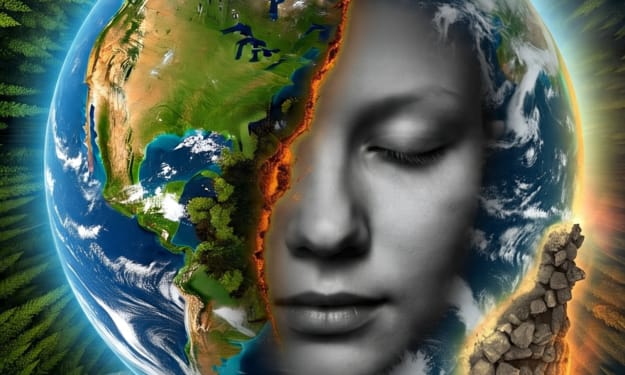
If Earth could speak, its voice might be slow and deep, echoing across valleys and mountains, whispering through leaves and crashing in waves. For 4.5 billion years, it has spun silently through space, bearing witness to cosmic chaos, violent eruptions, mass extinctions, and the rise of an intelligent species—us. Yet Earth is not just a rock hurtling around the sun. It is alive in ways we are only beginning to understand. Its crust shifts and sighs through tectonic plates, its atmosphere breathes with the rhythms of seasons, and its ecosystems are intricate symphonies of life and death. When we pause and listen, Earth speaks—not in words, but in signs, patterns, and warnings. The Ancient Birth of a Blue Planet Long before there was life, Earth was forged from cosmic dust and fire. Volcanic storms raged, seas of lava hardened into crust, and gases formed an atmosphere. Then came a miraculous twist—water. Comets and early volcanic activity may have delivered this precious substance, forming the oceans that would become the cradle of life. Somewhere in those primordial waters, life sparked. Tiny microbes emerged, eventually giving rise to all living things. Earth watched silently as fish took to the seas, plants to the land, and dinosaurs thundered across continents. And then—humans arrived. Humanity: Earth’s Most Talkative Species For the first 99% of our history, we lived in balance with nature. We hunted, gathered, and told stories by firelight. But in the last few centuries, something changed. We industrialized. We burned coal, then oil, then forests. We built cities that never sleep and machines that never stop. Earth began to speak louder. Through rising temperatures, melting glaciers, and increasingly violent storms, the planet now sends unmistakable signals. The last eight years have been the hottest on record. Wildfires burn longer, oceans rise faster, and species vanish at rates not seen since the dinosaurs disappeared. Scientists call this the Anthropocene—the age in which human activity is the dominant influence on climate and the environment. But to Earth, this age might feel like a fever, a disturbance in its otherwise slow, evolutionary pulse. Nature’s Resilience and Fragility Despite this, Earth is not helpless. Forests still breathe in carbon and release oxygen. Wetlands purify water. Coral reefs, though threatened, support more marine life than any other habitat on Earth. But these systems are not infinite. Like any living organism, the planet has limits. When pushed too far, it breaks down. Consider the Amazon rainforest. Often called the “lungs of the Earth,” it absorbs billions of tons of carbon dioxide. Yet deforestation and climate change threaten to turn parts of it into dry savannah, a shift that could release more carbon than it absorbs. Or the polar ice caps—white mirrors that reflect sunlight and help regulate global temperature. As they melt, darker ocean water absorbs more heat, accelerating warming. This feedback loop is Earth’s way of shouting, “Something is wrong.” Listening to Earth, Before It’s Too Late We are the only species capable of understanding these messages—and the only one with the tools to change course. Renewable energy, sustainable agriculture, conservation efforts, and reforestation all offer hope. Already, nations are rethinking how we live and grow. Individuals are making conscious choices, from reducing waste to protecting biodiversity. But time is limited. Scientists warn we have less than a decade to make profound changes before the damage becomes irreversible. The clock is ticking, not for the planet—which will eventually recover—but for the ecosystems and civilizations we’ve built. Earth Is Not Asking Us to Save It Here’s the truth: Earth doesn’t need saving. It has endured asteroid impacts, ice ages, and extinction events. What it needs is respect—and action. We must stop treating nature as a resource to be exploited and start seeing it as a partner in our survival. In the quiet of a forest, the roar of a storm, or the whisper of the wind across a field, Earth speaks. Are we listening? Perhaps the most powerful thing we can do is remember this: We are not separate from the Earth. We are Earth. Every breath we take, every meal we eat, every drop we drink is a gift from this living planet. To protect it is to protect ourselves. So let this be more than a story. Let it be a call to listen—and to act—before Earth’s voice becomes a cry we can no longer answer.
By Muhammad Saad 8 months ago in Earth


Comments
There are no comments for this story
Be the first to respond and start the conversation.