
Earth Speaks: The Untold Story of Our Living Planet
From ancient origins to modern crises, uncover how Earth's voice echoes through climate, nature, and humanity’s choices.
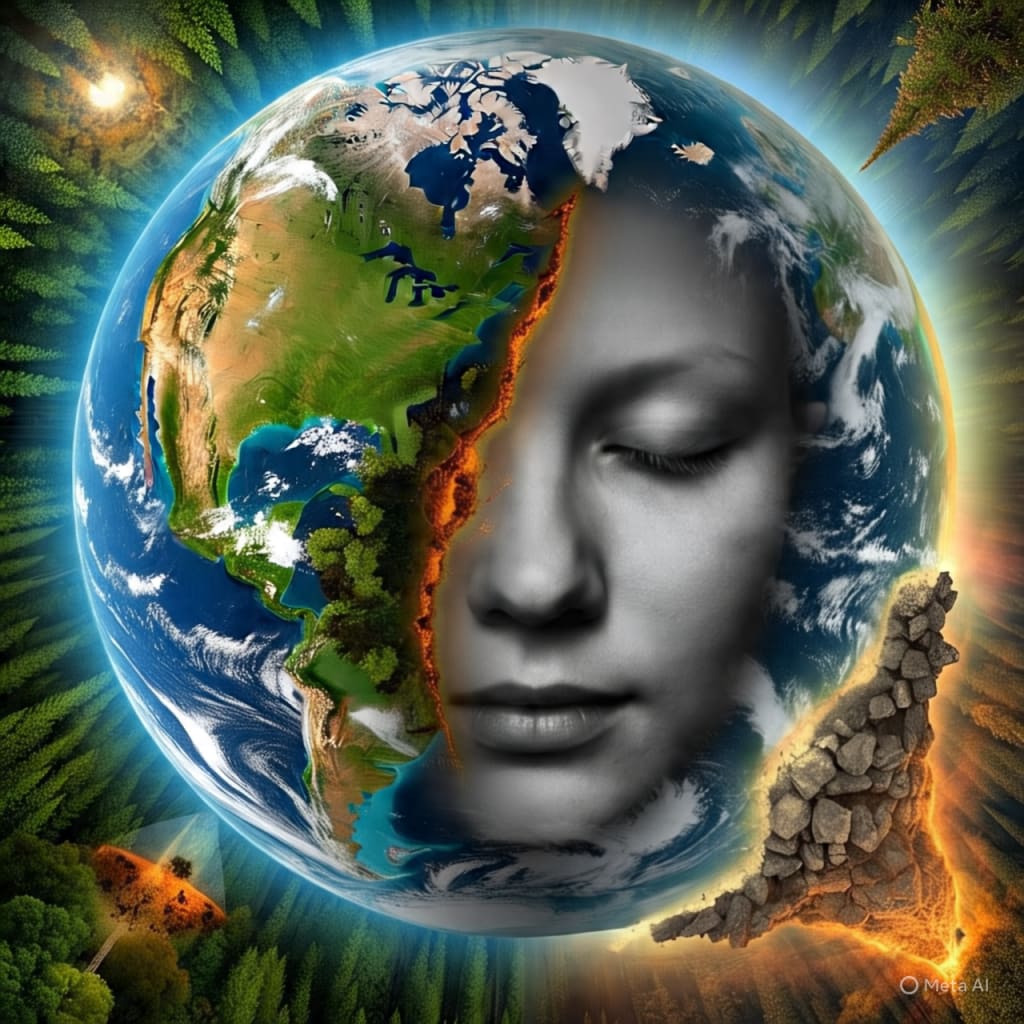
If Earth could speak, its voice might be slow and deep, echoing across valleys and mountains, whispering through leaves and crashing in waves. For 4.5 billion years, it has spun silently through space, bearing witness to cosmic chaos, violent eruptions, mass extinctions, and the rise of an intelligent species—us.
Yet Earth is not just a rock hurtling around the sun. It is alive in ways we are only beginning to understand. Its crust shifts and sighs through tectonic plates, its atmosphere breathes with the rhythms of seasons, and its ecosystems are intricate symphonies of life and death. When we pause and listen, Earth speaks—not in words, but in signs, patterns, and warnings.
The Ancient Birth of a Blue Planet
Long before there was life, Earth was forged from cosmic dust and fire. Volcanic storms raged, seas of lava hardened into crust, and gases formed an atmosphere. Then came a miraculous twist—water. Comets and early volcanic activity may have delivered this precious substance, forming the oceans that would become the cradle of life.
Somewhere in those primordial waters, life sparked. Tiny microbes emerged, eventually giving rise to all living things. Earth watched silently as fish took to the seas, plants to the land, and dinosaurs thundered across continents. And then—humans arrived.
Humanity: Earth’s Most Talkative Species
For the first 99% of our history, we lived in balance with nature. We hunted, gathered, and told stories by firelight. But in the last few centuries, something changed. We industrialized. We burned coal, then oil, then forests. We built cities that never sleep and machines that never stop.
Earth began to speak louder.
Through rising temperatures, melting glaciers, and increasingly violent storms, the planet now sends unmistakable signals. The last eight years have been the hottest on record. Wildfires burn longer, oceans rise faster, and species vanish at rates not seen since the dinosaurs disappeared.
Scientists call this the Anthropocene—the age in which human activity is the dominant influence on climate and the environment. But to Earth, this age might feel like a fever, a disturbance in its otherwise slow, evolutionary pulse.
Nature’s Resilience and Fragility
Despite this, Earth is not helpless. Forests still breathe in carbon and release oxygen. Wetlands purify water. Coral reefs, though threatened, support more marine life than any other habitat on Earth. But these systems are not infinite. Like any living organism, the planet has limits. When pushed too far, it breaks down.
Consider the Amazon rainforest. Often called the “lungs of the Earth,” it absorbs billions of tons of carbon dioxide. Yet deforestation and climate change threaten to turn parts of it into dry savannah, a shift that could release more carbon than it absorbs.
Or the polar ice caps—white mirrors that reflect sunlight and help regulate global temperature. As they melt, darker ocean water absorbs more heat, accelerating warming. This feedback loop is Earth’s way of shouting, “Something is wrong.”
Listening to Earth, Before It’s Too Late
We are the only species capable of understanding these messages—and the only one with the tools to change course. Renewable energy, sustainable agriculture, conservation efforts, and reforestation all offer hope. Already, nations are rethinking how we live and grow. Individuals are making conscious choices, from reducing waste to protecting biodiversity.
But time is limited. Scientists warn we have less than a decade to make profound changes before the damage becomes irreversible. The clock is ticking, not for the planet—which will eventually recover—but for the ecosystems and civilizations we’ve built.
Earth Is Not Asking Us to Save It
Here’s the truth: Earth doesn’t need saving. It has endured asteroid impacts, ice ages, and extinction events. What it needs is respect—and action. We must stop treating nature as a resource to be exploited and start seeing it as a partner in our survival.
In the quiet of a forest, the roar of a storm, or the whisper of the wind across a field, Earth speaks. Are we listening?
Perhaps the most powerful thing we can do is remember this: We are not separate from the Earth. We are Earth. Every breath we take, every meal we eat, every drop we drink is a gift from this living planet. To protect it is to protect ourselves.
So let this be more than a story. Let it be a call to listen—and to act—before Earth’s voice becomes a cry we can no longer answer.
About the Creator
Keep reading
More stories from Muhammad Saad and writers in Earth and other communities.
Earth: The Living Puzzle
From space, Earth looks like a marble — blue, green, and white, suspended in the black canvas of the universe. But beneath its beauty lies a complex, living system—an ancient puzzle still being assembled piece by piece. Scientists, explorers, and thinkers across time have tried to decipher it. And now, more than ever, that puzzle demands our attention. The Puzzle of the Past Earth is over 4.5 billion years old. Its surface has been shaped and reshaped by fire, ice, water, and life itself. The continents we know today were once part of a single supercontinent called Pangaea. It broke apart, drifted, and gave birth to the landmasses we now call home. Fossils, like time-stamped puzzle pieces, reveal ancient oceans, vanished species, and catastrophic events. The extinction of the dinosaurs, for instance, was caused by an asteroid that struck with the force of billions of atomic bombs. That single impact reshaped Earth’s biological path—and made room for mammals, and eventually humans, to rise. Each layer of rock tells a story. Each ice core drilled from Antarctica holds frozen bubbles of ancient air, allowing scientists to “read” Earth’s climate over hundreds of thousands of years. The planet keeps records, even if we don’t always know how to interpret them yet. The Present We Inhabit Today, Earth is a masterpiece of balance—one that supports nearly 9 million species, with humans playing the most dominant role. But our presence is starting to warp the puzzle. Since the Industrial Revolution, our use of fossil fuels has sent vast amounts of carbon dioxide into the atmosphere, trapping heat and warming the planet. Glaciers are melting. Sea levels are rising. Coral reefs, once vibrant underwater cities, are bleaching and dying. Weather patterns are growing more extreme, from hurricanes in the Atlantic to wildfires in the Arctic. At the same time, Earth’s biodiversity—the rich tapestry of life—is unraveling. Species are disappearing at a rate 1,000 times the natural background rate. This isn’t just a tragedy for wildlife. Every lost species is a missing piece in ecosystems that provide us with clean air, water, and food. Yet Earth remains resilient. Forests still breathe. Rivers still run. Migrating birds still trace invisible sky-paths mapped over millennia. The planet is not giving up—it’s waiting for us to listen. The Fragile Future The puzzle of Earth’s future is the most uncertain of all. Will we continue to take more than we give? Or will we learn to live in harmony with the only home we’ve ever known? Solutions exist. Renewable energy like solar and wind can replace dirty fuels. Cities can be redesigned to be green, walkable, and sustainable. Agriculture can be transformed to regenerate soil and protect pollinators. Most importantly, our relationship with nature can shift—from one of domination to one of stewardship. Young people around the world are already stepping up. Movements like Fridays for Future and Earth Guardians are led by youth who understand what’s at stake. Scientists are developing carbon-capture technology, reviving endangered species, and restoring damaged ecosystems. Indigenous communities, who have long lived in balance with the land, offer ancient wisdom for modern problems. But change must come quickly. The next ten years will shape the next thousand. If we delay, the cost will be measured not just in dollars—but in lives, livelihoods, and lost potential. One Planet, One Chance In a way, Earth itself is the greatest puzzle ever created—self-sustaining, interconnected, and endlessly fascinating. Every rainforest, glacier, desert, and deep-sea trench is a piece. So are we. We are not separate from this planet. We are made of it. The calcium in our bones came from ancient stars. The water in our cells has flowed through rivers and clouds for millions of years. When we protect the Earth, we protect ourselves. As we look forward, let’s stop treating Earth like a resource and start treating it like a relative—an elder whose stories we must learn, honor, and pass down. Because the puzzle is still being built. And we still have time to finish it—together. --- Author's Note: Our planet doesn’t need us—but we absolutely need it. Earth: The Living Puzzle is a reminder that science, history, and hope are all connected. Every small action counts. And every one of us is a piece that matters.
By Muhammad Saad 7 months ago in Earth
Supreme Court to Review Monsanto’s Bid for Immunity in Roundup Lawsuits
The U.S. Supreme Court has agreed to review Monsanto’s appeal seeking immunity from lawsuits related to its popular herbicide, Roundup. This decision marks a critical moment for both the company and individuals claiming health damages from the chemical, which contains glyphosate—a substance under scrutiny for potential links to cancer. The review could have wide-reaching implications for corporate accountability, public health, and the legal landscape surrounding chemical products. Background on Roundup and Legal Challenges Roundup, a herbicide produced by Monsanto (now owned by Bayer), has been a staple in agriculture and home gardening for decades. Glyphosate, its active ingredient, was introduced as a highly effective solution for weed control. However, in recent years, scientific studies and lawsuits have raised concerns about its potential carcinogenic effects. Thousands of plaintiffs have claimed that exposure to Roundup caused non-Hodgkin lymphoma and other health issues. Numerous state and federal courts have seen extensive litigation, with some plaintiffs receiving multimillion-dollar verdicts. Monsanto has consistently defended the product, emphasizing that regulatory agencies worldwide have deemed glyphosate safe when used as directed. Monsanto’s Bid for Immunity Monsanto is appealing for legal immunity, arguing that its use of Roundup was regulated and approved by federal agencies, and therefore the company should not be held liable in civil lawsuits. The company contends that federal oversight should preempt individual claims, a legal doctrine known as federal preemption. In essence, Monsanto is asserting that because the Environmental Protection Agency (EPA) has evaluated and permitted glyphosate use, states or courts should not hold the company personally accountable for alleged harm. Why the Supreme Court’s Review Matters The Supreme Court’s decision to hear the case is significant for several reasons: Corporate Accountability: A ruling in favor of Monsanto could strengthen corporate defenses in cases where products are federally regulated, potentially limiting lawsuits against companies producing similar chemicals or pharmaceuticals. Public Health: Plaintiffs and advocacy groups argue that a corporate victory could undermine accountability for harmful products and reduce incentives for companies to rigorously test safety. Legal Precedent: The case could set a nationwide precedent regarding federal preemption, influencing how courts balance regulatory approval with civil liability. The Supreme Court’s interpretation could reshape the legal landscape for product liability and consumer protection in the United States. Stakeholder Perspectives Plaintiffs and Advocacy Groups For those affected by Roundup, the Supreme Court review is a critical opportunity to hold a powerful corporation accountable. Many plaintiffs argue that Monsanto failed to adequately warn users of the potential risks associated with glyphosate exposure. “People shouldn’t have to choose between using a product as intended and risking their health,” says Laura Mitchell, an attorney representing multiple plaintiffs in Roundup lawsuits. “A ruling that shields Monsanto from liability could leave victims without recourse.” Advocacy groups, such as environmental and cancer prevention organizations, emphasize that transparency and accountability are essential, particularly for chemicals widely used in agriculture and landscaping. Monsanto and Bayer Monsanto, now part of Bayer, maintains that Roundup is safe when used according to label instructions. Bayer has publicly stated that legal challenges have cost billions but that the company continues to stand behind its products. The firm argues that courts must respect federal regulatory authority to avoid creating conflicting standards between federal law and state-level lawsuits. “If companies could be held liable despite following federal regulations, it would set a concerning precedent for innovation and regulatory compliance,” a Bayer spokesperson said. Broader Implications The Supreme Court review has implications far beyond Monsanto and Roundup: Agricultural Industry: Glyphosate and similar herbicides are widely used in crop production. Legal outcomes could influence labeling, usage guidelines, and liability risk for other companies in agriculture. Consumer Products: The ruling could affect cases involving pharmaceuticals, chemicals, and other regulated products, particularly when federal agencies approve them. Regulatory Authority vs. Civil Liability: The decision may clarify the balance between federal oversight and state-level tort claims, potentially shaping how courts interpret the limits of corporate immunity. Previous Court Decisions Lower courts have issued mixed rulings in Roundup lawsuits. Some courts awarded substantial damages to plaintiffs, while others limited awards or found in favor of Monsanto. These inconsistent outcomes underscore the complexity of balancing scientific evidence, regulatory approval, and legal responsibility. Federal appeals courts have previously sided with both sides in separate cases, making Supreme Court intervention necessary to establish uniform legal standards nationwide. Public and Media Reaction Media coverage of Monsanto’s legal challenges has been extensive, reflecting public concern over chemical safety and corporate responsibility. Many reports highlight the tension between regulatory approvals and individual health claims, questioning whether federal endorsements automatically protect companies from lawsuits. Public sentiment is divided. Supporters of corporate immunity argue that companies need protection to operate and innovate without fear of excessive litigation. Opponents worry that such immunity could prioritize corporate interests over public health. What to Expect The Supreme Court will now evaluate key questions: Does federal regulatory approval preempt state-level claims of harm? Can companies be held liable even if they followed federal guidelines? How should courts balance scientific uncertainty with civil justice? The decision, expected within the next year or two, will be closely watched by lawyers, plaintiffs, corporations, and advocacy groups alike. Conclusion The Supreme Court’s review of Monsanto’s bid for immunity in Roundup lawsuits represents a landmark moment in American legal history. The case has the potential to redefine corporate liability, influence public health policy, and set precedent for future disputes involving federally regulated products. For plaintiffs, the stakes are deeply personal—seeking justice for alleged health impacts caused by widespread chemical exposure. For Monsanto and other corporations, the outcome could determine the limits of accountability in a regulated marketplace. As the Supreme Court deliberates, the nation watches closely, recognizing that the ruling will resonate far beyond Monsanto, affecting consumers, companies, and the broader debate over safety, regulation, and responsibility in the United States.
By Muhammad Hassan3 days ago in Earth
Oil Well Abandonment Services: Responsible Closure for Long-Term Environmental Safety
Oil and gas production is only one chapter in the life of a well. When extraction ends, what happens next is just as important as the energy once produced. Oil well abandonment services ensure that inactive wells are closed in a safe, controlled, and permanent manner, preventing environmental damage and protecting surrounding land for future use. 🌍
By andersenintusabout 7 hours ago in Earth
My New Book is Finally Here
My poetry collection Beautiful and Brutal Things is done. It's actually done and finally published over 270 pages. Over a year of my life went into this book. More than a year, really. Long days at my computer, sometimes seven days a week because I couldn't stop even when I probably should have. Then two months of editing that felt harder than the writing itself. But it's finished, and I'm still standing, and the book is real.
By Tim Carmichael3 days ago in BookClub



Comments
There are no comments for this story
Be the first to respond and start the conversation.