
The Underwater Volcano That Burns at 400°C — Yet Keeps Its Surroundings Cold
Deep beneath the ocean, a fiery volcano erupts non-stop — and somehow the nearby water stays ice-cold.

At first glance, it sounds like a contradiction. How can a volcano burn at over 400°C and yet be surrounded by freezing water? But this is exactly what happens at hydrothermal vents, deep under the ocean's surface — a place where fire and ice collide, and nature throws the rulebook out the window.
These deep-sea volcanic systems are some of the most extreme environments on Earth. They're pitch black, intensely pressurized, and icy cold — except for the narrow zones where superheated water bursts out from the seafloor. And yet, life thrives here in ways that are as bizarre as they are beautiful.
Welcome to the world of underwater volcanoes, where boiling water meets freezing seas, and creatures survive without sunlight.
What Are Hydrothermal Vents?
Hydrothermal vents are cracks in the Earth's crust found mostly along mid-ocean ridges — underwater mountain ranges where tectonic plates are pulling apart. Seawater seeps down into these cracks, gets heated by magma below the Earth's crust, and then shoots back out at temperatures as high as 400°C (750°F).
This superheated water is enriched with minerals, making it look like dark smoke when it erupts into the cold ocean. These are called "black smokers."
Yet, only a few inches away from this scalding liquid, the water can be near freezing — often just 2°C (35°F). How can such extreme temperatures exist side by side?
Fire and Ice Side by Side
The secret lies in water pressure and heat transfer. At the depths where hydrothermal vents exist — usually 2 to 3 kilometers below the surface — the pressure is immense. This allows water to remain a liquid even at temperatures above boiling.
Also, the superheated water shoots out in narrow jets and mixes quickly with the surrounding cold seawater. The heat dissipates almost immediately, which is why the water just a short distance away remains icy cold.
So even though the vent fluid is hot enough to melt lead, it's instantly cooled by the vast, cold ocean that surrounds it.
Life in the Dark: Creatures of the Deep
You might assume nothing could survive in such a hostile place. No sunlight, toxic chemicals, extreme pressure — it's like an alien planet.
And yet, hydrothermal vents are teeming with life.
Instead of relying on photosynthesis (like most life on Earth), these ecosystems are powered by chemosynthesis. Microorganisms convert chemicals like hydrogen sulfide — which would kill most surface life — into energy.
These bacteria form the base of the food chain and support a bizarre collection of creatures:
- Giant tube worms that can grow over 6 feet long
- Blind shrimp that "see" using thermal sensors
- Ghostly white crabs, clams, and octopuses
Many of these species are found nowhere else on Earth.
Could These Vents Reveal the Origins of Life?
Some scientists believe that life on Earth may have begun at hydrothermal vents billions of years ago. The combination of heat, pressure, and rich chemistry could have created the right conditions for early life to form.
What’s more, similar environments may exist elsewhere in the solar system. Moons like Europa (Jupiter) and Enceladus (Saturn) are believed to have subsurface oceans and potential hydrothermal activity beneath their icy crusts.
If life can exist in Earth’s darkest, hottest corners, it might exist out there too.
Why This Matters
Hydrothermal vents challenge our understanding of what’s necessary for life. They show us that ecosystems can exist:
- Without sunlight
- Under crushing pressure
- In toxic, boiling conditions
They also serve as natural laboratories for science, helping researchers study extreme adaptation, microbial evolution, and even new pharmaceutical possibilities from vent-dwelling organisms.
Plus, they’re just downright cool (and hot).
Final Thought
The underwater volcano is a paradox brought to life. It burns hotter than anything we can imagine, but it lives beneath an ocean so cold it could kill you in minutes.
And somehow, life not only exists there — it thrives.
In a world that often feels predictable, hydrothermal vents remind us that nature still has secrets. That somewhere, miles beneath the sea, water boils and freezes at the same time, and creatures that look like science fiction are very much alive.
So the next time you hear someone say we know everything about our planet, just smile and tell them: "We still haven’t explored the bottom of the ocean.
About the Creator
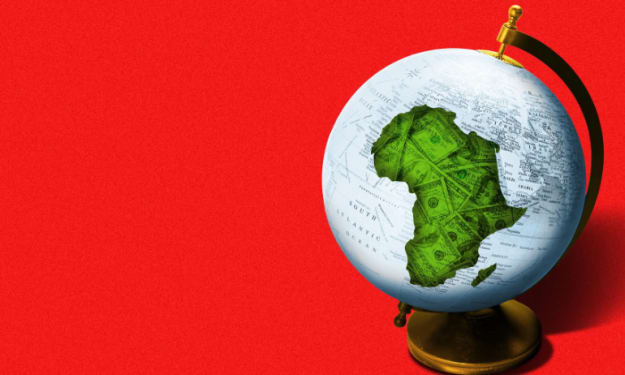
Inside Trump's $11 Billion Health Plan to Replace “Neo-Colonial” USAID
In the landscape of global health aid, few proposals have stirred as much debate as former President Donald Trump’s ambitious plan to restructure American assistance abroad. Dubbed an $11 billion health initiative aimed at replacing USAID’s current framework, the plan seeks to pivot away from what Trump and his allies have criticized as the “neo-colonial” approach of U.S. foreign aid. While the plan promises greater efficiency and impact, experts are split on whether it is a practical solution or a politically driven gamble. Trump’s Critique of USAID The United States Agency for International Development (USAID) has long been a central pillar of American foreign assistance, distributing billions in aid annually to address health crises, food insecurity, and development challenges worldwide. However, Trump’s administration and its supporters have often described USAID’s approach as bureaucratic, inefficient, and reflective of a “neo-colonial” mindset. In public statements, Trump argued that the U.S. was spending taxpayer dollars on programs that benefited foreign governments or contractors more than the intended local communities. Critics of the plan say that while USAID has flaws—as any large bureaucracy does—its extensive networks and decades of experience provide an unmatched capacity to deliver aid efficiently and safely. The Core of the $11 Billion Proposal At the heart of Trump’s proposal is an $11 billion fund designed to consolidate, modernize, and streamline U.S. health aid. Unlike the traditional USAID model, which relies heavily on long-term partnerships with governments and NGOs, the new plan emphasizes: Direct Impact Funding: Allocating resources to frontline health workers and local initiatives rather than intermediaries. Data-Driven Investments: Using real-time health data to target outbreaks and crises more efficiently. Private Sector Partnerships: Leveraging U.S. pharmaceutical companies, tech firms, and healthcare startups to deliver vaccines, treatments, and medical infrastructure. Shorter Program Cycles: Moving away from multi-year funding commitments in favor of more flexible, results-oriented programs. Proponents argue that this approach could reduce bureaucratic overhead and ensure U.S. aid reaches communities faster. By “cutting out the middlemen,” Trump supporters claim, America can avoid the pitfalls of slow-moving aid programs that sometimes fail to adapt to crises. Reactions from the Global Health Community Global health experts, however, have expressed concern about both the logistics and philosophy of the plan. Dr. Melissa Ortega, a senior researcher at the Global Health Policy Institute, explained, “The idea of bypassing established structures like USAID may sound appealing on paper, but in practice, it risks undermining decades of institutional knowledge. Health systems are complex, and short-term projects cannot replace long-term capacity building.” Some critics have also questioned the characterization of USAID as “neo-colonial.” While U.S. foreign aid has historically been tied to geopolitical interests, many programs today are designed collaboratively with recipient countries and local organizations. Reducing oversight could unintentionally increase the risk of misuse, corruption, or health inequities. On the other hand, supporters of Trump’s plan point to examples of inefficiency in USAID programs, citing cases where aid was delayed or mismanaged. By introducing more direct funding models, they argue, U.S. taxpayer dollars could achieve a higher “return on health outcomes.” Political Implications Trump’s health aid overhaul proposal is not just about international development—it is also deeply political. Framing USAID as a “neo-colonial” institution resonates with a populist narrative that America should prioritize its own citizens and assert greater control over how taxpayer money is spent abroad. Domestically, the $11 billion plan faces scrutiny from Congress. Lawmakers from both parties have questioned whether dismantling USAID’s systems could destabilize ongoing health programs in countries where the U.S. has long-term commitments. The potential impact on global health security—including the fight against pandemics like COVID-19—adds another layer of concern. Internationally, U.S. allies and partner nations are watching closely. Sudden shifts in aid delivery could disrupt health programs in low- and middle-income countries, many of which rely on predictable funding cycles to maintain vaccination campaigns, maternal health services, and disease surveillance. Possible Benefits and Risks If executed carefully, the Trump-backed model could bring several benefits: Faster Response Times: Direct funding could accelerate delivery of vaccines, treatments, and emergency support. Innovation Boost: By partnering with private sector companies, the plan could accelerate development of new health technologies. Accountability: With performance-based metrics, the plan may better measure the impact of U.S. aid. However, the risks are equally significant: Disruption of Existing Programs: Abrupt changes could destabilize ongoing health projects. Loss of Expertise: USAID’s decades of experience in navigating local governance, supply chains, and community engagement may be hard to replace. Geopolitical Fallout: Allies accustomed to collaborating with USAID might see the move as destabilizing, reducing cooperation on global health initiatives. Looking Ahead As Trump and his allies continue to advocate for this $11 billion overhaul, the debate over the future of U.S. health aid is intensifying. Proponents view it as a necessary modernization of an outdated system, while critics fear it could undercut decades of carefully built infrastructure and global partnerships. Ultimately, the success of this plan will hinge on its ability to balance efficiency with stability, innovation with oversight, and political objectives with humanitarian needs. For now, the proposal remains controversial, representing a dramatic departure from traditional approaches to U.S. foreign aid. Whether it will reshape global health for the better—or simply create more uncertainty—remains to be seen. In the end, the Trump health plan is as much about ideology as it is about dollars. It challenges the conventional wisdom of international development and asks whether a more streamlined, results-focused approach can truly replace a system built over decades. As the world watches, the stakes could not be higher: the future of U.S. global health aid—and the lives it touches—hangs in the balance.
By Muhammad Hassan3 days ago in Earth
Nitrogen is necessary for young tropical rain forests to combat climate change.
By absorbing carbon dioxide from the atmosphere and storing it in wood, tropical rainforests contribute to the slowing of climate change. Forests that develop quickly are even more important because they absorb carbon more quickly.
By Francis Dami2 days ago in Earth



Comments
There are no comments for this story
Be the first to respond and start the conversation.