
The Ultimate Bucket List: 50 Places to See Before You Die And Why You Should Throw It Away
The Paradox of the Bucket List: Is It Travel or Just a Social Flex?


If you’ve ever found yourself scrolling through yet another “50 Places to See Before You Die” article, you're not alone. It’s a tempting siren call, promising a life of adventure, brag-worthy photos, and spiritual revelations atop ancient ruins. But is this checklist approach to travel really the best way to see the world, or are we all just getting sucked into a cleverly marketed, one-size-fits-all vision of adventure? Let’s peel back the layers of this phenomenon and explore why maybe just maybe it’s time to rethink our travel priorities.
Chasing the Dream, One Instagram Post at a Time
Ah, the bucket list part travel guide, part social contract. We’ve all seen them: those glossy lists of must-visit destinations that promise to complete us. And sure, these lists can be inspiring. They remind us there’s a whole world beyond our morning commutes. But let’s be real how much of our desire to visit these places comes from a genuine love for adventure, and how much is about crafting the perfect Instagram feed?
According to a survey by YouGov, over 40% of millennials admit that social media plays a significant role in their travel choices. It’s not so much about finding inner peace in Bali as it is about proving to your followers that you’ve found it. This shift raises the question: are we exploring the world, or just playing a never-ending game of digital one-upmanship?
Why 50? The Arbitrary Nature of Travel Lists
Let’s talk about the number 50. Why 50 places? Why not 38? Or 27? The fixation on round numbers is a classic quirk of contemporary society. It’s as if our brains can’t fathom the notion of a satisfying list that doesn’t end in a zero. But life and travel is rarely that tidy. Some places might be truly transformative, while others could leave you wondering why you wasted a vacation day.
Take the Great Wall of China, for example. It’s on every bucket list, and for good reason. But while many tourists flock to the heavily visited Badaling section to tick it off, few venture to the quieter, more scenic parts of the wall where you can actually hear the wind rustling through the trees. This isn’t to knock the Great Wall it's awe-inspiring but to point out that when we treat travel like a checklist, we often miss the best parts in our rush to see it all.
A Better Way to Travel: Fewer Places, More Meaning
There’s something inherently frantic about the phrase “50 places to see before you die,” as if life is some kind of race against time. But do you know what truly enriches your life? It’s not the number of stamps in your passport, but the moments that take your breath away regardless of whether they’re in a famous city or a nameless village.
A study from the University of Surrey found that travellers who prioritize “slow travel” experiences staying longer in one place, engaging with locals, and embracing spontaneity reported higher levels of happiness and satisfaction. Slow travel encourages us to focus on quality over quantity. Instead of sprinting through five countries in two weeks, it’s about spending time in one place, soaking in the culture, the language, the food, and, yes, even the awkward moments when you accidentally order tripe instead of steak.
It’s the difference between speeding through Paris just to snap a selfie at the Eiffel Tower and spending an afternoon in a small Parisian café, chatting with the owner about his favorite wine. One is a photo op; the other is a memory that might actually change you.
The Environmental Cost of Bucket-List Travel
And then there’s the elephant in the room one we’re all a bit reluctant to talk about: the environment. As more of us chase down these bucket-list destinations, the places themselves are starting to show the strain. Think of Venice, where cruise ships tower over the canals, or Iceland, which has seen a massive influx of tourists since becoming Instagram-famous.
Over tourism is a real problem. The more we flock to these iconic sites, the more we contribute to their degradation. According to the World Travel & Tourism Council, over 72% of destinations have reported stress on infrastructure and natural resources due to tourism . Sure, we all want to see the world, but it’s worth asking if the world wants to be seen this way—trampled under the weight of our collective wanderlust.
The Joy of the Unexpected: Why We Should Embrace the Unplanned
Some of the best travel experiences are the ones that happen off-script. They’re not in the guidebooks, and they’re certainly not on those “must-see” lists. They happen when you take a wrong turn down a cobblestone street in Lisbon and stumble into a local fado performance or when you miss your train in Tokyo and end up in a quiet neighbourhood where you taste the best ramen of your life.
The bucket list mentality assumes that the best experiences are the ones everyone else has already had. But what about the places that don’t make the cut, simply because they’re not as photogenic? What about the small towns, the forgotten corners, the local festivals where you’re the only tourist?
Travel writer and philosopher Alain de Botton once argued, “Journeys are the midwives of thought.” Travel, at its best, is about letting the unexpected change you. It’s about discovering not just new places, but new versions of yourself. And those moments rarely happen when you’re following someone else’s list.
Letting Go of the List: Travel Your Own Way
So, is it time to throw away your bucket list? Not necessarily. Maybe just rethink it. The next time you feel the urge to travel, ask yourself what you really want from the experience. Is it to see the world, or to be seen seeing it? Are you looking for a place, or a feeling?
Ultimately, travel is about the discovery of new places, new people, and new perspectives. But perhaps the most important discovery you can make is that you don’t need a checklist to validate your adventures. Your journey doesn’t have to look like anyone else’s. It just has to feel right for you.
And who knows? Maybe by letting go of the pressure to see every “must-see” spot, you’ll end up finding a few places that matter even more.
About the Creator
The INFORMER
Source for in-depth news, investigations, whistleblower leaks, and insightful analysis you won't find anywhere else, produced by independent journalists exploring the fringes of society, technology, and culture.
Keep reading
More stories from The INFORMER and writers in Earth and other communities.
10 Hidden Gems You Must Visit Before They Become Popular.
We all know the feeling. That wave of regret when you scroll through Instagram and see your once-secret getaway plastered all over influencer feeds like it’s the next Coachella. You want to be the person ahead of the trend, not the one following a well-worn path of hashtags and FOMO. Luckily for you, there are still a few places left in this world that haven’t become touristy selfie stations just yet. But you’d better move fast these hidden gems won’t stay under the radar forever.
By The INFORMERabout a year ago in Earth
How Much Do You Need in an ISA for a Passive Income That Beats the State Pension?
For many people in the UK, the State Pension is expected to form the backbone of retirement income. But with rising living costs and growing uncertainty about the future, more savers are asking a crucial question: Can I build a passive income that beats the State Pension — and how much would I need in an ISA to do it?
By Aarif Lashariabout 13 hours ago in Earth
Tiny Lion Cubs Struggle To Keep Up With Mom
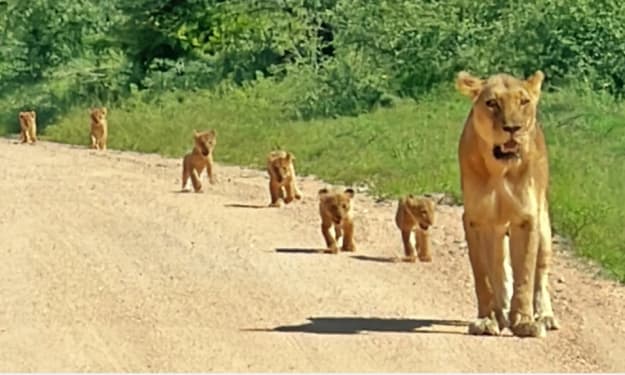
In the heart of the African savannah, life is a constant lesson for young animals. Few scenes are as endearing — or as heartwarming — as tiny lion cubs trying to keep pace with their mother. These little bundles of fur face a world full of challenges, from learning to hunt to avoiding dangers, all while depending on the guidance and protection of their experienced mom. Watching cubs wobble and tumble as they attempt to keep up with their mother reminds us that growing up, even in the wild, is a journey full of struggle, determination, and adorable missteps. The Early Days of Lion Cubs Lion cubs are born blind and helpless, usually in litters of two to six. For the first few weeks, they rely entirely on their mother for warmth, food, and safety. Even after opening their eyes and beginning to explore, the cubs are far from independent. The first months are crucial. Cubs learn social cues, hunting basics, and survival skills simply by watching their mother and the pride. But as anyone who has observed them knows, there’s often a huge gap between observation and action. Tiny cubs often struggle to match their mother’s pace, especially when she moves through long stretches of savannah or leads the family on patrols. A Mother’s Role in the Wild For a lioness, raising cubs is a full-time commitment. She hunts, defends her territory, and teaches her young, all while staying alert to predators such as hyenas, leopards, and even rival lions. The cubs, meanwhile, attempt to mimic her every move — often with clumsy yet charming results. A mother lion’s patience is remarkable; she frequently slows down, nudges them along, or stops to ensure no cub is left behind. These moments, while stressful for the tiny cubs, are vital learning opportunities. Struggling to Keep Up: Why It’s So Hard There are several reasons why tiny lion cubs have trouble keeping pace with their mother: Short Legs, Big Steps: Lion cubs’ legs are tiny and their coordination is limited, making it difficult to cover the same distance as an adult lioness. Curiosity: Cubs are naturally curious. A single butterfly or rustling bush can distract them, leaving mom to pause repeatedly. Energy Levels: Young lions tire quickly. Even with frequent naps, the cubs’ stamina is far lower than their mother’s. Learning Through Play: Play is not just fun; it teaches hunting, balance, and social skills. Running off to pounce on a sibling or chase an insect is all part of their education. Despite these challenges, the cubs’ determination to keep up demonstrates their resilience and growing understanding of the wild world. Lessons in Teamwork and Survival Every cub struggling to keep up is also learning crucial survival skills. The journey across the savannah is more than a test of speed — it’s a lesson in: Coordination: Cubs learn how to move efficiently across different terrains. Patience: They begin to understand the rhythms of adult life and the pace required for survival. Social Skills: Staying with the group teaches cubs how to interact with siblings and the pride, which is essential for their future roles. Observation: By following their mother, cubs study hunting techniques, territorial behavior, and predator awareness. Even the moments when cubs stumble or lag behind are essential for their development. These experiences prepare them for independence, which comes sooner than many might expect. The Cutest Moments in the Wild Anyone who has watched tiny lion cubs knows that their struggles are often irresistibly cute. Video clips from wildlife reserves frequently show cubs toddling along, tumbling over each other, or getting distracted mid-step. Observers often comment that these little stumbles reveal personality, determination, and playfulness, making them one of nature’s most heartwarming spectacles. While their mother is serious and focused, the cubs inject a sense of humor and lightness into life on the savannah. Why This Matters The struggles of lion cubs aren’t just adorable — they’re vital for understanding wildlife behavior. Conservationists and animal behaviorists use these moments to study growth patterns, social structures, and survival strategies in lion populations. These observations also highlight the importance of preserving natural habitats. Cubs must learn in a safe environment to survive; habitat loss, poaching, and climate change make these early struggles even more dangerous. Protecting the African savannah ensures that future generations of lions can experience the same lessons and playful tumbles. The Road to Independence Within a year, these tiny cubs will be more agile, faster, and more confident. By the time they reach two to three years old, males may begin to leave the pride, while females often stay and become caretakers themselves. Every misstep, tumble, and lagging moment is part of the journey toward strength, coordination, and independence. Watching them now gives us a glimpse of the challenges they will overcome, and the survival skills they will carry for life. A Celebration of Motherhood Ultimately, these scenes remind us of the incredible bond between mother and cubs. Her patience, vigilance, and teaching are the foundations of their future. The cubs’ struggles highlight the trials of growing up, while their determination showcases the resilience and beauty of wildlife. For those observing, it’s a powerful lesson in care, guidance, and perseverance, not just in lions but in the natural world as a whole. Final Thoughts Watching tiny lion cubs try to keep up with their mother is both entertaining and enlightening. It’s a story of growth, struggle, and resilience — a reminder that even the fiercest creatures start small, learning step by step. These little lions capture hearts while teaching life lessons: patience, determination, teamwork, and the importance of guidance. As they tumble and waddle across the savannah, they show us that growth is a process, one adorable misstep at a time. For wildlife enthusiasts, animal lovers, and anyone enchanted by nature, these tiny cubs are proof that even in the wild, love, care, and persistence are universal truths.
By Aarif Lashariabout 14 hours ago in Earth



Comments
There are no comments for this story
Be the first to respond and start the conversation.