
The True Story of the Ice Age: Earth's Frozen Past and the Rise of Humanity
Multiple Ice Ages: A Cycle of Freezing and Thawing

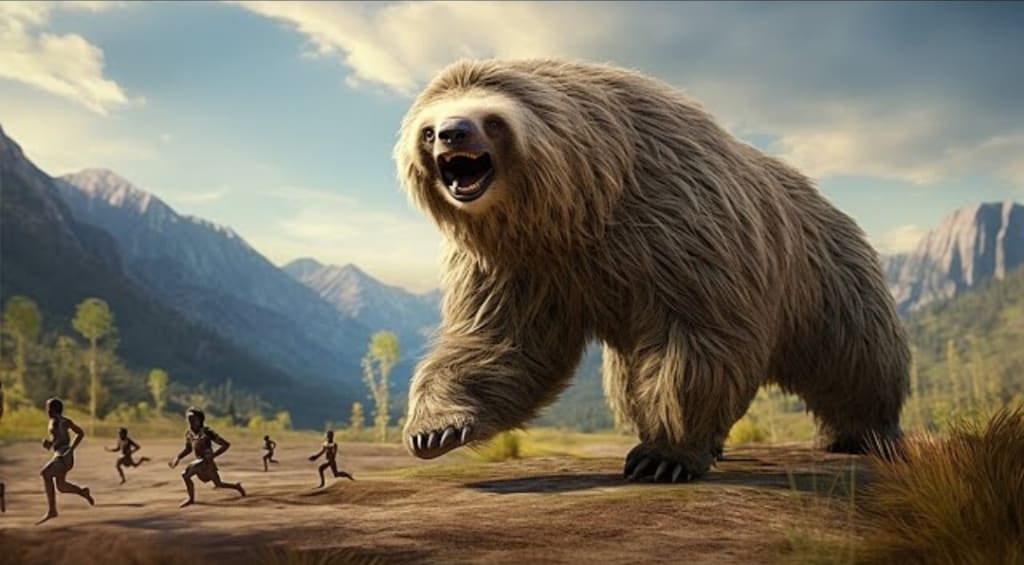
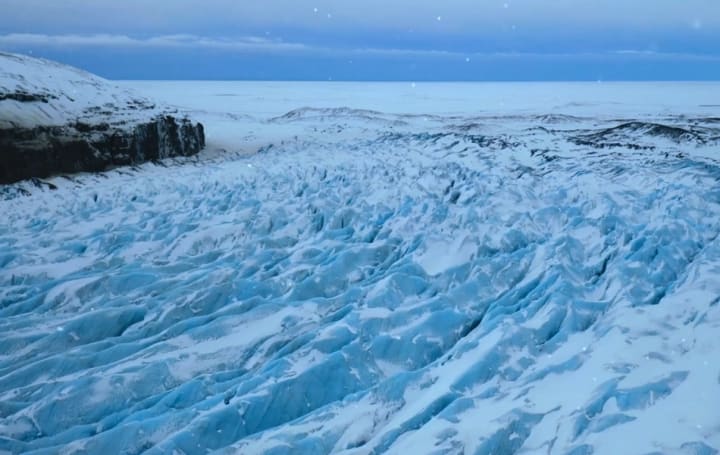
The term "Ice Age" often conjures up images of an entirely frozen Earth, where humans huddle in shelters while mammoths and saber-tooth tigers roam in search of food. You might even picture a crazed squirrel looking for its prized nut, but let’s step away from these dramatic depictions and explore what the Ice Age really was like.
While we often refer to "the Ice Age," the reality is that there have been multiple Ice Ages throughout Earth’s history—at least five. The first Ice Age occurred between 2.4 and 2.1 billion years ago, while the most recent one spanned from 2.6 million years ago to about 11,500 years ago. Some even argue that we are still living in an Ice Age today, though with much warmer conditions.
To understand the true nature of the Ice Age, it’s essential to break it down into two key stages. The first, the glacial period, is marked by a significant drop in temperature, which causes glaciers to form across the planet. During these times, the climate becomes cooler and drier, causing sea levels to drop. Water freezes into massive ice caps and stays trapped within them, which leads to a drop in sea levels of up to 400 feet—about the height of a 12-story building.
Glaciers grow and spread over vast expanses of the Earth’s surface. During the most recent glaciation, ice sheets expanded across Canada, Greenland, Scandinavia, Eurasia, and even South America. However, the entire planet didn’t become a frozen wasteland. While colder regions like modern-day Canada and Scandinavia saw extreme drops in temperature, there were still warmer areas. The tropics and Africa were about 10°F colder than they are today, but still far from freezing.
What’s fascinating is that despite these chilly conditions, humans were already living in these areas by the time the last Ice Age began. Early humans, including Homo sapiens, had already populated Africa for millions of years. As the glaciation set in, they began migrating beyond their warm homeland. Humans ventured into Europe, Asia, and even into areas where the temperature could plummet. For example, Germany’s average temperature today is around 46°F, but during the Ice Age, it hovered around 32°F—roughly the same as modern-day Iceland.
Despite these cold temperatures, humans adapted. The harsh environment pushed early humans to innovate and evolve. They invented tools, developed new hunting strategies, and began wearing clothing to protect themselves from the cold. They started using animal skins to make warm clothing, and their need for food drove them to develop more sophisticated methods of hunting.
One of the most iconic animals of the Ice Age was the mammoth. These giant creatures, which appeared around 300,000 years ago, roamed the Earth until about 10,000 years ago. Mammoths were well-suited to the cold, with thick fur coats and fat reserves to help them survive when food was scarce. They were primarily herbivores, feeding on grass and leaves, which were hard to find during the Ice Age. Despite this, mammoths had fat reserves that helped them weather lean periods.
Other animals, like the saber-tooth cat, also roamed the Earth during the Ice Age. These large predators were a threat to early humans, but humans adapted and learned how to outsmart them. The extinction of many Ice Age creatures is largely attributed to the warming of the planet and hunting pressures from early humans.
In addition to mammoths and saber-tooths, there were other giant creatures, such as the giant sloth, which stood about 12 feet tall. These creatures, along with giant beavers that grew to nearly human size, are reminders of the larger animals that once dominated the planet. However, as temperatures began to rise and conditions became more hospitable, many of these large species could no longer survive.
The warming that followed the Ice Age is called the interglacial period. This phase occurs when temperatures rise, and glaciers begin to melt. As ice sheets retreat, the sea levels rise, flooding land that was previously exposed during the glacial period. Scientists believe that the most recent interglacial period began about 11,500 years ago, though some argue that this transition is still ongoing.
This gradual warming is a natural process that follows every major Ice Age, driven by changes in Earth’s orbit and the amount of solar radiation reaching the planet. The warming triggers the release of carbon dioxide trapped in the oceans, which further accelerates the warming process. While this warming trend is natural, human activities over the past 150 years have significantly sped it up, contributing to the climate change we are experiencing today.
So, while the Earth didn’t plunge into an eternal winter as often depicted in movies, the Ice Age was a time of dramatic changes in climate and ecosystems. Humanity survived and even thrived in these cold conditions, adapting to a world where the temperature could fluctuate wildly and glaciers could cover vast portions of the land.
In conclusion, the Ice Age was far more complex and nuanced than the typical image of a frozen Earth. There were warmer regions, cooler temperatures, and a constant shift between glacial and interglacial periods. While we are no longer in a true Ice Age, the planet's climate cycles have always been in flux, and the possibility of another ice age remains, though it seems distant. What we do know is that humanity’s resilience and adaptability have played a key role in our survival and evolution through this ever-changing planet.
About the Creator
Nora Ariana
Empowering through stories and sound igniting purpose, sparking growth, and awakening the power within.
Keep reading
More stories from Nora Ariana and writers in Earth and other communities.
A goal is a dream with a deadline
A goal is a dream with a deadline. This powerful quote reminds us that without action, dreams remain just that wishes floating in our imagination. But when we set a timeline and commit to achieving them, they evolve into goals, bringing clarity, direction, and purpose. Many people go through life holding on to dreams, hoping they will come true someday. But someday is not a day on the calendar. Dreams without structure often fade with time or get buried under the weight of daily responsibilities. Turning a dream into a goal is what separates those who achieve from those who continue to wish.
By Nora ArianaExclusive • 9 months ago
White Mushroom Market Size and Forecast 2025–2033
Introduction White mushrooms—scientifically known as Agaricus bisporus—are no longer confined to salads, pizzas, and soups. Once considered a humble kitchen staple, they are now emerging as a strategic crop in the global agrifood ecosystem. Driven by sustainability trends, plant-based eating, and rising health consciousness, white mushrooms have carved out a powerful position in both consumer markets and foodservice industries.
By jaiklin Fanandish3 days ago in Earth


Comments
There are no comments for this story
Be the first to respond and start the conversation.