
The Trees That Taught Me to Look Up
A quiet story from Bangalore that reminds us: the wild is still around us, waiting to be noticed.

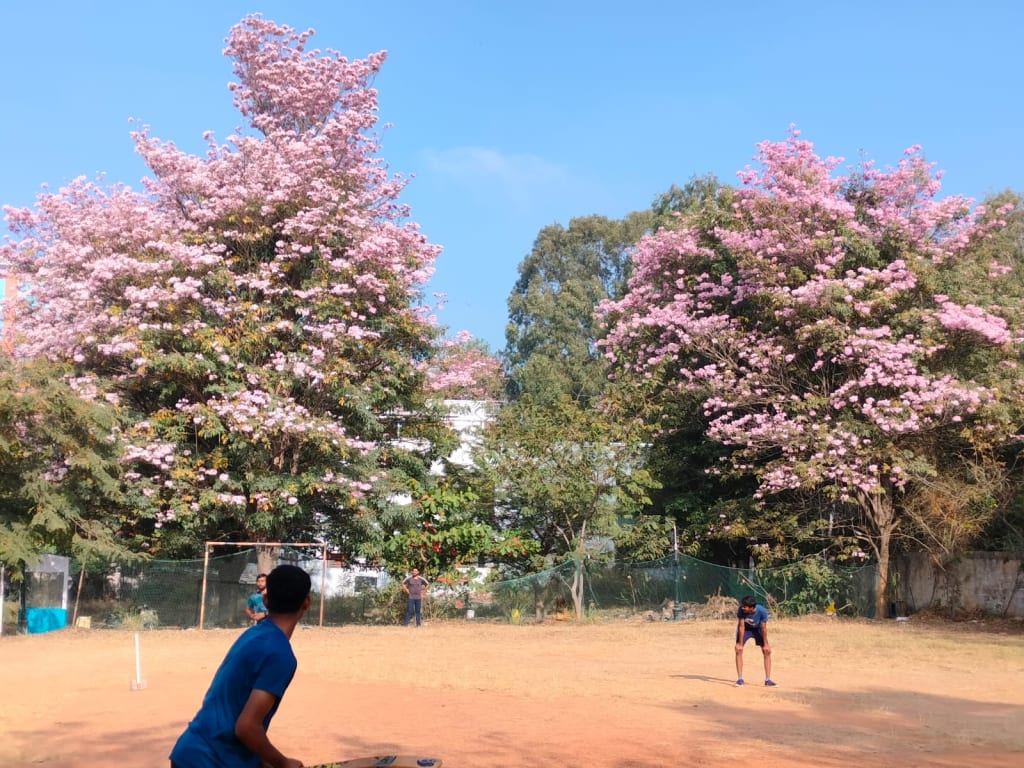
I grew up in Bangalore, a city that has changed as much as I have. But for 21 years, there was one constant in my life: a playground shaded by trees that knew how to put on a show.
Every summer, something magical happened.
The Tabebuia rosea trees lining our neighborhood would begin their quiet transformation. Slowly, their green faded. Leaves curled and dropped one by one, until only the bare branches remained. And then—almost overnight—those same branches would erupt in soft pink blossoms, as if the trees had been holding their breath all year just for this.
To a child, it felt like nature’s secret celebration, staged just for us. We’d spend hours playing under the pink canopy, watching the petals drift down like confetti. The air smelled different. The light felt warmer. Sometimes we’d lie on the ground and look up, feeling like we were inside a painting.
But as I grew older, I noticed something else too.
Most people just walked past.
They rushed under those trees with bags in their hands and phones in their ears, never once looking up. The magic that once stopped me in my tracks was invisible to them. And maybe that’s what stayed with me—the quiet heartbreak of beauty going unnoticed.
Bangalore still carries that softness, if you know where to look. Beneath the chaos of traffic and concrete, it quietly blooms each year in shades of pink. Every March and April, those trees return to remind the city that something delicate can still thrive. They fill the air with a quiet kind of joy, one that doesn’t shout to be seen.
But it’s easy to miss it now.
The city is louder. Faster. The skyline is taller, and the roads are tighter. The city which was once known as the 'Garden city 'is now a concrete jungle. I’ve watched some of those old Tabebuia trees disappear—cut down to make room for cables or parking lots. And still, every year, a few remain. Stubborn. Blooming. As if to say, “Look. I’m still here.”
I think we forget that wonder doesn’t always need a forest trail or a mountain peak. Sometimes, it’s a pink tree in a dusty playground. A fallen petal on your scooter seat. A burst of color peeking out from a busy street. A moment where you’re reminded, even briefly, that the world is still capable of softness.
That playground—and those trees—taught me to look closely. To pay attention. To be moved by things that don’t demand to be seen.
I try to carry that with me now. Even when I’m far from Bangalore, even in the middle of another city, I find myself scanning sidewalks for signs of wildness—an overgrown bush, a sun-warmed dog asleep on the pavement, a vine that refuses to stay trimmed. These small, living things ground me. They remind me I belong somewhere, not just to a place, but to the rhythm of the earth.
And maybe, if more of us remembered how to see like that, we’d start falling in love with the wild world again—even in the middle of a city.
Because nature hasn’t left us. We’ve just stopped noticing.
About the Creator
Basil Sarguroh
Biologist turned storyteller. I write about wild things—nature, science, and the human mess in between. Here to make complex stuff feel simple, weird stuff feel wonderful, and you feel a little more curious.
Keep reading
More stories from Basil Sarguroh and writers in Earth and other communities.
Dammed If We Do: How India’s Giant River Fish Is Dying in Silence
In the stillness of a summer afternoon, deep in the Cauvery River, something once stirred. A creature the size of a human child, orange-finned and hump-backed, glided through the cool, fast-flowing waters. Locals called it the "Tiger of the Cauvery," a fish so strong it bent rods and broke records. But today, that legend is fading.
By Basil Sarguroh10 months ago in Earth
Franklin County Snow Emergency
Winter weather in Ohio can change quickly, and when heavy snow or ice hits, local governments rely on snow emergency levels to keep residents safe. One of the most searched winter questions each year is: what level is Franklin County snow emergency right now? Understanding how these emergency levels work—and how they compare with nearby counties like Delaware County—can help drivers, workers, and families make safer decisions during severe weather. This article breaks down everything you need to know about the Franklin County snow emergency, including how levels are determined, where to find updates, and what each level means for daily life. What Is a Snow Emergency in Franklin County? A snow emergency is declared when weather conditions make travel dangerous due to snow, ice, or freezing rain. In Franklin County, Ohio, officials monitor road conditions, weather forecasts, and accident reports before announcing a snow emergency level. The Franklin County snow level system is designed to limit unnecessary travel and reduce accidents. Each level comes with specific guidelines for residents and employers. Local media outlets, especially 10TV Weather, play a major role in communicating these updates to the public in real time. Snow Emergency Levels Explained To understand what level snow emergency is Franklin County Ohio, it helps to know what each level represents. Level 1 Snow Emergency A Level 1 advisory means roads are slippery, especially bridges and secondary roads. Drivers should use caution, reduce speed, and allow extra stopping distance. Travel is permitted No legal restrictions Increased risk on untreated roads At this stage, daily activities usually continue as normal, though delays are common. Level 2 Snow Emergency When conditions worsen, officials may declare a Level 2 snow emergency. This signals that roads are hazardous and travel should be limited to essential trips only. Driving is discouraged Only necessary travel is advised Accidents become more frequent During a Level 2, many schools, businesses, and government offices may close or operate on delays. This is often the level that sparks widespread concern across Franklin County. Level 3 Snow Emergency Level 3 is the most serious designation. Roads are extremely dangerous or impassable, and travel is legally restricted. Only emergency personnel should be on the roads Driving can result in citations or arrest Conditions pose serious safety risks A Level 3 snow emergency is rare but critical. When declared, residents are urged to stay indoors until conditions improve. How Franklin County Determines Snow Emergency Levels Officials rely on multiple factors before announcing a snow emergency: Snowfall totals and accumulation rates Ice formation and road treatment effectiveness Traffic accidents and emergency response delays Weather forecasts from meteorologists Agencies coordinate closely with weather services and local law enforcement. Reports from 10TV Weather often provide early insight into whether conditions may escalate. Comparing Franklin County and Delaware County Snow Emergencies Many Ohio residents commute between counties, which makes comparing alerts important. A Delaware County snow emergency may not always match Franklin County’s status. For example: Franklin County could be under a Level 2 while Delaware County remains at Level 1 Snow bands may impact northern counties more severely Timing of road treatment can differ Drivers should always check both counties before traveling. Conditions can change rapidly, especially during overnight storms. Where to Find Reliable Updates Staying informed is essential during winter storms. The most reliable sources for Franklin County snow emergency updates include: Franklin County Sheriff’s Office announcements Official county websites and social media pages Local news stations, especially 10TV Weather Emergency alert systems and local radio Searching phrases like what level is Franklin County or what level snow emergency is Franklin County Ohio during storms is common, but always rely on official sources for confirmation. How Snow Emergencies Affect Schools and Workplaces Snow emergency levels often influence closures and delays: Schools typically close at Level 2 or Level 3 Government offices may shut down during Level 2 Many employers follow county advisories However, private businesses may set their own policies, so employees should check with supervisors directly. Preparing for a Franklin County Snow Emergency Preparation can make a major difference during winter weather. Residents are encouraged to: Keep vehicles fueled and stocked with emergency supplies Monitor forecasts before storms arrive Avoid unnecessary travel during Level 2 or Level 3 emergencies Check on elderly neighbors when conditions worsen Simple planning can reduce stress and improve safety during severe winter events. Why Snow Emergency Levels Matter Snow emergencies are not just warnings—they are safety tools. Each Franklin County snow level helps emergency crews prioritize resources, reduce accidents, and protect lives. Ignoring advisories can put drivers and first responders at risk. Understanding the system allows residents to make informed, responsible decisions. Final Thoughts Winter in Ohio is unpredictable, but information makes it manageable. Knowing how the Franklin County snow emergency system works—and staying updated through trusted sources like 10TV Weather—can help you stay safe when conditions deteriorate. Whether you’re checking what level is Franklin County, comparing alerts with a Delaware County snow emergency, or planning your commute, awareness is your best defense against winter hazards.
By Saboor Brohi 4 days ago in Earth



Comments
There are no comments for this story
Be the first to respond and start the conversation.