
The Top 10 Largest Deserts in the World
Amazing Details Are Waiting!

Introduction:
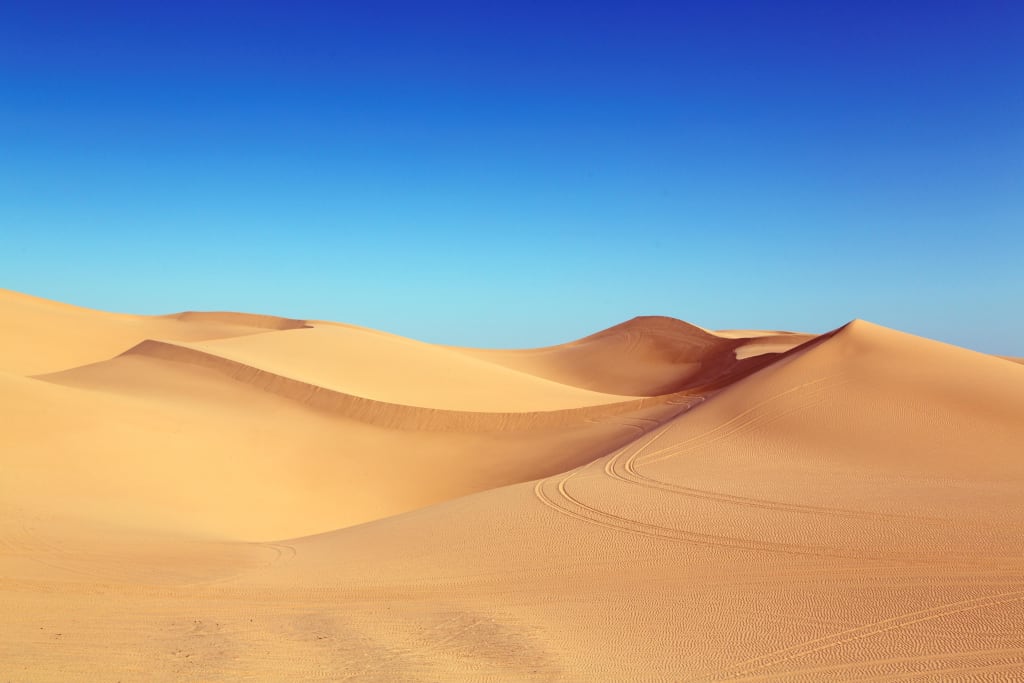
The vast and awe-inspiring deserts of the world demonstrate their raw beauty and unforgiving character. Deserts come in all shapes and sizes, from the scorching sands of the Sahara to the icy expanse of Antarctica. In this article, we will travel to the world's ten largest deserts and discover fascinating facts and tales along the way. Prepare to be awestruck by the extraordinary adaptations, breathtaking views, and one-of-a-kind features that can be found within these remarkable regions.
1. Africa's Sahara Desert:
The Sahara Desert is the world's largest hot desert, covering a staggering 9,200,000 square kilometers. The enormity of it is accurately reflected in its Arabic name, which means "the greatest desert." Did you know that the Sahara is bigger than Australia as a whole? Extreme temperature swings occur across this vast area, with some areas experiencing daytime highs of over 50°C (122°F) and nighttime lows below freezing.
2. Antarctica:
Antarctica is more than just a frozen desert, contrary to popular belief. It is the largest cold desert on earth, covering about 14,000,000 square kilometers. Unique animals like penguins, seals, and whales make this icy continent famous. It's interesting to note that Antarctica also has the driest desert on Earth, receiving very little rain. Those who are fortunate enough to experience its frozen wonders can expect a surreal experience thanks to the landscapes' towering icebergs and mesmerizing blue hues.
3. North Pole Desert in the Arctic:
The Arctic is categorized as a desert due to its lack of precipitation, despite being frequently associated with ice and snow. Spreading over around 14,056,000 square kilometers, this cool desert includes the North Pole and encompassing areas. The Arctic is alive with polar bears, arctic foxes, and reindeer despite its harsh climate. This delicate ecosystem is critical to conservation efforts because climate change poses a serious threat to it.
4. Middle Eastern Arabian Desert:
The majority of the Arabian Peninsula is covered by the Arabian Desert, which covers 2,330,000 square kilometers. This desert is home to fascinating adaptations and is well-known for its vast dunes and scorching temperatures. The dromedary camel thrives in these harsh environments because it can survive for extended periods of time without water. One of the world's largest continuous sand deserts, the Rub' al Khali, also known as the "Empty Quarter," covers a significant portion of the Arabian Desert.
5. Asia's Gobi Desert:
The Gobi Desert covers approximately 1,295,000 square kilometers and is found in northern China and southern Mongolia. The unique wildlife, rocky mountains, and sand of this desert combine to create a fascinating landscape. The Gobi is famous for its discoveries of dinosaur fossils, which shed light on Earth's prehistoric past. Despite its reputation for being arid, the Gobi actually gets snow on occasion in the winter, adding a touch of surreal beauty to its already stunning landscapes.
6. Africa's Kalahari Desert:
Sand dunes, grasslands, and sparse vegetation make up the captivating Kalahari Desert, which covers 900,000 square kilometers in southern Africa. Because it receives more precipitation than a typical desert, it is not a true desert, contrary to popular belief. This supports a wide range of plants and animals, such as the well-known Kalahari lion and meerkats. The Kalahari Desert exemplifies how resilient and adaptable life can be in difficult environments.
7. Australia's Great Victoria Desert:
The Great Victoria Desert dominates the southern part of Australia and covers approximately 348,750 square kilometers. This desert, which spans two Australian states, Western Australia and South Australia, captivates visitors with its springtime wildflower displays. The Great Victoria Desert is arid, but it is home to numerous species of birds, marsupials, and reptiles, some of which are unique to the planet.
8. Middle Eastern desert of Syria:
The Syrian Desert covers approximately 500,000 square kilometers and spans Syria, Jordan, and Iraq. It is well-known for its rugged landscapes and extensive sand dunes. The ancient city of Palmyra, which is a testament to the region's rich cultural heritage, is one of the remarkable historical sites in this desert. The fascinating intersection of nature and history can be seen in the Syrian Desert.
9. South American Patagonian Desert:
The Patagonian Desert covers 673,000 square kilometers and covers portions of Argentina and Chile. A mesmerizing landscape is created by its unique combination of windswept steppes, towering mountains, and sparkling lakes. The desert is home to a wide variety of animals, including the guanaco, Andean condor, and elusive puma, despite its harsh conditions. The rugged beauty of the Patagonian Desert draws adventurers and nature lovers from all over the world.
10. America's Great Basin Desert:
The Great Basin Desert covers approximately 492,000 square kilometers and includes portions of Nevada, Utah, California, and Oregon. There are snow-capped peaks, vast salt flats, and picturesque canyons in its diverse topography. The bristlecone pine trees, which are some of the oldest living things on Earth, are what make the Great Basin Desert famous. Hiking, camping, and stargazing are just a few of the many recreational activities that can be done in this desert region.
About the Creator
Arun Karunakaran
Collect amazing facts and statistics from around the world for your reading pleasure.
Keep reading
More stories from Arun Karunakaran and writers in Earth and other communities.
Top Ten Countries with the Most Area
At the point when we ponder the endlessness and variety of our planet, its monster nations frequently ring a bell. Crossing across mainlands, these monsters harbor wonderful scenes, societies, and narratives. These vast territories are home to millions, if not billions, of people. They range in size from vast plains to towering mountain ranges. In this article, we take you on a journey to learn about the top ten largest countries in the world and what sets them apart.
By Arun Karunakaran3 years ago in Earth
Guard Your Battery
Why are some people so attractive just by standing there? It’s not because they are "likable," but because they don’t need everyone to like them. I realized later that truly charismatic people allow themselves to be criticized, but they never criticize themselves. They never try to please the world; instead, the world stops to watch them.
By Emily Chan - Life and love sharing6 days ago in Poets


Comments
There are no comments for this story
Be the first to respond and start the conversation.