
The Tongue That Knows No Limits: Uncovering the Giant Anteater’s Bizarre World
How a toothless mammal with a two-foot tongue survives as one of nature’s strangest insect hunters. In the heart of South and Central America’s grasslands and forests, a quiet creature walks...

In the heart of South and Central America’s grasslands and forests, a quiet creature walks with slow purpose—massive claws folded under like a knight’s gauntlets, long snout pointed like a compass, fur draped like a cloak. Meet the giant anteater—a mammal so unusual, it almost seems designed by a child with a wild imagination.
A Tongue That Defies Nature
Imagine having a tongue nearly two feet long — longer than your entire head — and being able to flick it in and out up to 150 times per minute. The giant anteater’s tongue is its most remarkable feature. Anchored not to the skull, but deep in the chest near the sternum, this ultra-flexible muscle allows the anteater to dive deep into narrow insect tunnels with incredible speed.
Its saliva is sticky like glue, trapping hundreds of ants or termites in one slurp. But there’s no chewing involved — the anteater is entirely toothless. Instead, it grinds its food in a muscular stomach, aided by the grit and sand it swallows alongside its prey.
Built for Insect Warfare
The giant anteater’s claws are another evolutionary wonder. With forelimbs tipped by massive, curved claws, it rips open termite mounds and ant nests like a living can opener. These claws are so large that the anteater walks on its knuckles to keep them from dulling.
When threatened, it can rise on its hind legs and slash with its claws — a move strong enough to deter jaguars and pumas. Despite its slow and deliberate gait, this creature is no pushover in the wild.
A Nose Like a Heat-Seeking Sensor
The anteater’s elongated snout isn’t just for show — it houses an exceptionally sensitive sense of smell. In fact, it’s estimated to be 40 times stronger than that of humans. This allows the anteater to locate insect colonies buried deep underground, even detecting variations in scent trails.
It uses its nose to identify the type of insect, its location, and even whether the colony is active — all before lifting a claw.
Solitary Wanderers of the Grasslands
Giant anteaters are solitary by nature, roaming vast territories of savannas and rainforests in search of food. Each night, they curl up with their bushy tail covering their body like a blanket, a habit that helps conserve heat.
They may look clumsy, but their strong limbs and sharp instincts keep them well adapted to life on foot. On average, a giant anteater can consume up to 30,000 ants and termites in a single day — a full-time job in itself.
Vanishing from the Wild
Sadly, despite their strength and strangeness, giant anteaters are vulnerable in the wild. Habitat destruction, vehicle collisions, and wildfires are pushing their numbers down. In some areas, they are hunted due to misconceptions or simply seen as pests.
Their slow reproduction rate — one pup per year — makes recovery difficult. The young cling to their mother’s back, camouflaged by her fur, until they’re old enough to forage on their own.
Heat-Intolerant But Heat-Adapted
Despite living in warm regions, giant anteaters are surprisingly prone to overheating. Their low metabolic rate and heavy coat mean they are active mostly during cooler hours — early morning and dusk.
They’ve adapted behaviorally, seeking shade, wallowing in mud, or resting in dense vegetation to regulate their temperature, proving again how finely tuned they are to their environment.
A Brain Smaller Than You’d Expect
For such a large animal — growing up to 7 feet long including the tail — the giant anteater has a disproportionately small brain, roughly the size of a golf ball. But that doesn’t mean it's unintelligent. Its brain is wired for efficiency: a strong memory for scent trails and keen responses to movement make it highly skilled at what it does best — hunting insects.
This reminds us that intelligence comes in many forms, often tailored to an animal’s niche in the ecosystem.
Final Thought: The Quiet Architects of Balance
In a world where roaring predators and graceful flyers often steal the spotlight, the giant anteater represents a quieter kind of marvel — one that thrives not by brute force or dazzling speed, but through evolutionary precision.
Its long tongue, powerful claws, and unrivaled sense of smell make it a master of a tiny world most of us overlook. Each anteater plays a crucial role in controlling insect populations, keeping ecosystems in balance.
As their habitats shrink and the modern world encroaches, we risk losing not just a species, but an entire story of adaptation, quiet resilience, and ancient design.
The giant anteater doesn’t ask for much — just space to roam and mounds to raid. And maybe, just maybe, our admiration. Because sometimes, the most extraordinary creatures are the ones who walk slowly, live simply, and flick their tongues like nobody’s watching.
About the Creator
A building's lifetime climate impact is mostly determined by its daily energy use.
The majority of a building's climate impact is not caused by its construction. As the heating, lighting, and ventilation systems continue to function year after year, it gradually accumulates.
By Francis Dami5 days ago in Earth
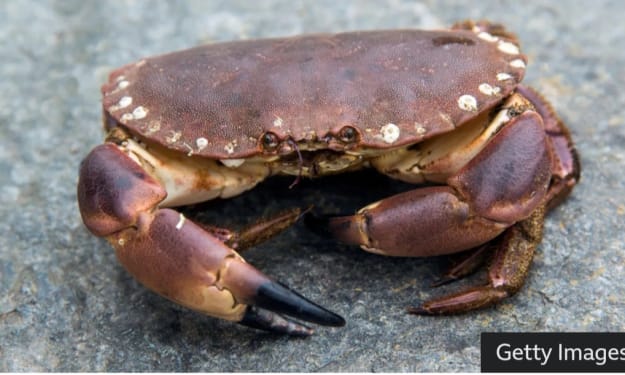
Workers Recover 15,000 Crabs After Lorry Crashes Into Field
An extraordinary scene unfolded when a lorry carrying an estimated 15,000 live crabs crashed into a field, spilling its cargo across farmland and prompting a large-scale recovery effort. The unusual accident quickly drew attention from local residents, emergency services, and animal welfare groups, as workers scrambled to rescue as many crabs as possible before they succumbed to exposure.
By Aarif Lashari6 days ago in Earth



Comments
There are no comments for this story
Be the first to respond and start the conversation.