
The Strawberry moon has nothing to do with color
The next lunar event may not be what you are expecting.


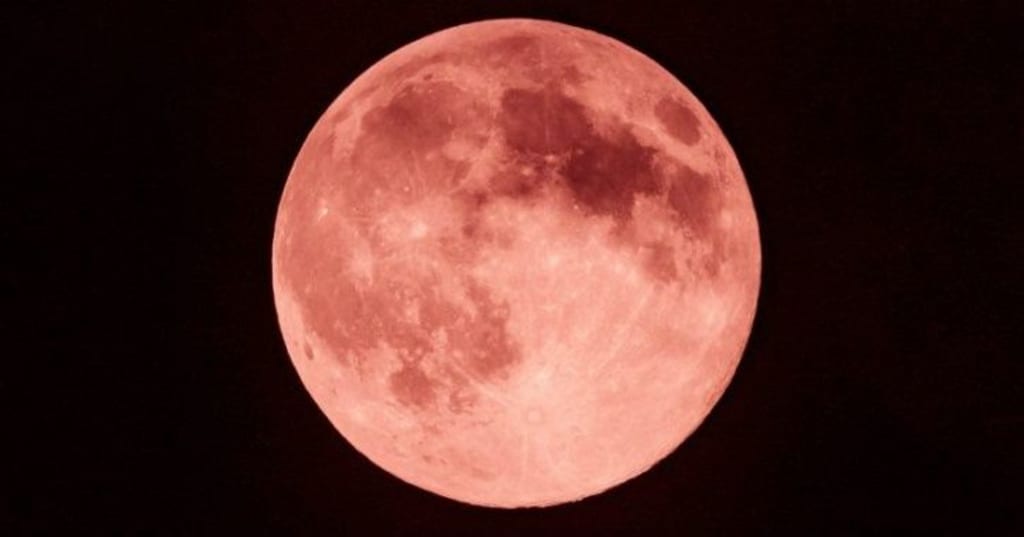
Get your telescopes ready because the heavens are about to provide yet another spectacular feat. A strawberry moon is coming but you might be surprised at how this name originated. Many times we pass names, phrases, and slogans down through the generations without ever knowing the origin. The night sky has been revealing many wonders to those of us on the earth. From a lunar eclipse to a partial solar eclipse to supermoons, 2021 been an unusual year for lunar events.The month of June marks the year's final supermoon, with a full "strawberry" moon that will illuminate next week’s night sky.
A supermoon takes place when the moon is at its closest point to Earth in its orbit, which is known as perigee. The moon appears somewhat brighter and larger than a typical full moon, and although the one in the photo appears red, this is not typical. Scientists, however, disagree on the manner of officially classifying this phenomenon. There is controversy amongst the experts as to whether or not a June moon should be considered a supermoon. The strawberry moon usually marks the last full moon of spring or the first one of summer. According to the Farmer’s Almanac, this has also been called the birth moon, blooming moon, hoer moon, green corn moon, egg laying moon and hatching moon, mead moon, and honey-moon. According to Gordon Johnston from NASA, there is a debate on what actually qualifies as a supermoon in 2021. Some publications include the four full Moons from March to June, others the three full Moons from April to June, and some only the two full Moons in April and May as supermoons.

According to the Farmer’s Almanac, a June full moon is often called the strawberry moon but it is not because of the moon's hue or that it is shaped like a strawberry. It was given this name by Native American tribes for the strawberries harvested in parts of North America during this time of year. The term "honeymoon" for newlyweds may possibly be associated with this full moon, because of the tradition of June weddings and might be why the "honey-moon" is called the "sweetest" moon. June has been known as the most popular month for weddings and many women have said they desired to be June brides.
The full moon will reach peak illumination on Thursday, June 24, at 2:40 p.m. ET, but will not be visible until later in the evening when it rises above the horizon. The moon will appear full for about three days between Wednesday morning and Saturday morning. If weather permits, this will be a good time to take photos or obtain video footage. On the evening of Thursday, June 24, look towards the southeast just after sunset to watch the full moon rise. It will not be strawberry colored, but will appear larger than usual and will have a golden hue.
June’s full Moon will reach peak illumination at 2:40 P.M. Eastern Time on June 24, but will not be visible until later that evening, when it drifts above the horizon. You can go to timeanddate.com to find the exact time of the moonrise and moonset in your neck of the woods. If there will not be a clear view of the event from your location, you can watch it from Virtual Telescope Project's livestream on June 24 which will show the moon over Rome beginning at 3 p.m. ET.
About the Creator
Cheryl E Preston
Cheryl enjoys writing about current events, soap spoilers and baby boomer nostalgia. Tips are greatly appreciated.
Keep reading
More stories from Cheryl E Preston and writers in Earth and other communities.
The Pleadies and Orion: Mythology, The Bible and History agree on their brilliance
Pleides: The Seven Star Cluster The Pleiades is a 7-star cluster in the heavens and is one of the most noticeable of all the star patterns. Without magnifying equipment, this cluster looks like a tiny, misty dipper of six little stars. The Pleiades are sometimes referred to as the Seven Sisters because, in Greek mythology, the Pleiades were the seven daughters of Atlas and Pleione.
By Cheryl E Preston3 months ago in Earth




Comments
There are no comments for this story
Be the first to respond and start the conversation.