
The Story of the Mayans
PART 1: The Rise of the Maya Civilization


The Maya civilization is one of the most enigmatic and intriguing cultures of ancient America. Spanning over 2,000 years, the Maya civilization left behind a rich legacy of art, architecture, and scientific knowledge that continues to fascinate historians and archaeologists to this day. In this article, we will delve into the history of the Maya civilization and explore the factors that led to their rise.
Origins of the Maya Civilization
The Maya civilization emerged in the Yucatan Peninsula of modern-day Mexico around 2000 BCE. At this time, the region was inhabited by a number of small farming communities that were practicing basic forms of agriculture. Over time, these communities began to develop more sophisticated agricultural techniques, such as terraced farming, which allowed them to grow crops on steep hillsides.
As these communities began to prosper, they developed a more complex social structure, with some individuals becoming leaders and others working as farmers, artisans, or traders. These communities also began to develop a system of writing, which allowed them to record important events and share information with other communities.
The Classic Period
Around 250 CE, the Maya civilization entered what is known as the Classic Period. During this time, the Maya civilization experienced a period of rapid growth and development. They built impressive cities, such as Tikal, Copan, and Palenque, which were home to thousands of people.
The Maya people were skilled architects and engineers, and they constructed elaborate buildings and temples that were adorned with intricate carvings and murals. They also developed a system of mathematics and astronomy that was incredibly advanced for its time, allowing them to accurately predict astronomical events and create a sophisticated calendar system.
Religion and Society
The Maya civilization was deeply religious, and their beliefs and practices played a significant role in their daily lives. The Maya religion was polytheistic, and they worshipped a vast pantheon of gods and goddesses who were associated with natural elements such as the sun, moon, and rain.
The Maya believed that their rulers had a direct connection to the gods, and the king was seen as both a political and a religious leader. The king was responsible for overseeing the construction of temples and other important buildings, as well as performing rituals and ceremonies to honor the gods.
Maya society was hierarchical, with the king and his family at the top of the social hierarchy. Beneath them were the nobles, who held positions of power and authority, and below them were the common people, who worked as farmers, artisans, or traders.
The Collapse of the Maya Civilization
Despite their impressive achievements, the Maya civilization began to decline around 900 CE. Scholars are still uncertain about the exact reasons for this decline, but some of the factors that may have contributed include overpopulation, environmental degradation, political instability, and warfare.
By the time the Spanish arrived in the 16th century, the Maya civilization had largely collapsed, and many of its cities had been abandoned. However, the Maya people and their culture have continued to survive, and today there are over 6 million Maya people living in Mesoamerica.
To be continued...
About the Creator
Kingson Makesan
Hi, I'm Kingson, an Experienced freelance writer creating engaging & informative content. Meticulously researched articles deliver valuable insights on the latest trends, skills, & ideas. Let's collaborate!
Keep reading
More stories from Kingson Makesan and writers in Earth and other communities.
The recent position of Donald Trump
Donald Trump has been a polarizing figure in American politics for many years, and his recent position has been no exception. Since leaving office in January 2021, Trump has remained a prominent figure in the Republican Party and has continued to make headlines with his statements and actions.
By Kingson Makesan 3 years ago in Humans
Walk the Coast Your Way: A Self-Guided Cape to Cape Experience
The Cape to Cape Track is a stunning walking trail in Western Australia, stretching about 135 kilometres along the Margaret River coastline. The trail passes sandy beaches, rugged cliffs, and peaceful forests, offering a mix of adventure and calm. While guided tours are popular, many walkers prefer a self-guided experience. Walking independently lets you set your own pace, choose when to rest, and spend more time enjoying each view.
By David Jhonabout an hour ago in Earth
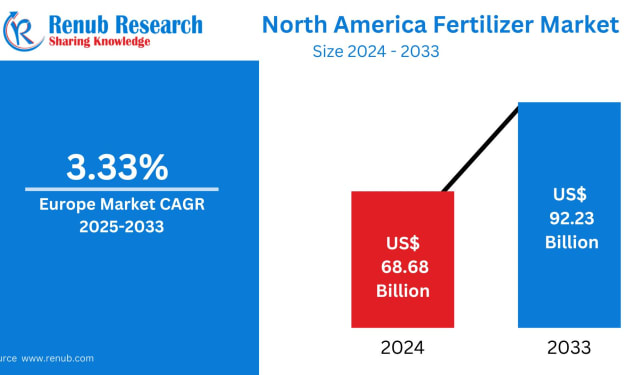
North America Fertilizer Market Size and Forecast 2025–2033
Introduction: Fertilizer as the Backbone of Modern Agriculture The fertilizer industry remains one of the most critical pillars supporting global food production, and in North America, its importance is growing stronger with each passing year. Fertilizers—whether organic or inorganic—play a vital role in replenishing soil nutrients, improving crop yields, and sustaining long-term soil fertility. As the region faces increasing food demand, climate pressure, and the need for sustainable agricultural practices, fertilizers are becoming more advanced, efficient, and environmentally responsible.
By Aaina Oberoiabout 20 hours ago in Earth



Comments
There are no comments for this story
Be the first to respond and start the conversation.