
The Sound of Health: Could AI One Day Diagnose Plants by Listening?
Exploring the frontier where artificial intelligence meets plant bioacoustics to detect distress we cannot hear.

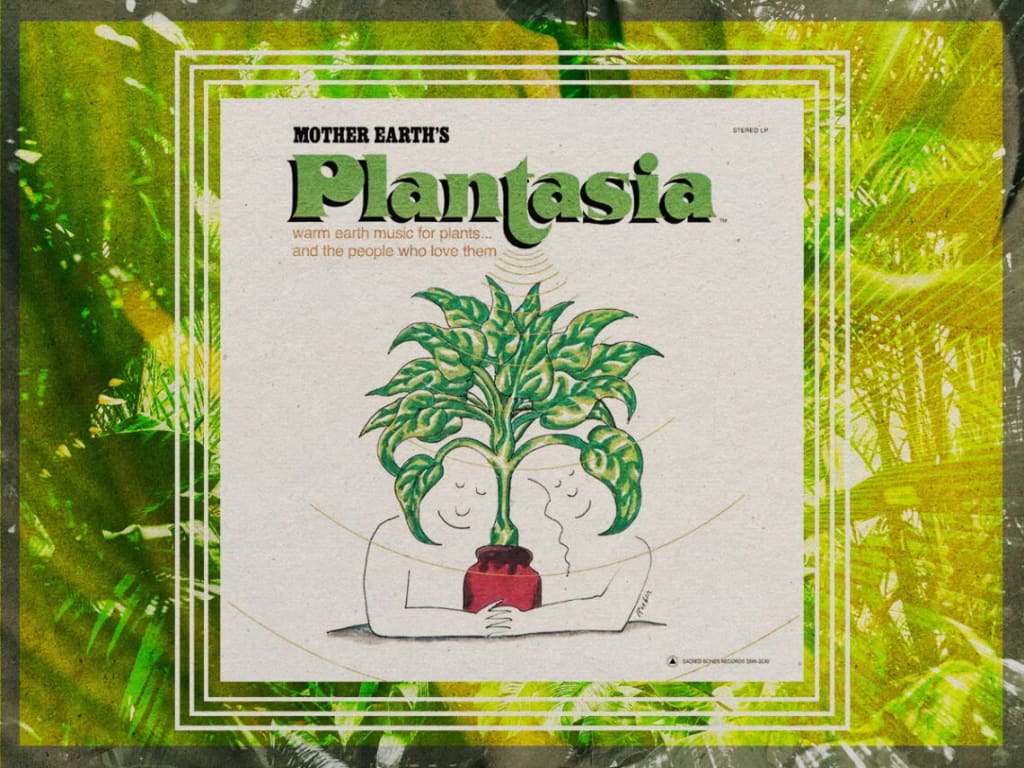
For centuries, humans have diagnosed plant health through sight and touch—yellowing leaves, wilting stems, soft spots. But what if our plants could tell us they're in trouble, not with a visual cue days too late, but with a sound at the very onset of stress? This isn't science fiction. Groundbreaking research is revealing that plants do, in fact, emit sounds, and artificial intelligence (AI) is learning to interpret these acoustic signatures. We stand at the edge of a new era where listening to our plants could become a fundamental tool for their care.
The Silent Scream: Discovering Plant Acoustics
The idea that plants might make noises has transitioned from folklore to peer-reviewed science. A pivotal 2023 study from Tel Aviv University, published in the journal Cell, provided compelling evidence. Researchers placed tobacco and tomato plants in an acoustic box in a greenhouse. Using sensitive microphones, they discovered that plants emit distinct, airborne sounds, especially when under stress.
These sounds are high-frequency clicks, akin to the popping of bubble wrap, but at frequencies mostly beyond human hearing (40-80 kHz). The study found that a stressed plant emits around 30 to 50 of these clicks per hour, while an unstressed plant is largely quiet. Crucially, the sound profile varied with the type of distress:
- Dehydration: Plants made specific noises when their stems were drying out.
- Physical Damage: A different acoustic pattern emerged when a stem was cut.
This suggests plants aren't just making random noise; they are producing informative, condition-specific signals.
How AI Becomes the Plant Listener's Ears
Hearing the sounds is one thing; understanding them is another. This is where machine learning, a subset of AI, becomes essential. The process works in three key stages:
- Data Collection & Training: Scientists record tens of thousands of these ultrasonic clicks from plants in various known states—healthy, thirsty, infected, or wounded. This audio data is fed into an AI model, which is "trained" to recognize patterns and correlations. For instance, it learns that a specific cluster of sound frequencies and rhythms correlates 99% of the time with a tomato plant that hasn't been watered for five days.
- Pattern Recognition & Diagnosis: Once trained, the AI can analyze new, unseen audio data from a plant. It doesn't "hear" like we do; it processes the audio as a complex spectrogram (a visual representation of sound frequencies over time). It scans this image for the patterns it learned, then outputs a diagnosis: "This plant is likely experiencing early-stage drought stress," potentially days before any wilting is visible.
- From Lab to Field: Prototypes are already being tested. Research published in Frontiers in Plant Science has explored using AI to analyze the sounds of crop plants for early disease detection. The vision is for this technology to be integrated into irrigation systems, greenhouse sensors, or even a future smartphone app that can listen and give gardeners a real-time health report.
The Potential: A Revolution in Plant Care
The implications of this technology are profound for everyone from home gardeners to industrial farmers.
- Precision Care for Homeowners: Imagine a small, stylish device on your plant shelf that listens to your fiddle-leaf fig or orchid. Your phone receives a notification: "Your Monstera is emitting early dehydration signals. Consider watering in the next 24 hours." This moves plant care from reactive to truly proactive, preventing damage before it occurs.
- A New Frontier for Agriculture: On a large scale, this could be transformative. Autonomous drones or field-based sensors equipped with ultrasonic microphones and AI could monitor vast crops, pinpointing the exact plants or rows that are thirsty, sick, or under pest attack. This enables precision agriculture, where water, pesticides, and fertilizers are applied only where and when needed, boosting yields while conserving vital resources.
- A Deeper Connection: Beyond the practical, this technology invites us to perceive plant life in a new way. It confirms that plants are dynamic, responsive organisms. Listening to them could foster a deeper, more intuitive relationship with the natural world in our homes and gardens.
- The Noise Problem: A home, farm, or forest is a cacophony of sound—wind, insects, machinery, distant traffic. A core challenge for AI is learning to isolate the faint, ultrasonic pops of a plant from this immense background noise. Current research often uses soundproof boxes; making the technology robust in real-world environments is an ongoing engineering task.
- Building the "Translation Dictionary": We have early proof that dehydration sounds different from a cut stem. But what does the sound of a powdery mildew infection, nitrogen deficiency, or aphid infestation sound like? The AI needs to be trained on a massive, comprehensive library of plant ailments and their acoustic fingerprints. This "dictionary" is still in its first chapters.
- Hardware Accessibility: Capturing ultrasonic frequencies requires specialized, sensitive microphones not typically found in consumer devices. For this to become mainstream, either this hardware must become cheap and ubiquitous, or brilliant software solutions must find ways to extract signals from standard microphones.
The Challenges on the Path from Concept to App
While the promise is exciting, significant hurdles remain before you can download a "Plant Doctor" listening app.
The Verdict: A Resonant Future
Could AI one day diagnose your plants by listening? The scientific foundation says yes. The concept is proven in controlled studies. The question is no longer "if" but "when" and "how seamlessly" it will integrate into our lives.
The future likely holds a blend of technologies. A gardener might use a visual plant identification app to know what a plant is, and a future acoustic sensor paired with AI to know how it feels. While a consumer product for the home may be several years away, the research is accelerating. We are learning the lexicon of plant sounds. The day may come when tending to your plants begins not with a glance, but with a quiet moment of listening, guided by an intelligent assistant that translates their silent needs into clear, actionable care.
About the Creator
Emma Wallace
Director of Research and Development at AI Plant Finder (Author)
Emma Wallace is an esteemed researcher and developer with a background in botany and data analytics.
Keep reading
More stories from Emma Wallace and writers in Earth and other communities.
The Holiday Cactus Conundrum: Tell Your Thanksgiving, Christmas, and Easter Cactus Apart
A Trio of Holiday Classics First, a little botanical history to understand the confusion. All three plants are tropical cacti (epiphytes) native to the rainforests of Brazil, where they grow on trees. The Thanksgiving (Schlumbergera truncata) and Christmas (Schlumbergera × buckleyi) cacti are close cousins within the same genus. The Easter cactus (Hatiora gaertneri), however, has been reclassified into a different genus altogether, which explains its more significant differences.
By Emma Wallacea day ago in Earth
Violent Winds Could Strike Without Warning — Officials Urge Extreme Caution*
**Violent Winds Could Strike Without Warning — Officials Urge Extreme Caution** Meteorologists have issued an urgent warning as violent winds are expected to develop rapidly, posing a serious threat to public safety. Weather experts say conditions are becoming increasingly unstable, with sudden gusts capable of causing damage within minutes. Unlike typical windy days, this event is marked by unpredictability, making it especially dangerous for residents, travelers, and outdoor workers.
By America today 4 days ago in Earth



Comments
There are no comments for this story
Be the first to respond and start the conversation.