
The Silent Strangulation: How Human Hands are Ending Breath and Life on Earth
How Deforestation, Water Misuse, and Climate Change are Accelerating Humanity’s Environmental Collapse

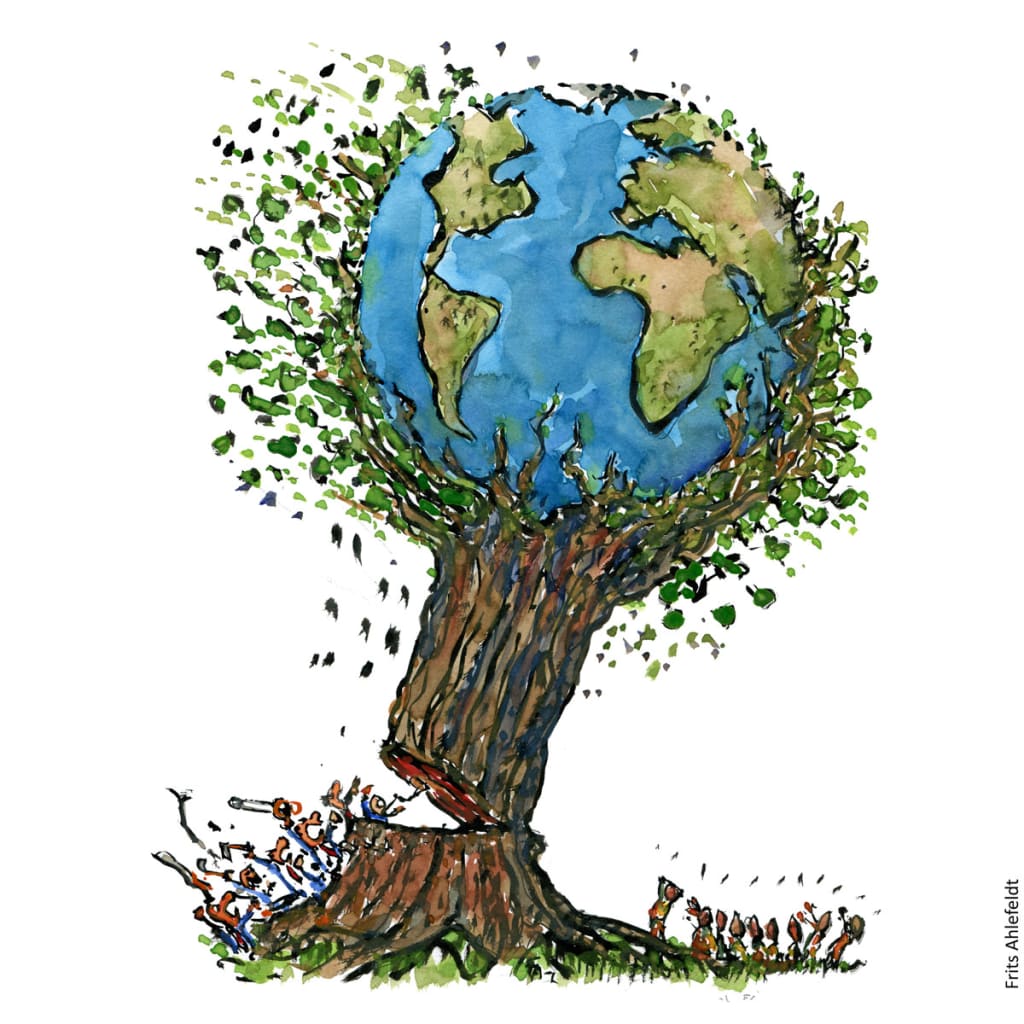
In recent years, humanity has been inching closer to a self-inflicted environmental disaster. Like someone slowly cutting off their own breath, we are depleting the very resources that sustain life—forests, water, air, and ecosystems. Our actions, driven by industrialization, deforestation, and reckless use of natural resources, are pushing the planet to its limits. This article explores how human activities, such as cutting down trees and misusing water resources, contribute to climate change and other environmental crises.
Deforestation: The Slow Death of the Planet's Lungs
Trees are often referred to as the "lungs of the Earth" for good reason. They play a vital role in absorbing carbon dioxide and producing oxygen, making the air we breathe. Forests also help regulate the Earth's climate by stabilizing temperatures and influencing rainfall patterns. Moreover, they provide habitats for countless species, contribute to the water cycle, and prevent soil erosion.
However, human activities have drastically reduced forest cover across the world. Each year, we lose approximately 10 million hectares of forest, a trend driven largely by agriculture, urbanization, and logging. Tropical forests, in particular, are being cleared at alarming rates to make way for cattle ranching, palm oil plantations, and other commercial activities.
The consequences of deforestation are manifold:
1. Loss of biodiversity: Forests are home to over 80% of terrestrial species. As these ecosystems are destroyed, countless plants and animals face extinction. The World Wildlife Fund (WWF) estimates that between 200 and 2,000 species go extinct every year, primarily due to habitat loss.
2. Increased carbon emissions: Forests act as carbon sinks, meaning they absorb large amounts of carbon dioxide. When trees are cut down, not only is this carbon absorption capability lost, but the carbon stored in the trees is released back into the atmosphere, exacerbating global warming.
3. Soil degradation: Trees prevent soil erosion by stabilizing the ground with their roots. When forests are removed, topsoil—the most fertile layer—erodes, leading to desertification and loss of agricultural productivity.
The unchecked deforestation is, therefore, a direct assault on the natural systems that provide humanity with clean air, food, and water.
Water Resources: Misuse and Overexploitation
Water is essential for life. Yet, humans have exploited and polluted water resources to the point of crisis. Freshwater is increasingly scarce due to a combination of climate change, industrial pollution, and unsustainable agricultural practices. According to the United Nations, by 2050, nearly 5 billion people could face water shortages.
Key challenges surrounding water resources include:
1. Overuse of freshwater: Agriculture consumes around 70% of the world's freshwater supply, much of which is wasted due to inefficient irrigation methods. Industrial sectors and growing urban populations also demand huge amounts of water, leaving little for natural ecosystems and other human needs.
2. Water pollution: Rivers, lakes, and oceans are contaminated by industrial waste, chemical runoff from farms, and plastic pollution. This not only harms aquatic life but also makes clean water increasingly difficult to access for humans.
3. Aquifer depletion: In regions where surface water is limited, humans have turned to underground aquifers. Overpumping has led to the depletion of these water reserves, which take centuries to replenish, leaving future generations with fewer water resources.
These problems are exacerbated by climate change, which is altering precipitation patterns and making droughts more frequent. As water scarcity intensifies, it threatens to destabilize societies, contributing to food shortages, migration, and even conflict.
Climate Change: The Ultimate Consequence
The interconnectedness of deforestation, water misuse, and other human activities leads to the most significant environmental challenge of our time—climate change. As we pump greenhouse gases into the atmosphere, primarily through burning fossil fuels and cutting down forests, we are witnessing rapid changes to the Earth's climate system.
The impacts are wide-reaching:
1. Global temperature rise: The planet’s average temperature has already risen by 1.2°C since pre-industrial times. Even a small increase in temperature disrupts weather patterns, leading to more extreme heatwaves, wildfires, storms, and floods.
2. Melting ice and rising sea levels: The polar ice caps and glaciers are melting at unprecedented rates, contributing to rising sea levels. Low-lying coastal areas are at risk of flooding, and entire communities may be displaced as a result.
3. Ocean acidification: Increased carbon dioxide levels are being absorbed by the oceans, making them more acidic. This threatens marine life, particularly coral reefs and shellfish, which are vital for the overall health of marine ecosystems.
The Broader Impact on Humanity
These environmental crises have a direct impact on human well-being. Climate change, deforestation, and water scarcity threaten food security, access to clean water, and overall health. Increased frequency of extreme weather events, such as floods and droughts, is leading to economic instability, loss of homes, and forced migration. Additionally, declining biodiversity weakens ecosystems, making them less resilient to future changes.
The Path Forward: Can We Save Ourselves?
While the situation is dire, it's not too late to reverse some of the damage. Governments, businesses, and individuals must take urgent action to adopt sustainable practices. Reforestation efforts, water conservation measures, and transitioning to renewable energy sources are critical steps toward mitigating climate change and preserving the Earth’s ecosystems.
In conclusion, humanity’s actions—cutting down trees, mismanaging water resources, and fueling climate change—are leading to its own slow suffocation. We are cutting off the planet’s ability to sustain life, and by extension, our own survival. It’s time to recognize the urgency of the situation and work together to protect the future of our planet.
About the Creator
Keep reading
More stories from Muhammad Waheed Asghar and writers in Earth and other communities.
Educated but Ignorant: The Paradox of Modern Knowledge
In today's world, formal education is often viewed as the key to success, progress, and intelligence. Yet, we increasingly encounter a puzzling phenomenon: people who are well-educated but still demonstrate ignorance in certain areas. This paradox of being "educated but ignorant" raises important questions about the nature of education and knowledge in the modern age.
By Muhammad Waheed Asgharabout a year ago in Education
Stanislav Kondrashov on the Role of Smart Grids in the Energy Transition
In the unfolding narrative of global energy transition, one innovation continues to shape the path forward with quiet persistence: smart grids. As countries shift away from fossil fuels and towards decentralised, renewable energy sources, smart grids are emerging as the invisible backbone of the future energy landscape. According to energy strategist and researcher Stanislav Kondrashov, the smart grid isn't just a technical upgrade—it's a fundamental rethinking of how societies generate, distribute, and consume power.
By Stanislav Kondrashov7 days ago in Earth


Comments
There are no comments for this story
Be the first to respond and start the conversation.