
The Silent Countdown: Why Earth’s Last Breath Won’t Be from Climate or Comets”
Scientists reveal a sobering truth—our planet’s ultimate doomsday may not come from fire or ice, but from a slow, quiet suffocation.

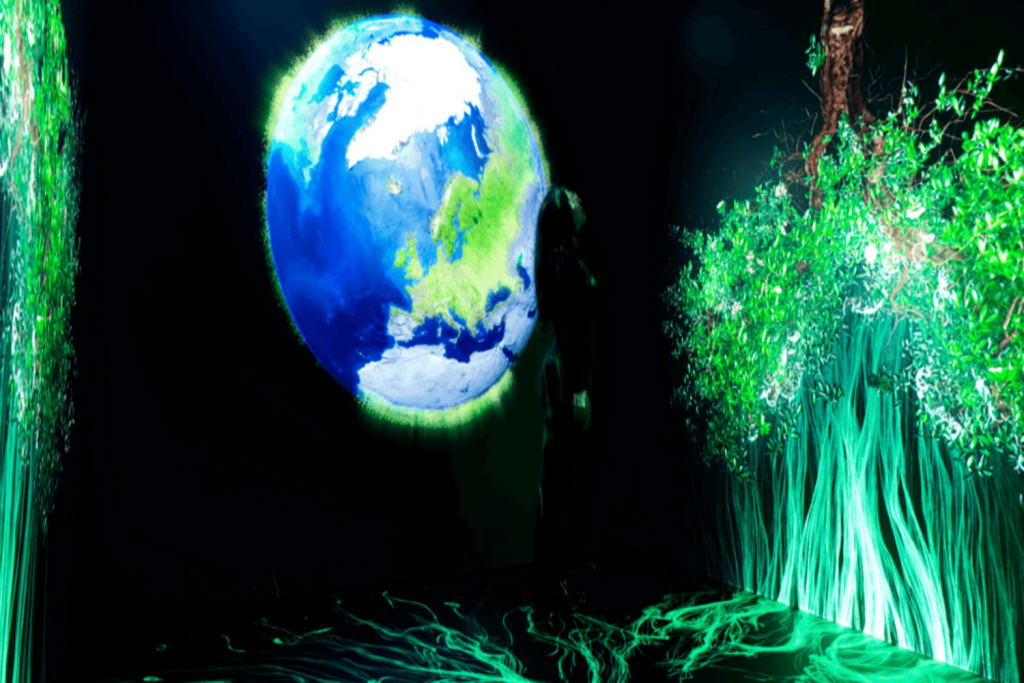
In a world obsessed with end-of-the-world movies and sudden doomsday plots—climate catastrophe, AI takeovers, nuclear war, asteroid collisions—few have considered the possibility that the end would not arrive with a bang, but in a stifled gasp. A new study by Toho University in Japan, supported by NASA data, has placed a chilling new spin on Earth's distant future. It won't be fire or flood that will snuff out life as we know it, but the gradual and irreversible draining of oxygen.
Indeed—oxygen. The very substance that sustains every breath you take, every flame that burns, and every ecosystem on Earth. The Earth's breathable atmosphere, we discover from this groundbreaking research, is not a guarantee, and its breakdown is already an event in the calendar—one that it may be impossible to avoid.
The Science Behind Earth's Last Breath
Toho University scientists used advanced climate and geochemical models to project the future development of the Earth's biosphere and atmosphere. Their findings say that within approximately one billion years the oxygen levels will drop so low that the majority of complex life, including plants, animals, and eventually even microbes—will be unable to survive.
The cause of this slow extinction is rooted in the evolution of our sun. The sun, as it continues to age, will become hotter and brighter. Increasing solar radiation will disrupt the earth's carbon dioxide cycle by reducing CO₂ in the atmosphere. Reduced carbon dioxide, ironically, means reduced photosynthesis—the process by which plants produce oxygen. With decreased photosynthesis, the levels of oxygen will decline.
Unlike sudden calamities like asteroid collisions, this one will be gradual and relentless. Life will not come to an end overnight. Instead, there will be a steady, suffocating loss of biodiversity, a dimming of the theater light before the final act.
What Will Happen First?
As the models predict, the collapse will start with the death of vegetation. When photosynthesis is inefficient due to limited CO₂, plants will die off. Without plants to recycle the oxygen cycle, O₂ in the air will drop drastically.
This decrease in oxygen will eventually have a domino effect:
Mammals, birds, and other oxygen-breathing animals will die off.
Ocean ecosystems will collapse as fish and aquatic animals suffocate.
Even tough microorganisms that exist in extreme environments will struggle to survive.
Earth's skies will eventually look more like those of the Archean Eon—methane-rich and oxygen-poor—more akin to what things were like billions of years ago than the life-filled planet we have today.
A Billion-Year Grace Period?
While this scenario sounds grim, there’s a significant silver lining—it won’t happen for a billion years. That’s 1,000 million years away. It’s an incomprehensible stretch of time by human standards, longer than all of recorded history by orders of magnitude.
So, is there reason to panic? Absolutely not. But is there reason to ponder? Absolutely.
This study offers a sobering sense of scale. It's a reminder that the world, and life itself, is at the mercy of cosmic and geologic forces much larger than us. Climate change, while urgent and man-made, is operating on a short timescale. Oxygen collapse is the long game—the ultimate end of Earth habitability.
Implications Beyond Earth
NASA's interest in supporting this research is not strictly theoretical. The findings focus the search for life elsewhere in the universe. If atmospheres conducive to life are brief episodes in the life of a planet, the chance for the existence of alien life might be smaller than we think.
Planets may be habitable for only brief geological periods. This would explain the "Fermi Paradox"—why we have yet to find intelligent life despite the vastness of space. We might be dropping by at the wrong moment.
The Poetry of Planetary Mortality
There is something deeply poetic in the idea that the last gasp of Earth will not be snuffed out by violence or arrogance, but will simply fade away, unnoticed. The planet that gave rise to the symphonies of Beethoven, the pyramids of Maya, coral reefs, and hummingbirds will slowly come to a stop—not from strife, but from the quiet procession of starry time.
The study does not suggest that humans, or even their very remote descendants, will be around to witness that final gasp. Most likely, if our species survives even part of the way there, we will have long since moved on from the Earth. But it adds to the book of knowledge—a cosmic obituary, written in advance.
Last Thoughts
Although climate change remains the urgent existential threat of our age, this study offers the gift of perspective. The Earth does have a biological expiration date, one set not by our hand but by the processes of the universe itself. It's a reminder of our fragility, but also our incredible fortune to be alive during the planet's golden age.
Take a breath. Each breath is on loan from a billion-year miracle.
About the Creator
MD NAZIM UDDIN
Writer on tech, culture, and life. Crafting stories that inspire, inform, and connect. Follow for thoughtful and creative content.
Keep reading
More stories from MD NAZIM UDDIN and writers in Earth and other communities.
Stitching Legacy: The Met Gala 2025 Red Carpet Was a Symphony of Style and Story”
Crowning the Night: The Met Gala 2025 Red Carpet Was a Masterpiece of Style as Storytelling The first Monday in May once again transformed the steps of the Metropolitan Museum of Art into a living canvas, where fashion was performance, history, and prophecy blended. The 2025 Met Gala, whose theme was "Superfine: Tailoring Black Style," was not merely a celebration of haute couture—it was a celebration of cultural heritage, self-expression, and the future of fashion defined by the past.
By MD NAZIM UDDIN 10 months ago in Interview
Skiing Photography: Capturing the Magic of Snow-Covered Landscapes on the Slopes
Winter mountains create a scene that feels calm, bright, and powerful at once. Snow spreads across the ground, trees, and mountain peaks like a natural blanket. The white surface reflects sunlight, making the entire area glow. Skiers moving through the snow add life and motion to this peaceful setting. This mix of nature and action attracts photographers from around the world. Skiing photography allows people to capture both adventure and beauty in one image.
By Neil Druker2 days ago in Earth
The Politics of Playing Dress-Up
Well, to start off I'd like to say a happy world book day to all who celebrate. I know I haven't really posted anything on my socials about it but I'm not a jubilant kind of person. I lay low most of the time. Let's start off with a popular anecdote from the vaults...
By Annie Kapur4 days ago in Geeks


Comments
There are no comments for this story
Be the first to respond and start the conversation.