
The Secret Life of Trees: How Forests Communicate, Heal, and Defend the Planet
Unveiling the hidden intelligence of forests — how trees communicate, heal ecosystems, and protect the planet from climate change.


Introduction: Forests' Essential Function in Sustaining Life
Forests cover nearly 31% of the Earth's land surface, providing oxygen, shelter, and sustenance for an immeasurable number of organisms. But beyond their well-known functions in sustaining life on this planet, trees also lead a myriad of hidden life, much of which occurs beneath the forest floor and in the higher echelons of the canopy. These giant beings are much more than inert carbon repositories or wood producers. They are essential actors in the world's ecological well-being, with complex networks and ingenious mechanisms to communicate, heal, and defend the environment.
Researchers have, in recent years, started to reveal tree life's complexity in ways that are rewriting our knowledge of nature. Trees are anything but alone; they live in interconnected networks, they cooperate to live, and they possess mechanisms of self-defense and resilience. In this piece, we venture into the hidden life of trees: how they communicate among themselves, regenerate ecosystems after disasters, and fight climate change—lessons ultimately in nature's self-healing and that of the planet.
The Secret Underground World of Tree Roots: The 'Wood Wide Web'
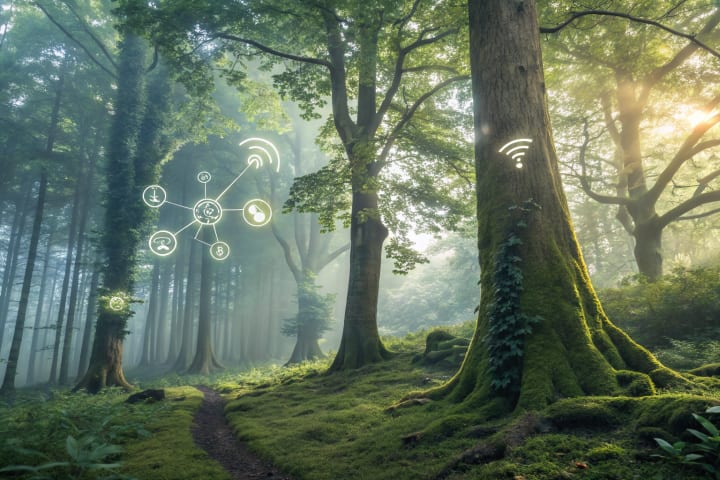
One of the most fascinating discoveries in forest ecology is the existence of what scientists call the "Wood Wide Web," a network of roots and mycorrhizal fungi that connects trees to one another beneath the forest floor. Mycorrhizal networks—fungi that form symbiotic relationships with plant roots—are at the heart of tree communication and resource exchange.
Through this network, trees are not individual entities but part of a huge, interconnected system. Mycorrhizal fungi facilitate nutrient exchange, whereby trees send sugars and other nutrients to fungi, and fungi send trees necessary minerals such as phosphorus. But these networks do more than facilitate nutrient exchange; they also facilitate tree communication.
The "Wood Wide Web" enables trees to share resources like water and carbon, and even send warning signals when they are attacked. If, for example, a tree is being attacked by insects or pathogens, it can send chemical warnings through the network, alerting nearby trees to ramp up their defenses. In a sense, trees look after one another through these networks, especially when under stress or environmental pressure.
More recent studies have found that younger trees, which are less resistant to environmental stressors, are helped along by the resources shared by larger, older trees through the mycorrhizal network. This communal type of sharing allows the entire forest to be healthy and in balance, showing that even in the plant kingdom, survival is often a collective effort.
How Trees Share Resources and Warnings
While the below-ground networks provide a means for sharing resources, trees also interact above ground, particularly through leaves and branches. Trees can release chemical signals in the form of VOCs into the atmosphere when they are infested by insects. The VOCs serve as an alarm to nearby trees, where it triggers defense mechanisms. For example, a tree that is being attacked by caterpillars can release a specific VOC that induces other nearby trees to produce chemicals that make their leaves undesirable for the insects.
Secondly, trees also tend to work together in a way to enable one another to survive. In the presence of environmental stress conditions like drought, some tree species can regulate water loss and share the available resources with others through their roots. This communal approach to resources allows the forest as a whole to be more resilient, allowing it to flourish even when conditions are unfavorable. Through this kind of "social cooperation," trees protect not only themselves but improve the overall ecosystem, showing how community is vital to sustaining life.
In some cases, trees take it a step further. African acacia trees, for instance, can warn each other of herbivore threats by releasing chemicals that affect not just their immediate surroundings but also distant trees. These synchronized defense strategies show that trees do not act simply as individual organisms but as part of a large, cooperative network.
The Tree Communication Process: Chemicals and Electrical Signals
Tree communication is not limited to the exchange of physical resources only but also involves sophisticated electrical and biochemical signals in which trees coordinate and respond to the environment. While plants and trees lack any nervous system, they also employ electrical signals to communicate information, in a way similar to how animals use nerve impulses.
When trees are in danger—whether from insects, disease, or physical damage—they send electrical impulses through their vascular system. These impulses, similar to nerve impulses, travel through the tree, stimulating cells to emit defensive chemicals. It is similar to what animals do when they send messages of pain to the brain when injured. In some cases, these impulses are transmitted from tree to tree, alerting the whole forest to the possibility of danger.
Aside from that, trees also produce phytohormones like jasmonic acid as a reaction to herbivore attack or damage. The chemical signals enable the trees to "decide" how to respond, be it by producing toxins to deter herbivores, reinforcing their physical defenses, or even summoning predators to consume the damaging pests.
This chemical and electrical signaling system not only enables trees to respond to immediate threats like these but also operates toward the long-term health of the forest by maintaining a kind of communal vigor. This incredible volume of communication reveals that trees, though immobile, are very dynamic in the broader context of their ecosystems.
How Forests Renew and Heal After Natural Disasters
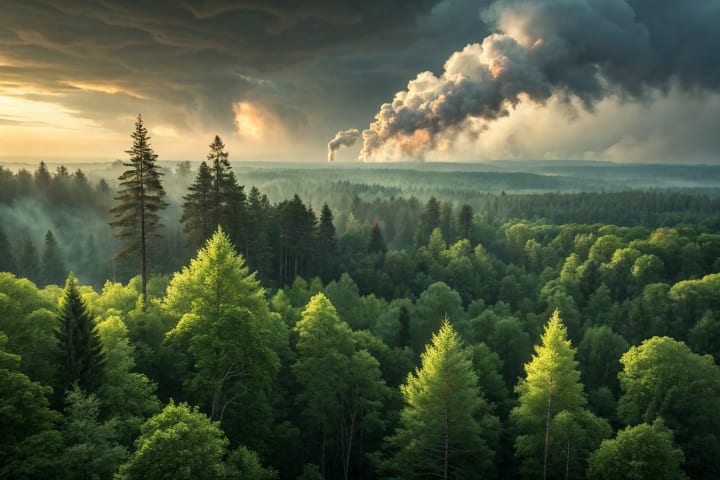
One of the most dramatic abilities of forests—and by extension, trees—is their capacity to regenerate themselves following natural disasters in the form of fires, floods, or storms. While landscapes designed by humans struggle to recover from intense disturbance, forests are built to fix themselves.
When a forest is disturbed, whether by fire, flood, or even logging, trees and plants work together to find a balance once more. Fire seems to be a destructive force, but many forests, like the California chaparral, have evolved over time to thrive in the wake of fire. Some trees have a solid bark that protects them from fire, and others, like sequoias, depend on fire to open their cones and release seeds.
Even if a disaster is particularly catastrophic, forests demonstrate the remarkable ability to regenerate from stumps, roots, and surrounding vegetation. Some tree species, like the European beech, are capable of regenerating from their root systems and begin producing new shoots, essentially "healing" themselves over time.
Forests also provide the world with a crucial function of soil erosion prevention. After a storm or flood, trees again hold the soil in place with their root systems, preventing further erosion and allowing new vegetation to grow. In this way, trees actively assist in their ecosystem's healing process, restoring biodiversity and stability to damaged ecosystems.
The Role of Trees in Combating Climate Change
One of the most important things that trees do is their action to mitigate climate change. Trees are natural carbon sinks and absorb carbon dioxide (CO₂) from the air through the process of photosynthesis. Forests, indeed, absorb about 30% of the earth's carbon emissions every year and thus are a vital means to fight global warming.
And yet, climate change is not only something that trees are able to fight; it is also something that menaces their very existence. Global warming, drought, and increasingly violent storms put tremendous pressure on forests, making it more difficult for them to seal in carbon and maintain their ecosystems. This creates a feedback loop, where deforestation and forest degradation create climate change, which in turn drives further deforestation.
On the bright side, the global movement to restore and conserve forests has gained momentum in recent years. Initiatives like REDD+ (Reducing Emissions from Deforestation and Forest Degradation) suggest providing financial incentives to countries to maintain their forests, with the recognition that trees are not just an aspect of the environment—they are one of the solutions to the climate crisis.
Latest Research: How Forests Interact with the Atmosphere
Recent scientific research has made groundbreaking findings of the ways through which trees communicate with the atmosphere. Trees, for instance, have been found to release volatile organic compounds (VOCs) that play a significant role in cloud formation and atmospheric cooling. The chemicals combine with water vapor in the atmosphere to produce clouds, which bounce back solar radiation and regulate Earth's temperature.
Furthermore, trees are now realized to have a role in the hydrological cycle. By absorption and release of water through transpiration, trees maintain local and global water cycles. This cools the air, brings rainfall, and maintains groundwater levels in balance, which are essential for agriculture and drinking water sources.
Research on forest ecosystems continues to uncover how intimately connected trees are with the earth's climatic systems, emphasizing how vital forest conservation is to both environmental and human well-being.

Conclusion: The Imperative of Forest Conservation
The hidden life of trees is as fascinating as it is vital to the life of our planet. From their network roots underground to their air-purifying properties, trees possess an immense capacity to communicate, heal, and protect the planet. Their role in mitigating climate change, maintaining biodiversity, and ecological balance cannot be overstated. As we face planetary crises like deforestation, climate change, and ecosystem loss, it is clear that protecting and caring for forests is not just an environmental concern—it is an existential one.
It is our responsibility as human beings to rescue these life-supporting giants and their sophisticated networks. Tree wisdom enlightens us about cooperation, persistence, and harmony and reminds us that the health of the Earth is closely related to the health of its forests. If we are to have a future, we must first rescue the forests that sustain life on this planet.
About the Creator
The Chaos Cabinet
A collection of fragments—stories, essays, and ideas stitched together like constellations. A little of everything, for the curious mind.
Keep reading
More stories from The Chaos Cabinet and writers in Earth and other communities.
The Secret Life of Spices: How Flavor Changed Human History
Introduction – A World in a Pinch of Flavor Open a kitchen drawer, and there they sit—a stash of miniature glass jars—cinnamon, black pepper, turmeric, nutmeg, paprika. They rest quietly, unobtrusively, until called upon to sprinkle into a sauce or dust over bread. But for two millennia, these minute shavings of plants mounted epic journeys, founded empires, overthrew dynasties, rewired economies. Spices are not just flavor—they are history, medicine, and memory reduced to pinches and handfuls.
By The Chaos Cabinet4 months ago in Earth
Britain in Talks With NATO to Boost Arctic Security
The Arctic Is No Longer a Frozen Backwater For decades, the Arctic sat quietly on the margins of global politics—remote, frozen, and largely ignored. That era is over. Britain is now in talks with NATO to strengthen Arctic security, acknowledging growing risks posed by Russia and China. In a notable shift, London’s assessment aligns closely with warnings long emphasized by Donald Trump, particularly as he continues to express strategic interest in Greenland. What once sounded like an eccentric fixation has evolved into a serious geopolitical conversation. The Arctic is rapidly becoming one of the world’s most contested regions, and Britain is positioning itself to play a larger role. Why Britain Is Paying Attention Now Although the UK is not an Arctic nation, it is an Arctic-adjacent power with significant strategic interests. British officials increasingly view the High North as critical to national and allied security. Melting ice is opening new shipping routes, exposing untapped natural resources, and making military movement easier than ever before. Britain’s talks with NATO focus on intelligence sharing, joint exercises, surveillance capabilities, and protecting undersea infrastructure such as communication cables and energy pipelines. These are not abstract concerns. Any disruption in the Arctic could have immediate consequences for European security and global trade. In short, what happens in the Arctic does not stay in the Arctic. Russia’s Expanding Arctic Footprint Russia is the dominant military power in the Arctic, and it is not slowing down. Moscow has reopened Soviet-era bases, deployed advanced missile systems, expanded its icebreaker fleet, and increased patrols across the region. The Arctic coastline represents a core part of Russia’s nuclear deterrent, making it strategically vital to the Kremlin. From NATO’s perspective, this military buildup creates both risk and uncertainty. Britain, which has long been vocal about Russian aggression—from Ukraine to cyber warfare—sees the Arctic as another front where deterrence must be strengthened before tensions spiral. The concern is not necessarily an immediate conflict, but miscalculation. In a region with harsh conditions and limited communication infrastructure, even minor incidents could escalate rapidly. China’s Quiet but Steady Arctic Ambitions While Russia’s presence is overt, China’s Arctic strategy is more subtle—and equally concerning to Western planners. Beijing calls itself a “near-Arctic state,” a label that has raised eyebrows in Europe and North America. Through investments, research stations, and partnerships, China is laying the groundwork for long-term influence. Britain shares NATO’s concern that China could use civilian projects for dual-use purposes, blending scientific research with intelligence gathering and infrastructure control. As Arctic shipping routes become commercially viable, China’s interest in controlling parts of the supply chain only grows. London’s alignment with these concerns reflects a broader shift in UK foreign policy: China is no longer viewed solely as an economic partner, but as a strategic competitor. Trump, Greenland, and Strategic Reality Donald Trump’s repeated interest in Greenland—most famously his suggestion that the United States should buy it—was widely mocked at the time. Yet behind the headlines was a strategic logic that many Western governments now openly acknowledge. Greenland sits at the heart of the Arctic, hosting vital air and naval routes between North America and Europe. It is also rich in rare earth minerals critical for modern technology and defense systems. As ice recedes, Greenland’s strategic value only increases. Britain’s current position, which aligns with Trump’s warnings about Arctic vulnerabilities, shows how quickly political perceptions can change. What once seemed unconventional now appears prescient. NATO’s Arctic Awakening NATO has traditionally focused on Eastern Europe and the North Atlantic. The Arctic, despite its importance, received less coordinated attention. That is changing. Britain’s talks with NATO reflect a broader alliance effort to integrate Arctic defense into its core strategy. This includes: Increased joint military exercises in cold-weather environments Enhanced monitoring of Russian and Chinese activity Strengthening cooperation with Arctic nations like Norway, Canada, and Denmark Protecting critical undersea and satellite infrastructure For Britain, this is also about credibility. As a leading NATO member and a key military power, the UK wants to demonstrate that it can contribute meaningfully beyond its immediate geography. Climate Change as a Security Multiplier One of the most striking aspects of Arctic security is how closely it is tied to climate change. Melting ice is not just an environmental issue—it is a strategic one. New sea lanes shorten travel between Asia and Europe, while access to oil, gas, and minerals becomes easier. This transformation increases competition and reduces natural barriers that once limited military movement. Britain’s involvement reflects recognition that climate-driven changes are reshaping the security landscape faster than traditional institutions were designed to handle. In this sense, Arctic security is a preview of future global challenges where environmental change and geopolitics collide. Domestic and Diplomatic Balancing Acts Britain’s Arctic engagement is not without challenges. Increased military involvement raises questions about defense spending, priorities, and escalation risks. Diplomatically, London must balance deterrence with dialogue, avoiding actions that could unnecessarily provoke Russia while still protecting allied interests. There is also the question of public awareness. Arctic security lacks the visibility of conflicts like Ukraine, making it harder to sustain political attention. Yet policymakers increasingly argue that prevention is cheaper—and safer—than crisis response. What This Means Going Forward Britain’s talks with NATO mark an important shift in how the Arctic is viewed: not as a distant frontier, but as a central arena in 21st-century security. Agreement with Trump-era assessments on Russia, China, and Greenland underscores how geopolitical realities can outlast political controversies. As competition intensifies, the Arctic will likely become a testing ground for cooperation, deterrence, and strategic foresight. Britain’s involvement signals that mid-sized powers are no longer content to watch from the sidelines. Final Thoughts The Arctic is warming faster than any other region on Earth—and so are the geopolitical tensions surrounding it. Britain’s move to boost Arctic security with NATO reflects a growing consensus that ignoring the High North is no longer an option. Whether driven by Russia’s militarization, China’s quiet expansion, or lessons drawn from Trump’s blunt warnings, one truth stands out: the future of global security may well be shaped at the top of the world, where ice, ambition, and power now intersect.
By Muhammad Hassan7 days ago in Earth



Comments
There are no comments for this story
Be the first to respond and start the conversation.