
The Secret Language of Flowers
Beauty, Meaning, and the Stories They Tell


Flowers are one of nature’s most delicate masterpieces.
They bloom without asking, speak without words, and fill our world with color, fragrance, and meaning.
From ancient rituals to modern celebrations, flowers have always played a vital role in human life. They are present in love and loss, birth and death, silence and celebration. A single blossom can say what we sometimes struggle to express.
In every culture, every season, every garden, flowers carry a message.
This is their story.
🌸 1. A History Rooted in Petals
Flowers have been blooming for over 130 million years—far longer than humans have walked the Earth. But as civilizations grew, so did our relationship with flowers.
In Ancient Egypt, lilies were sacred and placed in tombs for the afterlife.
In Greece, flowers were woven into myths—like the narcissus, which symbolizes vanity and self-love.
In China, peonies represented wealth and honor, while plum blossoms stood for endurance in hardship.
Throughout history, flowers were not just admired—they were revered. Grown in royal gardens, offered in religious ceremonies, and used to heal both body and soul.
🌻 2. The Language of Flowers
In the 19th century, especially in Victorian England, flowers became a way to communicate secret emotions. This was known as floriography, the “language of flowers.”
Each bloom held meaning:
🌹 Red Rose – Romantic love
💐 Daisy – Innocence and purity
🌼 Sunflower – Loyalty and warmth
🌸 Cherry Blossom – The fleeting beauty of life
🌷 Tulip – Deep admiration
🥀 Black Rose – Farewell or rebirth
Bouquets became coded letters, and every arrangement could tell a full emotional story without a single spoken word.
Today, we still use flowers to communicate: in weddings, on birthdays, in sympathy, or just because.
🌺 3. More Than Decoration
Flowers aren’t just pretty—they’re essential to ecosystems. They feed pollinators like bees, butterflies, and hummingbirds, and help produce the fruits and seeds that sustain other life forms.
Bees and butterflies rely on nectar and pollen.
Birds often use flowers for food or nesting.
Humans, too, have cultivated flowers for herbal medicine, teas, oils, and even food.
Chamomile for calm. Lavender for sleep. Calendula for healing skin.
Every flower offers something more than just beauty—it offers balance and harmony.
🌷 4. Flowers and Emotion
There’s a reason we give flowers during emotional moments.
They are soft, fragile, vibrant.
They bloom fully and then fade—a reminder that beauty is temporary and precious.
A bouquet on a hospital bed brings hope.
A single rose on a grave brings remembrance.
A wildflower picked for a loved one says, "I thought of you."
Flowers mirror life itself: colorful, vulnerable, powerful in silence.
💐 5. Famous Flowers and What They Symbolize
Some flowers have become icons, each carrying deep symbolic meaning:
Lotus: Purity and rebirth in many Eastern cultures. It grows from the mud, untouched by it.
Lavender: Calm, spirituality, and grace.
Orchid: Rarity, luxury, and sensuality.
Marigold: In Mexico, used during Day of the Dead to honor ancestors.
Poppy: Remembrance, especially in war memorials.
These flowers appear not just in gardens, but in art, poetry, tattoos, perfumes, dreams—they’re woven into the fabric of human identity.
🌹 6. Flowers in Ritual and Celebration
Across the world, flowers mark life’s biggest moments:
Weddings: Bouquets, crowns, and petals thrown in celebration.
Birthdays: Bright arrangements to celebrate another year of life.
Funerals: White lilies and chrysanthemums for peace and mourning.
Festivals: Garlands in India, cherry blossom festivals in Japan, flower carpets in Europe.
From ancient flower crowns to modern arrangements, flowers represent transition, honor, and beauty—in every culture.
🌼 7. The Science Behind the Bloom
Scientifically, flowers are reproductive organs of plants. They contain all the magic needed to produce seeds and new life.
But their colors, shapes, and scents are evolutionary genius—designed to attract the right pollinators.
Bright colors lure bees.
Scent attracts insects even at night.
Shape and size determine which animals can access the nectar.
So what feels magical is, in fact, nature’s precise design.
Yet, even knowing the science doesn't take away the wonder.
🌸 8. The Healing Power of Flowers
Flowers have a quiet, psychological effect on humans. Studies show that simply having fresh flowers in a room can:
Elevate mood
Reduce stress and anxiety
Improve concentration and memory
In therapy, horticulture (gardening) is used to help patients recover from trauma, depression, or illness. The act of nurturing life is, itself, deeply healing.
A flower doesn't judge.
It just grows.
And watching it grow reminds us that we can too.
🌺 9. A Flower for Every Season
Each season brings its own blooms:
🌷 Spring: Tulips, daffodils, cherry blossoms — new beginnings
🌻 Summer: Roses, sunflowers, zinnias — passion and energy
🍁 Autumn: Dahlias, chrysanthemums — maturity and reflection
❄️ Winter: Camellias, snowdrops — resilience and quiet beauty
Just like our lives, the flower world moves in cycles.
Each bloom teaches us something: to wait, to open, to shine, and to let go.
🌹 Conclusion: In Every Flower, a Story
Flowers are more than nature’s decorations.
They are living poetry, expressions of love, life, and the unspoken parts of the human soul.
Whether growing wild in a meadow, sitting in a vase on a kitchen table, or pressed between the pages of a forgotten book—flowers remind us to slow down, feel deeply, and notice beauty in every detail.
In a world that rushes, flowers bloom slowly.
And maybe that’s the lesson we need most.
About the Creator
Farzad
I write A best history story for read it see and read my story in injoy it .
Britain in Talks With NATO to Boost Arctic Security
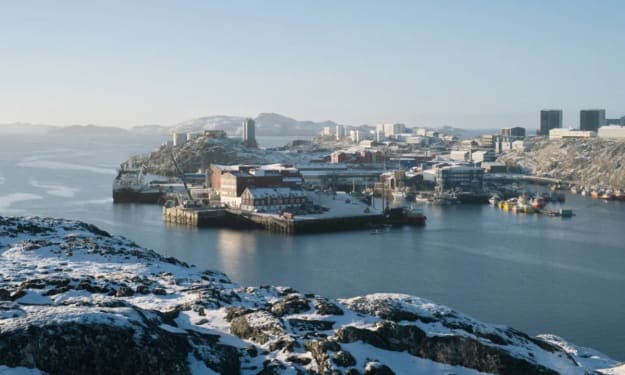
The Arctic Is No Longer a Frozen Backwater For decades, the Arctic sat quietly on the margins of global politics—remote, frozen, and largely ignored. That era is over. Britain is now in talks with NATO to strengthen Arctic security, acknowledging growing risks posed by Russia and China. In a notable shift, London’s assessment aligns closely with warnings long emphasized by Donald Trump, particularly as he continues to express strategic interest in Greenland. What once sounded like an eccentric fixation has evolved into a serious geopolitical conversation. The Arctic is rapidly becoming one of the world’s most contested regions, and Britain is positioning itself to play a larger role. Why Britain Is Paying Attention Now Although the UK is not an Arctic nation, it is an Arctic-adjacent power with significant strategic interests. British officials increasingly view the High North as critical to national and allied security. Melting ice is opening new shipping routes, exposing untapped natural resources, and making military movement easier than ever before. Britain’s talks with NATO focus on intelligence sharing, joint exercises, surveillance capabilities, and protecting undersea infrastructure such as communication cables and energy pipelines. These are not abstract concerns. Any disruption in the Arctic could have immediate consequences for European security and global trade. In short, what happens in the Arctic does not stay in the Arctic. Russia’s Expanding Arctic Footprint Russia is the dominant military power in the Arctic, and it is not slowing down. Moscow has reopened Soviet-era bases, deployed advanced missile systems, expanded its icebreaker fleet, and increased patrols across the region. The Arctic coastline represents a core part of Russia’s nuclear deterrent, making it strategically vital to the Kremlin. From NATO’s perspective, this military buildup creates both risk and uncertainty. Britain, which has long been vocal about Russian aggression—from Ukraine to cyber warfare—sees the Arctic as another front where deterrence must be strengthened before tensions spiral. The concern is not necessarily an immediate conflict, but miscalculation. In a region with harsh conditions and limited communication infrastructure, even minor incidents could escalate rapidly. China’s Quiet but Steady Arctic Ambitions While Russia’s presence is overt, China’s Arctic strategy is more subtle—and equally concerning to Western planners. Beijing calls itself a “near-Arctic state,” a label that has raised eyebrows in Europe and North America. Through investments, research stations, and partnerships, China is laying the groundwork for long-term influence. Britain shares NATO’s concern that China could use civilian projects for dual-use purposes, blending scientific research with intelligence gathering and infrastructure control. As Arctic shipping routes become commercially viable, China’s interest in controlling parts of the supply chain only grows. London’s alignment with these concerns reflects a broader shift in UK foreign policy: China is no longer viewed solely as an economic partner, but as a strategic competitor. Trump, Greenland, and Strategic Reality Donald Trump’s repeated interest in Greenland—most famously his suggestion that the United States should buy it—was widely mocked at the time. Yet behind the headlines was a strategic logic that many Western governments now openly acknowledge. Greenland sits at the heart of the Arctic, hosting vital air and naval routes between North America and Europe. It is also rich in rare earth minerals critical for modern technology and defense systems. As ice recedes, Greenland’s strategic value only increases. Britain’s current position, which aligns with Trump’s warnings about Arctic vulnerabilities, shows how quickly political perceptions can change. What once seemed unconventional now appears prescient. NATO’s Arctic Awakening NATO has traditionally focused on Eastern Europe and the North Atlantic. The Arctic, despite its importance, received less coordinated attention. That is changing. Britain’s talks with NATO reflect a broader alliance effort to integrate Arctic defense into its core strategy. This includes: Increased joint military exercises in cold-weather environments Enhanced monitoring of Russian and Chinese activity Strengthening cooperation with Arctic nations like Norway, Canada, and Denmark Protecting critical undersea and satellite infrastructure For Britain, this is also about credibility. As a leading NATO member and a key military power, the UK wants to demonstrate that it can contribute meaningfully beyond its immediate geography. Climate Change as a Security Multiplier One of the most striking aspects of Arctic security is how closely it is tied to climate change. Melting ice is not just an environmental issue—it is a strategic one. New sea lanes shorten travel between Asia and Europe, while access to oil, gas, and minerals becomes easier. This transformation increases competition and reduces natural barriers that once limited military movement. Britain’s involvement reflects recognition that climate-driven changes are reshaping the security landscape faster than traditional institutions were designed to handle. In this sense, Arctic security is a preview of future global challenges where environmental change and geopolitics collide. Domestic and Diplomatic Balancing Acts Britain’s Arctic engagement is not without challenges. Increased military involvement raises questions about defense spending, priorities, and escalation risks. Diplomatically, London must balance deterrence with dialogue, avoiding actions that could unnecessarily provoke Russia while still protecting allied interests. There is also the question of public awareness. Arctic security lacks the visibility of conflicts like Ukraine, making it harder to sustain political attention. Yet policymakers increasingly argue that prevention is cheaper—and safer—than crisis response. What This Means Going Forward Britain’s talks with NATO mark an important shift in how the Arctic is viewed: not as a distant frontier, but as a central arena in 21st-century security. Agreement with Trump-era assessments on Russia, China, and Greenland underscores how geopolitical realities can outlast political controversies. As competition intensifies, the Arctic will likely become a testing ground for cooperation, deterrence, and strategic foresight. Britain’s involvement signals that mid-sized powers are no longer content to watch from the sidelines. Final Thoughts The Arctic is warming faster than any other region on Earth—and so are the geopolitical tensions surrounding it. Britain’s move to boost Arctic security with NATO reflects a growing consensus that ignoring the High North is no longer an option. Whether driven by Russia’s militarization, China’s quiet expansion, or lessons drawn from Trump’s blunt warnings, one truth stands out: the future of global security may well be shaped at the top of the world, where ice, ambition, and power now intersect.
By Muhammad Hassan7 days ago in Earth



Comments
There are no comments for this story
Be the first to respond and start the conversation.