
The Soul of the Sea
A Deep Dive Into Its Beauty, Power, and Mystery


The sea speaks in a language all its own.
It doesn’t use words—but we still understand it. Through its waves, its salt air, its endless horizon, the sea tells stories older than any book and deeper than any poem.
Some fear the sea. Others are drawn to it like a magnet.
But no one is untouched by it.
Whether standing barefoot on a shoreline or sailing into a storm, humans have always had a sacred relationship with the sea.
This is more than a body of water.
This is the soul of the Earth.
1. The Science Beneath the Surface
The sea covers more than 70% of the Earth’s surface. It contains 97% of the planet’s water and is home to millions of species, many of which we’ve never even discovered.
It regulates our climate. It creates clouds. It generates more than half the oxygen we breathe through microscopic plants called phytoplankton.
It’s easy to forget, but without the sea, life on land would not exist.
And yet, despite our dependence, we know more about the surface of Mars than we do about our own ocean floor.
The sea is Earth’s greatest mystery. One we live beside every day.
2. The Sea as Emotion
People often describe the sea like they describe human feelings.
Calm. Wild. Restless. Deep. Unpredictable.
It’s no coincidence.
The sea reflects human emotion because it’s both strong and fragile—just like us.
A still, flat sea can bring peace to a worried heart. A crashing wave can feel like the release of pain. A distant horizon can whisper the promise of something better, just out of reach.
The sea doesn’t just exist in the world. It exists in us.
3. Myths and Meanings
Since ancient times, the sea has been a stage for myth and legend.
Greek mythology gave us Poseidon, god of the ocean, fierce and proud.
Sailors feared sea serpents and krakens.
Mermaids sang in whispers, sometimes saving, sometimes luring men to the deep.
But myths don’t just exist in books. They exist in the way we feel about the sea.
It’s the feeling that there’s something beneath the surface—something watching, waiting, ancient.
And maybe, sometimes, we’re right.
4. The Sea and the Human Spirit
Writers and philosophers have long believed that the sea mirrors the soul.
Ernest Hemingway wrote of the sea with both love and fear.
Rachel Carson, in her groundbreaking work The Sea Around Us, spoke of its poetry and power.
Even Shakespeare gave us lines like:
“The sea’s a thief, whose liquid surge resolves the moon into salt tears.”
Why does the sea move us so deeply?
Because it humbles us.
It shows us how small we are—and how magnificent that smallness can feel when standing before something eternal.
5. The Sounds of the Sea
If you’ve ever sat quietly by the sea, you know this already:
The ocean has a soundtrack.
The rhythmic crash of waves.
The cries of gulls overhead.
The soft hiss of water pulling back over sand.
These sounds are not just beautiful—they’re healing.
Ocean sound therapy has been used to reduce stress, anxiety, and even chronic pain. That’s because the brain naturally responds to ocean rhythms with calm, meditative states.
The sea doesn’t just wash the shore.
It washes the mind.
6. What We Leave in the Sea
But as much as the sea gives, we also take—and not always with care.
Over 12 million tons of plastic enter the oceans every year. Coral reefs bleach and die from rising temperatures. Entire species disappear because of overfishing and pollution.
We once believed the sea was too vast to be harmed. We were wrong.
The sea is strong, but not invincible.
And every bottle, every net, every drop of oil becomes a wound it must absorb.
Protecting the sea isn’t charity.
It’s self-preservation.
7. The Magic of the Tides
Twice a day, the sea comes to shore, and then leaves again.
This rhythm, governed by the moon’s pull, reminds us that even the wildest forces follow a cycle.
Tides are the sea’s heartbeat.
They teach us patience.
They teach us balance.
They teach us that coming and going is a natural part of life.
Sometimes, we need to let go like the outgoing tide.
Other times, we rise again, returning full and bold.
8. The Sea in Memory
Everyone has at least one memory of the sea.
Maybe it’s the first time you saw the ocean as a child.
Maybe it’s a walk along the beach during a heartbreak.
Or the taste of salt on your lips after diving into cold waves.
The sea leaves a mark—not on the skin, but on the soul.
Some people carry the sea within them, even if they live miles from it.
It becomes a metaphor for freedom.
A space for healing.
A place where we go to remember who we are when the world feels too heavy.
🌊 Conclusion: Listening to the Sea
The sea does not ask for anything from us.
It continues to rise and fall, sing and roar, whether we notice or not.
But when we do take the time to listen—truly listen—we are reminded of something both ancient and sacred:
That we are part of something bigger.
That mystery still exists.
That beauty is not something we build, but something we are gifted.
The sea teaches us humility, strength, depth, surrender, and survival.
And in doing so, it gives us a rare gift in a noisy world:
Stillness. Wonder. And awe.
So if you are ever lost, tired, heartbroken, or overwhelmed by life—
Go to the sea.
You don’t need to swim.
You don’t even need to speak.
Just sit beside it.
And let the soul of the sea remind you…
That even in chaos, there is calm.
Even in darkness, there is depth.
And even in silence, there is a story waiting to be heard.
About the Creator
Farzad
I write A best history story for read it see and read my story in injoy it .
Inside Trump's $11 Billion Health Plan to Replace “Neo-Colonial” USAID
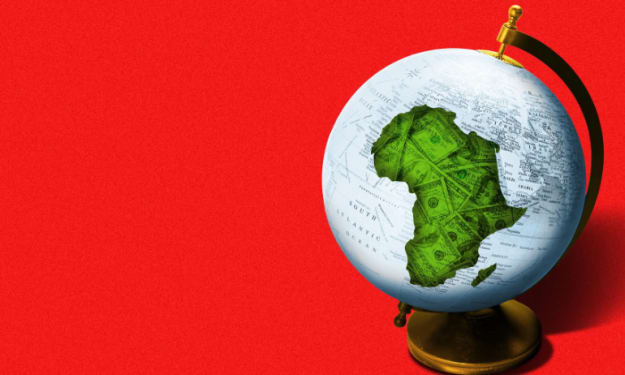
In the landscape of global health aid, few proposals have stirred as much debate as former President Donald Trump’s ambitious plan to restructure American assistance abroad. Dubbed an $11 billion health initiative aimed at replacing USAID’s current framework, the plan seeks to pivot away from what Trump and his allies have criticized as the “neo-colonial” approach of U.S. foreign aid. While the plan promises greater efficiency and impact, experts are split on whether it is a practical solution or a politically driven gamble. Trump’s Critique of USAID The United States Agency for International Development (USAID) has long been a central pillar of American foreign assistance, distributing billions in aid annually to address health crises, food insecurity, and development challenges worldwide. However, Trump’s administration and its supporters have often described USAID’s approach as bureaucratic, inefficient, and reflective of a “neo-colonial” mindset. In public statements, Trump argued that the U.S. was spending taxpayer dollars on programs that benefited foreign governments or contractors more than the intended local communities. Critics of the plan say that while USAID has flaws—as any large bureaucracy does—its extensive networks and decades of experience provide an unmatched capacity to deliver aid efficiently and safely. The Core of the $11 Billion Proposal At the heart of Trump’s proposal is an $11 billion fund designed to consolidate, modernize, and streamline U.S. health aid. Unlike the traditional USAID model, which relies heavily on long-term partnerships with governments and NGOs, the new plan emphasizes: Direct Impact Funding: Allocating resources to frontline health workers and local initiatives rather than intermediaries. Data-Driven Investments: Using real-time health data to target outbreaks and crises more efficiently. Private Sector Partnerships: Leveraging U.S. pharmaceutical companies, tech firms, and healthcare startups to deliver vaccines, treatments, and medical infrastructure. Shorter Program Cycles: Moving away from multi-year funding commitments in favor of more flexible, results-oriented programs. Proponents argue that this approach could reduce bureaucratic overhead and ensure U.S. aid reaches communities faster. By “cutting out the middlemen,” Trump supporters claim, America can avoid the pitfalls of slow-moving aid programs that sometimes fail to adapt to crises. Reactions from the Global Health Community Global health experts, however, have expressed concern about both the logistics and philosophy of the plan. Dr. Melissa Ortega, a senior researcher at the Global Health Policy Institute, explained, “The idea of bypassing established structures like USAID may sound appealing on paper, but in practice, it risks undermining decades of institutional knowledge. Health systems are complex, and short-term projects cannot replace long-term capacity building.” Some critics have also questioned the characterization of USAID as “neo-colonial.” While U.S. foreign aid has historically been tied to geopolitical interests, many programs today are designed collaboratively with recipient countries and local organizations. Reducing oversight could unintentionally increase the risk of misuse, corruption, or health inequities. On the other hand, supporters of Trump’s plan point to examples of inefficiency in USAID programs, citing cases where aid was delayed or mismanaged. By introducing more direct funding models, they argue, U.S. taxpayer dollars could achieve a higher “return on health outcomes.” Political Implications Trump’s health aid overhaul proposal is not just about international development—it is also deeply political. Framing USAID as a “neo-colonial” institution resonates with a populist narrative that America should prioritize its own citizens and assert greater control over how taxpayer money is spent abroad. Domestically, the $11 billion plan faces scrutiny from Congress. Lawmakers from both parties have questioned whether dismantling USAID’s systems could destabilize ongoing health programs in countries where the U.S. has long-term commitments. The potential impact on global health security—including the fight against pandemics like COVID-19—adds another layer of concern. Internationally, U.S. allies and partner nations are watching closely. Sudden shifts in aid delivery could disrupt health programs in low- and middle-income countries, many of which rely on predictable funding cycles to maintain vaccination campaigns, maternal health services, and disease surveillance. Possible Benefits and Risks If executed carefully, the Trump-backed model could bring several benefits: Faster Response Times: Direct funding could accelerate delivery of vaccines, treatments, and emergency support. Innovation Boost: By partnering with private sector companies, the plan could accelerate development of new health technologies. Accountability: With performance-based metrics, the plan may better measure the impact of U.S. aid. However, the risks are equally significant: Disruption of Existing Programs: Abrupt changes could destabilize ongoing health projects. Loss of Expertise: USAID’s decades of experience in navigating local governance, supply chains, and community engagement may be hard to replace. Geopolitical Fallout: Allies accustomed to collaborating with USAID might see the move as destabilizing, reducing cooperation on global health initiatives. Looking Ahead As Trump and his allies continue to advocate for this $11 billion overhaul, the debate over the future of U.S. health aid is intensifying. Proponents view it as a necessary modernization of an outdated system, while critics fear it could undercut decades of carefully built infrastructure and global partnerships. Ultimately, the success of this plan will hinge on its ability to balance efficiency with stability, innovation with oversight, and political objectives with humanitarian needs. For now, the proposal remains controversial, representing a dramatic departure from traditional approaches to U.S. foreign aid. Whether it will reshape global health for the better—or simply create more uncertainty—remains to be seen. In the end, the Trump health plan is as much about ideology as it is about dollars. It challenges the conventional wisdom of international development and asks whether a more streamlined, results-focused approach can truly replace a system built over decades. As the world watches, the stakes could not be higher: the future of U.S. global health aid—and the lives it touches—hangs in the balance.
By Muhammad Hassan3 days ago in Earth
Nitrogen is necessary for young tropical rain forests to combat climate change.
By absorbing carbon dioxide from the atmosphere and storing it in wood, tropical rainforests contribute to the slowing of climate change. Forests that develop quickly are even more important because they absorb carbon more quickly.
By Francis Damia day ago in Earth



Comments
There are no comments for this story
Be the first to respond and start the conversation.