
The Sea Without Shores
Unveiling Earth's Strangest Ocean Mystery

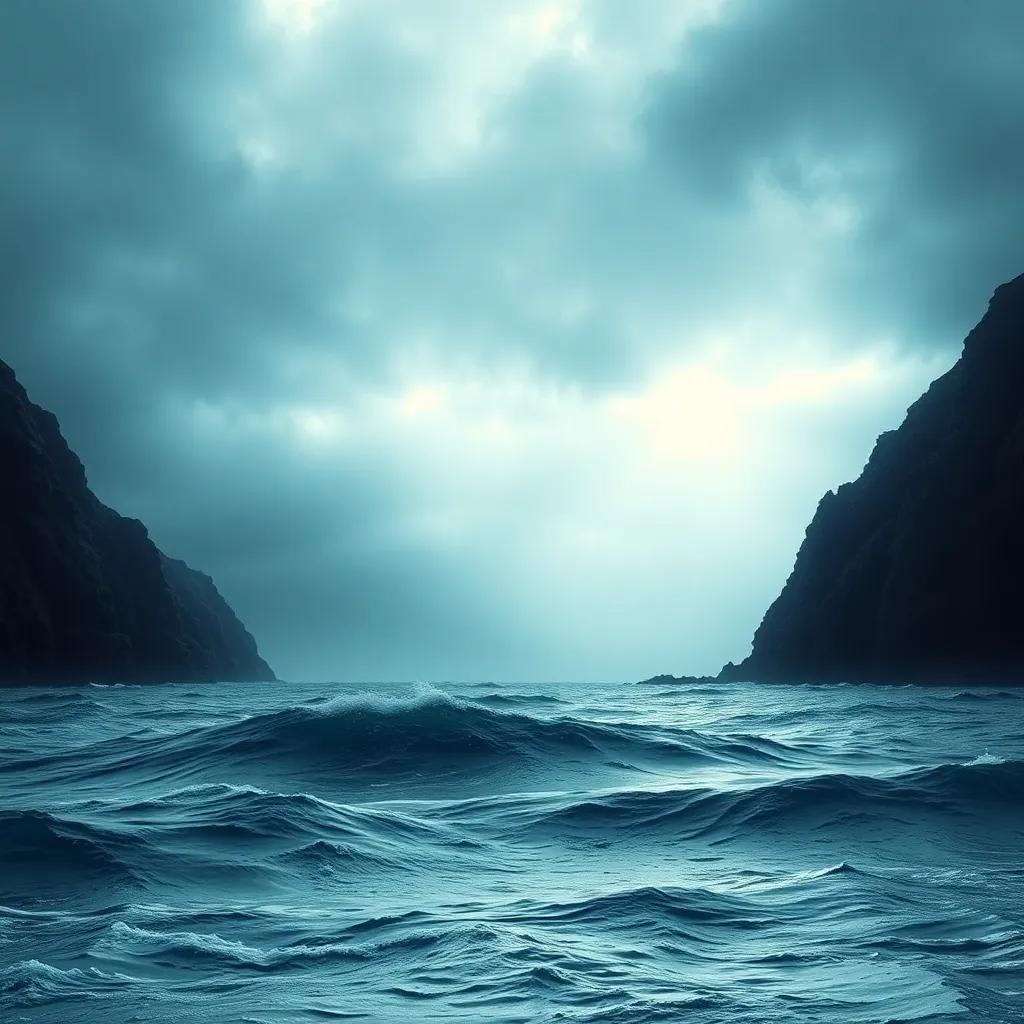
Most seas have coastlines—a tangible, rocky boundary where land meets water. From the Mediterranean’s snaking 28,000-mile coastline to the colorful edges of the Red, Black, and Yellow Seas, these borders are defining features. But what if a sea had no coastline at all?
Enter the Sargasso Sea, a place so unique it defies conventional definitions. Unlike any other sea on Earth, the Sargasso has no physical border. Instead, it’s bounded by ocean currents—the Gulf Stream, North Atlantic Drift, Canary Current, and North Equatorial Current—that form the vast, swirling vortex known as the North Atlantic Gyre. These currents act as invisible walls, isolating the Sargasso from the surrounding ocean.
A Silent Enigma in the Atlantic
Christopher Columbus was among the first to document the Sargasso Sea, mesmerized by the floating seaweed mats he encountered—great, tangled "forests in the sea." These mats, formed by **Sargassum seaweed**, drift serenely within the calm waters, where winds and waves are rare. This eerie stillness has given rise to legends of ghost ships stranded in its grasp, unable to escape the tranquil waters.
One infamous tale is that of the French merchant ship **Rosalie**, found adrift in 1840 with its sails set, cargo untouched, and no crew in sight. The mystery of what happened on board remains unsolved.
A Sea Without a Shore, Yet Full of Wonders
The Sargasso Sea spans roughly 1,800 by 600 nautical miles, though its size constantly shifts with the currents. Its waters are a deep, almost transparent blue, offering visibility of up to 60 meters—an otherworldly clarity that reveals the secrets hidden below.
At its surface floats **Sargassum**, a brown seaweed buoyed by tiny gas-filled pockets called pneumatocysts. This ingenious design allows it to create sprawling rafts that stretch for hundreds of miles, some visible from space. But Sargassum is more than just seaweed; it’s a carbon sink, absorbing atmospheric CO₂ and playing a role in mitigating climate change.
These floating islands serve as a sanctuary for life, hosting creatures found nowhere else on Earth. The Sargasso is a refuge for baby sea turtles, which seek shelter in the seaweed’s embrace to evade predators. It’s also the spawning ground for Atlantic white marlins, which release their eggs into the seaweed mats.
One enigmatic resident is the **Sargassum fish (Histrio histrio)**, a master of disguise whose body mimics the seaweed it calls home. This predatory fish lies in wait, perfectly camouflaged, ready to ambush unsuspecting prey.
Legends, Mysteries, and Ancient Mariners
The Sargasso Sea is steeped in myth. Mariners once whispered of strange sounds echoing across its waters, attributing them to ghostly whales or lost souls. Modern science has debunked these tales, revealing the culprits to be snapping shrimp, whose claws generate underwater sonic booms to stun prey.
The sea’s history may stretch back to ancient times. Phoenician artifacts found near the Sargasso suggest these masterful sailors might have reached it around 1550 BCE. Could they have even ventured to the Americas, long before Columbus? A controversial stone inscribed with Phoenician writing, discovered in Brazil in 1872, tantalizingly hints at this possibility.
A Floating Rainforest at Risk
Dubbed the "floating rainforest," the Sargasso Sea teems with over 100 species of fish, 145 invertebrates, and even 10 types of sharks. Its delicate balance supports an extraordinary web of life, from the tiniest plankton to large predators. Yet this fragile ecosystem faces a modern menace: **plastic pollution**.
The **North Atlantic Garbage Patch**, a swirling vortex of waste, flows directly through the Sargasso, entangling with the seaweed mats and poisoning marine life. Microplastics consumed by tiny organisms climb the food chain, threatening the entire ecosystem.
Efforts like The Ocean Cleanup and the Five Gyres Initiative are working to tackle this issue, but the ultimate solution lies in reducing plastic waste at its source.
Preserving a Natural Wonder
Recognizing its ecological and cultural importance, governments and organizations signed the **Hamilton Declaration** in 2014, pledging to protect the Sargasso Sea. This international effort is a symbolic “pinky promise” to safeguard this remarkable, shoreless world.
The Sargasso Sea is more than just a body of water—it’s a realm of mystery, biodiversity, and beauty. Its secrets continue to inspire awe and curiosity, reminding us of the marvels hidden in our oceans and the responsibility we bear to protect them.
---
What other wonders lie hidden in the depths of the Sargasso Sea? Only time, and perhaps our continued exploration, will tell.
About the Creator
llaurren's reads
Dear Reader,
Welcome to my collection of journals, articles, diaries, short stories, and more. This is a treasure trove from an author—or rather, a humble writer—whose penmanship was previously tucked away and is now ready to emerge.
Keep reading
More stories from llaurren's reads and writers in Earth and other communities.
The Enigma of London Stone
Every day, thousands of commuters shuffle along Cannon Street, making their way through the dense fog that rolls over London’s financial district. But among the hustle and bustle, few notice an oddity standing almost inconspicuously in a glass enclosure: London Stone. It’s a lump of rock, certainly not impressive at first glance, but this stone holds a mysterious past that has captivated Londoners for centuries.
By llaurren's readsabout a year ago in History
Biochar: Unlocking the Potential for Climate Change Mitigation and Carbon Markets
Biochar is created through the process of pyrolysis, where organic materials such as agricultural waste, wood, or even certain types of plastic are heated in the absence of oxygen. This process breaks down the biomass into three main products: gas, liquid (bio-oil), and solid carbon-rich residue—biochar. Unlike organic matter that decomposes naturally, releasing carbon dioxide (CO₂) into the atmosphere, biochar locks carbon in a stable form that can persist in the soil for hundreds or even thousands of years.
By Bestonpyrolysis4 days ago in Earth
FPS: The Last Flame Challenge Winners
Welcome to our first Winners Announcement of the year and to the final challenge in the Fall Poetry Series. The Last Flame invited writers to sit with endings, using fire as a central image to consider what remains when something burns out: ash, warmth, memory, silence, or the faint promise of what comes next. The strongest pieces treated endings as gradual rather than sudden, allowing them to flicker, dim, and linger.
By Vocal Curation Team7 days ago in Resources



Comments
There are no comments for this story
Be the first to respond and start the conversation.