
The Sea Creature That Turns Inside Out to Eat
It looks peaceful on the outside, but its way of eating is straight out of a horror movie.

At first glance, it looks like a slow-moving star lying flat on the ocean floor. Harmless, quiet, and peaceful. But wait a moment—because when it finds its next meal, something truly bizarre happens.
This creature doesn’t bite. It doesn’t suck or swallow like most predators.
Instead, it turns its stomach inside out, pushes it through its own mouth, and digests its food outside its body.
Meet the starfish—or more accurately, the sea star. One of the strangest eaters in the entire animal kingdom.
Not Really a Fish
Let’s start with a small clarification: starfish aren’t actually fish. Scientists prefer the term “sea stars” because these creatures have no bones, no blood, and no brain—all features that traditional fish have.
They belong to a group called echinoderms, which also includes sea urchins and sea cucumbers. But among this strange family, sea stars might be the weirdest.
And their method of eating is what sets them apart from almost every other animal on Earth.
A Mouth with a Twist
If you’ve ever picked up a sea star at the beach or in a tide pool, you might’ve noticed a small hole in the center of its underside. That’s its mouth.
But the sea star’s mouth doesn’t work like yours or mine. It doesn’t chew. It doesn’t swallow. It doesn’t even open wide.
Instead, when it finds prey—usually a clam or mussel—it does something almost no other animal can do: it pushes its stomach out through its mouth.
Yes, you read that right. The stomach comes out of the body, wraps around the food, and digests it externally.
Only after the meal is broken down into a mushy soup does the sea star pull its stomach back into its body—along with the digested nutrients.
It’s like turning a glove inside out, wrapping it around your lunch, and then pulling it back in once it’s all melted.
Breaking Through Armor
You might wonder: why go through all that trouble?
Because sea stars often eat shelled animals like mussels and clams—creatures with hard exteriors that most predators can’t access.
Sea stars solve this problem with brute strength and patience. Using hundreds of tiny tube feet, they grip both sides of a mussel shell and slowly pull. It can take hours.
Eventually, the shell tires and opens just slightly. And that’s all the sea star needs.
It slips its stomach inside the tiny opening and begins digesting the animal while it’s still in the shell.
It’s a slow-motion ambush that ends with an entire mussel being turned into soup—outside of the sea star’s body.
Two Stomachs, No Problem
Sea stars actually have two stomachs: the cardiac stomach and the pyloric stomach.
The cardiac stomach is the one that gets pushed out to do the external digestion. Once the food is liquified, it’s pulled back in, where the pyloric stomach finishes the job.
This two-step system is incredibly efficient—especially for an animal with no brain and no eyes (only basic light sensors).
And it’s not just efficient—it’s ancient. Sea stars have been using this method for over 450 million years.
No Blood, No Bones, No Limits
Sea stars don’t have blood. Instead, they use seawater to transport nutrients throughout their body via a system of canals. Their tube feet also run on water pressure, allowing them to move silently across the seafloor like a ghost.
They also don’t have a centralized brain. Yet, they show surprisingly complex behaviors—such as problem-solving and directional movement based on light and touch.
Despite their soft appearance, some species can regrow lost arms, or even an entire new body from a single severed limb.
They’re built for survival—and their bizarre eating habits are just one part of a much stranger design.
When the Predator Looks Harmless
You’d never guess that this slow, pretty sea star is a deadly predator. But nature loves to surprise us.
Its way of eating—turning its stomach inside out and digesting prey alive—is like something out of a science fiction novel. But it’s real. And it happens every day, silently beneath the waves.
The next time you see a sea star on the beach, remember: behind that calm, peaceful shape is one of the weirdest and most effective hunters the ocean has ever known.
It may look like a star. But it eats like a monster.
About the Creator
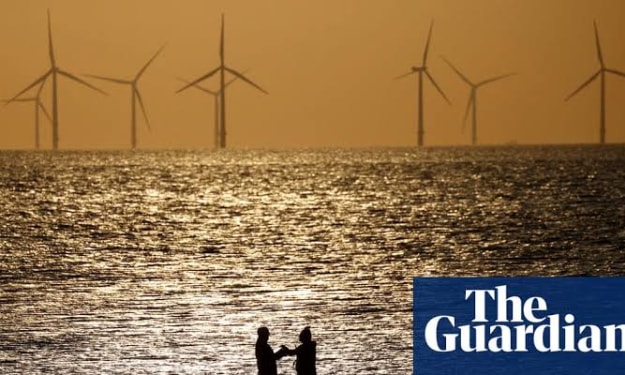
UK must double down on renewables as wars drive up energy costs, experts say
Britain must accelerate its transition toward renewable energy sources as geopolitical conflicts continue to drive global energy prices higher, according to leading energy analysts and climate policy experts. The warning comes as wars and political tensions across key energy-producing regions expose the vulnerability of countries still heavily reliant on imported fossil fuels. In recent years, the United Kingdom has made significant progress expanding renewable energy capacity, particularly in offshore wind and solar power. However, experts argue that the pace of the transition remains insufficient to shield the country from the volatility of international energy markets. Conflicts in the Middle East and Eastern Europe have demonstrated how quickly supply disruptions can translate into rising costs for households and businesses. Energy economists say the lesson from recent global crises is clear: the more dependent a country is on imported oil and gas, the more exposed it becomes to geopolitical shocks. Britain imports a substantial portion of its natural gas and refined fuel products, meaning instability in global supply chains can quickly affect domestic energy bills. During periods of international conflict, oil prices often spike due to fears that shipping routes or production facilities could be disrupted. Even rumors of attacks near key energy chokepoints — such as major pipelines or shipping lanes — can cause markets to react sharply. These fluctuations, analysts say, ultimately filter down to consumers through higher electricity and heating costs. Renewable energy sources offer a potential solution to this problem because they rely on domestic resources such as wind and sunlight rather than imported fuels. Once renewable infrastructure is built, operating costs remain relatively stable because there is no need to purchase fuel on global markets. The United Kingdom already operates some of the world’s largest offshore wind farms, and renewable energy now accounts for a significant share of the country’s electricity generation. Government data indicates that wind power alone has become one of the largest sources of electricity in Britain, particularly during periods of strong weather conditions. Despite this progress, energy specialists argue that further investment is essential. Expanding renewable generation capacity requires not only building more wind and solar farms but also upgrading the national electricity grid. A modernized grid would allow energy produced in remote offshore locations to be transmitted efficiently to cities and industrial centers. Energy storage is another critical piece of the puzzle. Because renewable sources like wind and solar are intermittent, large-scale battery systems or alternative storage technologies are needed to ensure a stable supply of electricity during periods when generation drops. Developing these systems will require both technological innovation and sustained financial investment. Some experts also emphasize the importance of diversifying the country’s renewable portfolio. While offshore wind remains a cornerstone of Britain’s energy strategy, solar power, tidal energy, and green hydrogen could also play important roles in the future energy mix. The government has already announced plans to increase renewable capacity dramatically over the next decade. Officials argue that reducing reliance on fossil fuels will not only strengthen national energy security but also help the country meet its climate targets. However, critics say policy uncertainty and slow planning approvals have sometimes delayed renewable projects. Industry leaders have urged authorities to streamline regulatory processes and provide clearer long-term incentives for investors. For many analysts, the link between energy security and climate policy has never been more obvious. Wars and geopolitical tensions have shown that fossil fuel dependence can create economic vulnerability, while domestically produced renewable energy offers greater stability. “The global energy system is changing,” said one energy policy researcher. “Countries that invest early in renewable infrastructure will be better protected from geopolitical shocks and price spikes.” As international conflicts continue to reshape global energy markets, the debate over Britain’s energy future is likely to intensify. For supporters of renewable power, the current moment represents both a warning and an opportunity — a chance to accelerate the transition toward a more secure and sustainable energy system.
By Fiaz Ahmed 6 days ago in Earth



Comments
There are no comments for this story
Be the first to respond and start the conversation.