
The science of renewable energy.
Renewable energy is a critical component of the global effort to reduce carbon emissions and combat climate change.


Fossil fuels, which are finite and contribute to environmental degradation, renewable energy sources harness naturally occurring processes to generate power sustainably. This article delves into the science behind various renewable energy technologies, including solar, wind, hydro, geothermal, and biomass energy.
Solar Energy
Solar energy is derived from the Sun’s radiation and is one of the most abundant energy sources on Earth. The primary technology used to harness solar power is the photovoltaic (PV) cell, which converts sunlight directly into electricity. PV cells are made of semiconductor materials, such as silicon, which generate an electric current when exposed to sunlight. This phenomenon, known as the photovoltaic effect, was first observed by Alexandre-Edmond Becquerel in 1839.
Another method of utilizing solar energy is through concentrated solar power (CSP) systems, which use mirrors or lenses to focus sunlight onto a receiver. This concentrated heat is then used to generate steam, which drives a turbine to produce electricity. CSP is particularly useful in large-scale power generation in areas with high solar irradiance.
Wind Energy
Wind energy is generated by the movement of air masses caused by differences in atmospheric pressure. Wind turbines capture kinetic energy from the wind and convert it into mechanical energy, which is then transformed into electricity via a generator. The efficiency of a wind turbine depends on several factors, including blade design, wind speed, and turbine height.
Wind power is a highly scalable technology, with applications ranging from small residential wind turbines to massive offshore wind farms. Advances in aerodynamics and materials science have led to more efficient turbine designs, increasing the Viability of wind energy as a major power source.
Hydropower
Hydropower, or hydroelectric energy, is generated by the movement of water. This form of energy has been used for centuries, with early applications including water wheels for grinding grain. Modern hydroelectric power plants utilize dams to control water flow and direct it through turbines, converting kinetic energy into electrical energy.
There are several types of hydropower systems, including run-of-the-river and pumped storage hydroelectricity. Run-of-the-river systems rely on the natural flow of water, whereas pumped storage facilities act like batteries, storing energy by pumping water to a higher elevation during periods of low electricity demand and releasing it to generate power when demand is high.
Geothermal Energy
Geothermal energy harnesses heat from the Earth’s interior, which originates from radioactive decay and residual heat from planetary formation. This heat can be accessed through geothermal power plants, which extract steam or hot water from underground reservoirs to drive turbines and generate electricity.
There are three main types of geothermal power plants: dry steam, flash steam, and binary cycle. Dry steam plants use steam directly from geothermal reservoirs, while flash steam plants use high-pressure hot water that flashes into steam when exposed to lower pressures. Binary cycle plants transfer heat from geothermal water to another liquid with a lower boiling point, which then vaporizes and drives a turbine.Geothermal energy is a highly reliable and constant energy source, as it is not affected by weather conditions. However, its viability is location-dependent, as it requires significant underground heat resources.
Biomass Energy
Biomass energy is derived from organic materials, such as wood, agricultural waste, and algae. This energy source has been used for millennia, primarily through the burning of wood for heat. Modern biomass energy technologies include biofuels, biogas, and biomass power plants.
Biofuels, such as ethanol and biodiesel, are produced from plant-based materials and can be used as alternatives to gasoline and diesel. Biogas is generated through the anaerobic digestion of organic matter, producing methane-rich gas that can be used for heating and electricity generation.
Biomass energy is considered renewable as long as the rate of consumption does not exceed the rate of replenishment. However, it must be managed sustainably to avoid deforestation and excessive carbon emissions.
Challenges and Future Prospects
Despite their advantages, renewable energy sources face several challenges, including intermittency, energy storage, and infrastructure costs. Solar and wind power depend on weather conditions, requiring advancements in battery technology and grid management to ensure a stable energy supply. Energy storage solutions, such as lithium-ion batteries and hydrogen fuel cells, are critical for overcoming these limitations.
Moreover, the transition to renewable energy requires substantial investment in infrastructure, including smart grids, transmission lines, and energy-efficient technologies. Governments and private sectors play a crucial role in funding research and development to enhance the efficiency and affordability of renewable energy systems.
IN THE END
The science of renewable energy is continuously evolving, with ongoing advancements in technology making these energy sources more efficient and accessible. By leveraging solar, wind, hydro, geothermal, and biomass energy, humanity can move towards a more sustainable and environmentally friendly energy future. The integration of these technologies, coupled with innovative energy storage and distribution solutions, holds the key to reducing dependence on fossil fuels and mitigating climate change.
About the Creator
Badhan Sen
Myself Badhan, I am a professional writer.I like to share some stories with my friends.
Keep reading
More stories from Badhan Sen and writers in Earth and other communities.
The process of cloud formation.
Cloud formation is a fundamental meteorological process that plays a crucial role in Earth's weather and climate. This process occurs due to changes in temperature, pressure, and humidity, ultimately leading to precipitation and various weather phenomena. Understanding cloud formation requires an exploration of the water cycle, atmospheric conditions, and the mechanisms that drive condensation.
By Badhan Senabout a year ago in Earth
Philippines Pesticide Market 2026: Crop Protection Demand, Farm Productivity & Regulatory Shifts
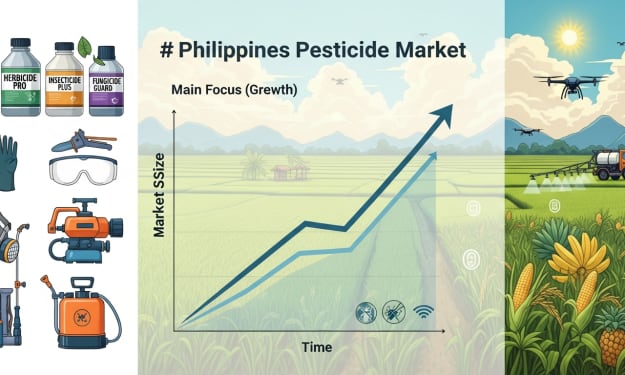
Philippines Pesticide Market Overview The Philippines pesticide market continues to develop as agriculture remains a vital sector supporting food security, rural employment and economic activity. Pesticides play an important role in protecting crops from insects, weeds and diseases, helping farmers improve yields and reduce post-harvest losses. The market includes insecticides, herbicides, fungicides and other crop protection chemicals used across rice, corn, fruits, vegetables, sugarcane and plantation crops.
By Manisha Dixit3 days ago in Earth
Our Song
Evening has given way to night. Gently, I settle next to you on the comfortable, old love seat and reach for your hand. You snatch it away, again. It cuts me to the quick, but I hide the pain, understanding that the reaction is but part of your demented state. Since the accident, your presence here in our cozy home has been clouded by a haze I can't see. Nevertheless, I feel the frigidity of your expressions and it serves as an excruciating reminder of the immeasurable distance between us.
By Dana Crandell3 days ago in Fiction



Comments
There are no comments for this story
Be the first to respond and start the conversation.