
The Scent of the Fox: How Smell Shapes a Mysterious Life
In the world of foxes, scent is more than just a trail—it's a language.

The Silent Language of the Wild
Foxes are famously elusive — graceful, intelligent, and often misunderstood. But behind their silent steps and clever eyes lies an even more fascinating secret: they “speak” through smell. While we humans rely heavily on vision and sound, the fox navigates its world primarily through scent.
Let’s unravel how foxes use this invisible sense in ways that are deeply complex — and uniquely beautiful.
1. Scent as a Primary Language
For foxes, scent is everything.
- They use their highly developed sense of smell to detect danger, hunt for food, and identify other animals in their area.
- But beyond survival, scent is also their main form of communication — a social tool as powerful as speech is for us.
Foxes leave behind messages for other foxes using urine, feces, and special scent glands. These chemical messages can say things like:
- “This is my territory.”
- “I’m looking for a mate.”
- “Stay away.”
- “I was here.”
Every scent mark carries information about the individual: its age, sex, reproductive status, even emotional state.
2. The Role of the Bushy Tail
A fox's bushy tail isn't just for balance or warmth — it's a scent tool.
- The base of the tail houses a violet gland, which secretes a musky odor.
- When the fox swishes its tail, it spreads this scent over rocks, trees, or even the air — acting like a walking billboard of its identity.
This makes the tail a vital extension of the fox's social toolkit, turning even the simple act of walking into a message drop.
3. Smell Over Sight
While foxes can see relatively well, they don't depend on vision the way we do.
- In dense forests or under cover of night, scent becomes their “eyes.”
- A fox can sniff out a rodent burrowing underground or detect a decaying log full of insects without ever seeing them.
- Their ability to distinguish individual smells is so refined that they can separate fresh tracks from older ones, or identify specific individuals just by their scent trail.
4. No Smell, No Signal: What Happens When They’re Tired
Here’s where it gets more interesting.
- When a fox becomes exhausted, its body reduces the production of scent signals.
- A tired fox, particularly when resting or sleeping, may emit little to no detectable odor.
Why? It’s believed this helps them stay hidden from predators. No scent means no trail. No trail means safety.
In this state, a fox becomes almost “invisible” in the world of scent. It’s a silent form of camouflage, helping it recover without risking detection.
5. Sleeping Foxes Go Stealth Mode
Ever seen a fox curled up with its tail wrapped over its nose?
That’s not just to stay warm.
- Covering the nose may help mask their breath and scent even further.
- While sleeping, the fox enters a stealth state — quiet, still, and scentless.
This instinctual behavior highlights how deeply scent is tied not just to communication, but to survival.
6. Marking Territory, Keeping the Peace
Foxes are solitary by nature, and they use scent to avoid unnecessary fights.
- By marking boundaries clearly, they signal other foxes to stay out.
- This scent map reduces direct confrontation — keeping peace without ever needing to meet.
Think of it as invisible fencing, constantly updated and maintained through regular patrols and markings.
7. Mating Season and the Power of Perfume
During mating season, scent becomes even more crucial.
- Males will mark more frequently, and females produce specific pheromones to signal readiness to mate.
- These scent cues help foxes locate one another across large territories, even if they never make a sound.
It’s nature’s version of dating apps — except entirely chemical.
Final Thought
For foxes, scent is not just a tool — it's a lifeline. It’s how they navigate, communicate, hide, and connect. While humans often overlook smell as a minor sense, in the world of the fox, it is the language of life itself.
Each scent mark is a sentence, each whiff a conversation. It’s a reminder that some of the most powerful forms of communication are the ones we can’t see or hear.
Hungry for More?
If the secret world of foxes fascinates you, you’re not alone. Nature is full of surprising sensory wonders:
- Polar bears are nearly invisible to infrared cameras because of their translucent fur.
- Tortoise beetles scare off predators by bleeding through their knees.
- Flamingos turn pink from pigments in their food.
- Male sandgrouse carry water in their feathers for their chicks.
- Octopuses and squids have not one, not two, but three hearts.
Stay curious. The animal kingdom is full of hidden superpowers — and every species has its own mysterious language worth exploring.
About the Creator
Britain in Talks With NATO to Boost Arctic Security
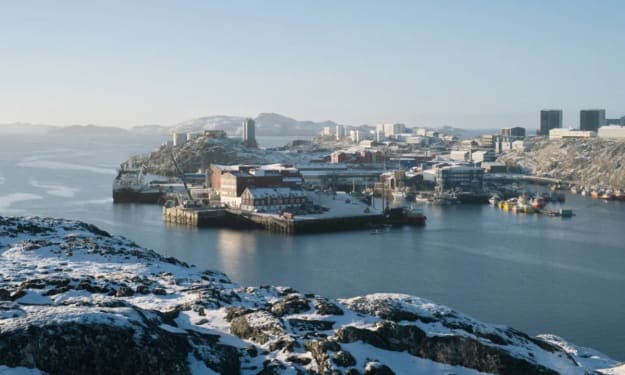
The Arctic Is No Longer a Frozen Backwater For decades, the Arctic sat quietly on the margins of global politics—remote, frozen, and largely ignored. That era is over. Britain is now in talks with NATO to strengthen Arctic security, acknowledging growing risks posed by Russia and China. In a notable shift, London’s assessment aligns closely with warnings long emphasized by Donald Trump, particularly as he continues to express strategic interest in Greenland. What once sounded like an eccentric fixation has evolved into a serious geopolitical conversation. The Arctic is rapidly becoming one of the world’s most contested regions, and Britain is positioning itself to play a larger role. Why Britain Is Paying Attention Now Although the UK is not an Arctic nation, it is an Arctic-adjacent power with significant strategic interests. British officials increasingly view the High North as critical to national and allied security. Melting ice is opening new shipping routes, exposing untapped natural resources, and making military movement easier than ever before. Britain’s talks with NATO focus on intelligence sharing, joint exercises, surveillance capabilities, and protecting undersea infrastructure such as communication cables and energy pipelines. These are not abstract concerns. Any disruption in the Arctic could have immediate consequences for European security and global trade. In short, what happens in the Arctic does not stay in the Arctic. Russia’s Expanding Arctic Footprint Russia is the dominant military power in the Arctic, and it is not slowing down. Moscow has reopened Soviet-era bases, deployed advanced missile systems, expanded its icebreaker fleet, and increased patrols across the region. The Arctic coastline represents a core part of Russia’s nuclear deterrent, making it strategically vital to the Kremlin. From NATO’s perspective, this military buildup creates both risk and uncertainty. Britain, which has long been vocal about Russian aggression—from Ukraine to cyber warfare—sees the Arctic as another front where deterrence must be strengthened before tensions spiral. The concern is not necessarily an immediate conflict, but miscalculation. In a region with harsh conditions and limited communication infrastructure, even minor incidents could escalate rapidly. China’s Quiet but Steady Arctic Ambitions While Russia’s presence is overt, China’s Arctic strategy is more subtle—and equally concerning to Western planners. Beijing calls itself a “near-Arctic state,” a label that has raised eyebrows in Europe and North America. Through investments, research stations, and partnerships, China is laying the groundwork for long-term influence. Britain shares NATO’s concern that China could use civilian projects for dual-use purposes, blending scientific research with intelligence gathering and infrastructure control. As Arctic shipping routes become commercially viable, China’s interest in controlling parts of the supply chain only grows. London’s alignment with these concerns reflects a broader shift in UK foreign policy: China is no longer viewed solely as an economic partner, but as a strategic competitor. Trump, Greenland, and Strategic Reality Donald Trump’s repeated interest in Greenland—most famously his suggestion that the United States should buy it—was widely mocked at the time. Yet behind the headlines was a strategic logic that many Western governments now openly acknowledge. Greenland sits at the heart of the Arctic, hosting vital air and naval routes between North America and Europe. It is also rich in rare earth minerals critical for modern technology and defense systems. As ice recedes, Greenland’s strategic value only increases. Britain’s current position, which aligns with Trump’s warnings about Arctic vulnerabilities, shows how quickly political perceptions can change. What once seemed unconventional now appears prescient. NATO’s Arctic Awakening NATO has traditionally focused on Eastern Europe and the North Atlantic. The Arctic, despite its importance, received less coordinated attention. That is changing. Britain’s talks with NATO reflect a broader alliance effort to integrate Arctic defense into its core strategy. This includes: Increased joint military exercises in cold-weather environments Enhanced monitoring of Russian and Chinese activity Strengthening cooperation with Arctic nations like Norway, Canada, and Denmark Protecting critical undersea and satellite infrastructure For Britain, this is also about credibility. As a leading NATO member and a key military power, the UK wants to demonstrate that it can contribute meaningfully beyond its immediate geography. Climate Change as a Security Multiplier One of the most striking aspects of Arctic security is how closely it is tied to climate change. Melting ice is not just an environmental issue—it is a strategic one. New sea lanes shorten travel between Asia and Europe, while access to oil, gas, and minerals becomes easier. This transformation increases competition and reduces natural barriers that once limited military movement. Britain’s involvement reflects recognition that climate-driven changes are reshaping the security landscape faster than traditional institutions were designed to handle. In this sense, Arctic security is a preview of future global challenges where environmental change and geopolitics collide. Domestic and Diplomatic Balancing Acts Britain’s Arctic engagement is not without challenges. Increased military involvement raises questions about defense spending, priorities, and escalation risks. Diplomatically, London must balance deterrence with dialogue, avoiding actions that could unnecessarily provoke Russia while still protecting allied interests. There is also the question of public awareness. Arctic security lacks the visibility of conflicts like Ukraine, making it harder to sustain political attention. Yet policymakers increasingly argue that prevention is cheaper—and safer—than crisis response. What This Means Going Forward Britain’s talks with NATO mark an important shift in how the Arctic is viewed: not as a distant frontier, but as a central arena in 21st-century security. Agreement with Trump-era assessments on Russia, China, and Greenland underscores how geopolitical realities can outlast political controversies. As competition intensifies, the Arctic will likely become a testing ground for cooperation, deterrence, and strategic foresight. Britain’s involvement signals that mid-sized powers are no longer content to watch from the sidelines. Final Thoughts The Arctic is warming faster than any other region on Earth—and so are the geopolitical tensions surrounding it. Britain’s move to boost Arctic security with NATO reflects a growing consensus that ignoring the High North is no longer an option. Whether driven by Russia’s militarization, China’s quiet expansion, or lessons drawn from Trump’s blunt warnings, one truth stands out: the future of global security may well be shaped at the top of the world, where ice, ambition, and power now intersect.
By Muhammad Hassan7 days ago in Earth
Miss Persephone's Manual to a Seemingly Ordinary Life
Miss Persephone was found at the dining table, her blue eyes swollen, her tears arriving and retreating like the tides of the ocean. Earlier that day, her family had visited her in the retirement home where she had lived for eight years. It was her eightieth birthday.
By Imola Tóth3 days ago in Fiction



Comments
There are no comments for this story
Be the first to respond and start the conversation.