
Razor-Edge Rodents: The Truth Behind the Incredible Power of Rat Teeth
Discover how a rat’s continuously growing teeth can gnaw through concrete, metal, and more

A Small Creature with Big Bite Power
They may seem small and ordinary at first glance, but rats are equipped with one of the most formidable tools in the animal kingdom — their teeth. While their tiny claws and whiskers help them navigate through tight spaces, it’s their sharp, ever-growing incisors that steal the spotlight. These teeth are so powerful and efficient that they’ve been known to chew through seemingly indestructible materials like wood, concrete, and even soft metals.
The Science of a Rat’s Teeth
- Constant Growth
Unlike human teeth, a rat’s front incisors never stop growing. This means they must continuously gnaw on hard materials to keep their teeth filed down to a manageable length. If they don't, their teeth could grow so long that they’d be unable to eat or close their mouths properly.
- Self-Sharpening Edges
- Electrical wires
- Pipes
- Concrete blocks
- Plastic containers
- Wood beams
- Aluminum sheeting
Each of the upper and lower incisors is curved and coated with a hard layer of enamel on the front surface, but softer dentin on the back. This unique structure causes the teeth to self-sharpen as they gnaw, maintaining a chisel-like edge that stays deadly sharp throughout the rat’s life.
Just How Strong Are They?
To the surprise of many, a rat’s bite strength and tooth durability are comparable to that of a steel blade on a much smaller scale. Their teeth can exert up to 12 tons of pressure per square inch (PSI) when scaled relative to body size. That’s why they’re capable of chewing through:
This jaw strength is not just a random fact — it’s a survival trait. In the wild or urban settings, rats use their teeth to access food, create nesting spaces, and escape predators by chewing through barriers.
Nature’s Little Engineers
This chewing ability makes rats excellent problem-solvers. Whether it’s getting into stored grains, breaking into trash bins, or gnawing holes through buildings, their teeth allow them to shape the environment to their needs. That’s part of the reason rats thrive in cities — their biology is perfectly suited for adaptation and persistence.
Why Urban Rats Are Especially Dangerous
In city environments, rats are not just a nuisance — they pose real structural and health risks. Their constant need to chew means they often target electrical wires, which can lead to:
- House fires
- Short circuits
- Internet or power outages
- Water leaks from damaged pipes
This behavior has made them one of the most destructive pests in urban areas, costing homeowners and municipalities millions in repairs and prevention each year.
Are They the Only Ones?
While rats are the poster animal for relentless gnawing, they’re not alone. Other rodents like beavers, squirrels, and porcupines also have ever-growing incisors. However, rats stand out because of how frequently and effectively they apply this tool, especially in human-inhabited environments.
Final Thought
When we think about the world’s most impressive animals, rats rarely make the list. But take a closer look — their teeth are marvels of evolutionary engineering. With self-sharpening mechanisms, non-stop growth, and jaw pressure capable of piercing barriers, these tiny creatures hold a kind of biological superpower.
They may be pests in some places, but there’s no denying the respect they’ve earned when it comes to sheer toughness and adaptability.
Hungry for More?
If rat teeth fascinate you, you're in for a treat. The animal kingdom is full of surprises — from octopuses with three hearts to flamingos that get their color from their food. Why not explore how:
- Koalas aren’t actually bears, despite their cuddly name.
- Polar bears are nearly invisible to infrared cameras.
- Tortoise beetles bleed on purpose to scare predators.
There’s a universe of unusual animal facts out there — each one a reminder that nature never runs out of amazing stories.
About the Creator
Greenland News
Greenland News Greenland has increasingly drawn global attention in recent years due to its political developments, environmental changes, and growing strategic importance. As the world looks more closely at the Arctic region, news from Greenland reflects a unique mix of local priorities and international interest. From climate-related challenges to economic opportunities and governance issues, Greenland continues to shape its own path while remaining closely connected to global affairs.
By America today a day ago in Earth
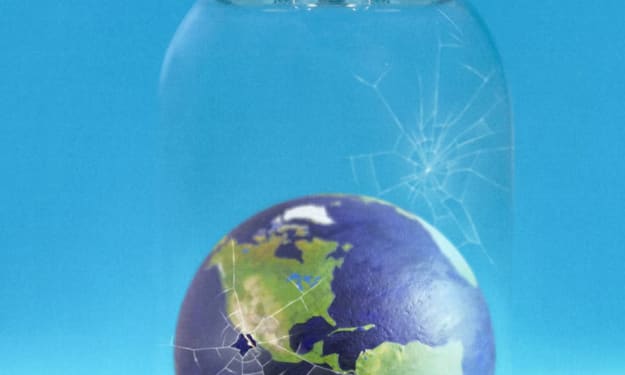
Davos 2026: The Last-Chance Saloon to Save the Old World Order?
Every January, the Swiss town of Davos becomes a temporary capital for the world’s elite. Politicians, CEOs, bankers, and thought leaders converge on the snowy Alps for the World Economic Forum (WEF), a gathering that blends diplomacy, business strategy, and high-profile networking. But in 2026, Davos carries an unusually heavy weight: many are asking whether this year’s forum is the last-chance saloon to preserve the old world order. The “old world order” refers to the system of global governance, trade, and alliances dominated by Western powers since the end of World War II. It’s a framework built on liberal democracy, free markets, and institutions like the United Nations, NATO, and the International Monetary Fund. But cracks have been appearing for years—rising nationalism, economic inequality, technological disruption, and the ascent of new global powers are challenging the old guard. Davos 2026 may be where these challenges are addressed—or exposed. A Gathering of Uneasy Allies Davos has always been more than a conference; it’s a stage. World leaders like the U.S. president, Chinese premier, and European Union officials attend alongside CEOs of tech giants, investment banks, and energy conglomerates. In past years, it has been a place for deal-making, policy announcements, and networking in an environment removed from daily political pressures. This year, however, the tone is tense. With geopolitical rivalries intensifying—from U.S.-China competition to ongoing conflicts in Eastern Europe—the forum is less about optimism and more about survival. Many attendees see it as a final opportunity to steer global institutions in a way that sustains stability, economic growth, and cooperation in a rapidly shifting world. As one European diplomat reportedly told journalists: “We’re past casual discussion. This is about whether the rules of the game we’ve known for decades can continue to function.” Economic Uncertainty and the Quest for Stability The global economy is at a crossroads. Inflation, supply chain disruptions, and debt crises have put pressure on governments and corporations alike. Davos provides a platform to coordinate strategies, whether that’s stabilizing financial markets, agreeing on new trade frameworks, or tackling climate and energy crises. But the challenge is bigger than economics alone. The rise of digital currencies, artificial intelligence, and global tech conglomerates has shifted the balance of power. Traditional Western institutions are struggling to keep pace with these innovations, while emerging economies leverage technology and alternative governance models to increase their influence. In this context, Davos 2026 is not just about discussion—it’s about defining who sets the rules for the next era. The Climate Crisis as a Litmus Test One area where the old world order faces a major test is climate policy. Despite decades of conferences and commitments, global emissions continue to rise. The forum’s agenda includes discussions on renewable energy investment, carbon taxation, and sustainable finance—yet the real question is whether collective action can overcome national self-interest. For some attendees, climate is more than an environmental issue; it’s a proxy for global governance. Nations that fail to cooperate on climate risk destabilizing trade, migration, and economic security. Davos 2026 may reveal whether the old mechanisms for multilateral cooperation can still work—or whether the world is moving toward fragmented blocs of competing interests. The Rise of New Powers Another key dynamic is the shifting balance of global power. Emerging economies in Asia, Africa, and Latin America are asserting themselves politically, economically, and technologically. Countries like China, India, and Brazil are shaping new trade and financial networks, sometimes outside traditional Western-dominated institutions. This diversification of influence poses a challenge for Davos. While the forum has historically been Western-centric, ignoring emerging voices could make its conclusions irrelevant. In 2026, the question is whether the WEF can integrate new powers into a cooperative framework—or whether the old world order will crumble under the weight of its exclusivity. Technology, AI, and the Future of Governance Technology is another frontier where the old world order is on trial. Artificial intelligence, cyber warfare, and digital surveillance are reshaping economies and politics alike. CEOs and policymakers in Davos 2026 are expected to discuss regulatory frameworks, ethical AI use, and cybersecurity collaboration. The stakes are high: how nations and corporations govern technology today could determine whether global systems remain stable or fracture. If the old world order fails to set rules for emerging tech, alternative models led by new powers could take hold, redefining global norms. Why Davos 2026 Feels Like a “Last-Chance Saloon” The term “last-chance saloon” evokes urgency. For decades, the old world order relied on cooperation, multilateralism, and shared values to maintain relative peace and prosperity. Today, cracks are visible: rising populism, regional conflicts, economic nationalism, and technological disruption all threaten the status quo. Davos 2026 is unique because it isn’t just a forum for ideas—it’s a test of relevance for the institutions themselves. Leaders will attempt to negotiate solutions, but the outcomes may reveal whether the old structures are adaptable—or obsolete. What to Watch Some of the key signals to watch at Davos 2026 include: Trade agreements and economic cooperation: Will major powers commit to joint frameworks or pursue protectionist policies? Climate action pledges: Are countries willing to act collectively, or do national priorities dominate? Technological governance: Will there be consensus on AI, cybersecurity, and digital currency regulations? Representation of emerging powers: Are new voices integrated into the conversation, or marginalized? The answers could indicate whether the forum reinforces the old order—or marks its final chapter. Final Thoughts Davos 2026 is more than a gathering of the global elite; it’s a litmus test for the old world order. The forum’s success—or failure—may determine whether multilateralism, cooperation, and shared governance survive in an era of rising nationalism, technological disruption, and shifting power dynamics. For observers, policymakers, and citizens alike, the stakes couldn’t be higher. The snowy streets of Davos may once again host ambitious speeches, networking dinners, and visionary panels—but the real question remains: can the old world order be saved, or is it time to prepare for a new world entirely?
By Muhammad Hassana day ago in Earth



Comments
There are no comments for this story
Be the first to respond and start the conversation.