
The Role of Biomass Pyrolysis in Achieving Circular Economy Goals
Advance Circular Economy

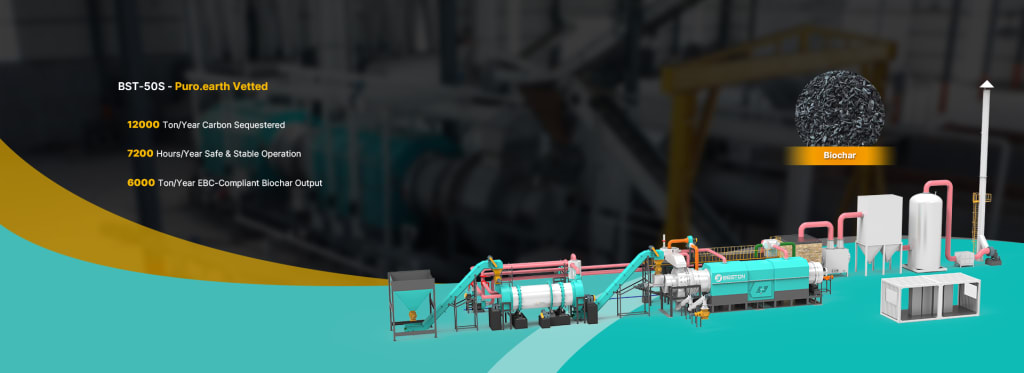
In an era where global waste generation reaches over 2.01 billion tonnes annually (per UNEP data) and fossil fuel depletion accelerates climate change, the circular economy has emerged as a critical solution to break the “take-make-waste” cycle. At the heart of this transition lies biomass pyrolysis—a transformative technology that turns organic waste (agricultural residues, forest byproducts, and even municipal solid waste) into high-value energy and materials. This blog explores how biomass pyrolysis drives circularity, its key applications, and why investing in quality biomass pyrolysis equipment is a game-changer for businesses and sustainability goals.
What Is Biomass Pyrolysis, and How Does It Fit the Circular Economy?
Biomass pyrolysis is a thermal decomposition process that breaks down organic biomass in the absence of oxygen, producing three main products:
Biochar: A carbon-rich solid used as a soil amendment to sequester carbon and improve crop yields.
Syngas: A gaseous mixture (hydrogen, methane, carbon monoxide) used for heat, electricity, or biofuel production.
This closed-loop system aligns perfectly with circular economy principles: it diverts waste from landfills, reduces reliance on non-renewable resources, and creates a circular flow of materials (e.g., agricultural waste → biochar → enhanced soil → more crops → new biomass). Unlike incineration (which releases harmful emissions) or landfilling (which generates methane), pyrolysis maximizes resource efficiency while cutting carbon footprints.
Key Applications of Biomass Pyrolysis in Circular Systems
The versatility of biomass pyrolysis makes it indispensable across industries. Here are three impactful use cases:
1. Agricultural Waste Recycling
Farmers generate millions of tonnes of straw, husks, and stalks yearly—much of which is burned, causing air pollution. With a biomass pyrolysis reactor, this waste is converted into biochar (boosting soil fertility) and bio-oil (powering farm machinery). This not only eliminates waste but also reduces farmers’ dependence on synthetic fertilizers and fossil fuels, creating a self-sustaining agricultural cycle.
2. Municipal Solid Waste (MSW) Management
Cities struggle with organic MSW (food scraps, yard waste), which decomposes in landfills to release methane (a greenhouse gas 28x more potent than CO₂). Biomass pyrolysis plants process this waste into syngas (used for district heating) and biochar (used in urban gardening). For example, a small-scale biomass pyrolysis plant for sale can help mid-sized cities cut MSW volumes by 50% while generating clean energy.
3. Industrial Byproduct Valorization
Industries like paper mills and sawmills produce large amounts of wood waste. Instead of discarding it, they use biomass pyrolysis equipment to turn it into bio-oil (used as a boiler fuel) or biochar (sold to agriculture or construction sectors). This transforms a cost center (waste disposal) into a revenue stream, aligning profitability with sustainability.
Why Quality Biomass Pyrolysis Equipment Matters
To unlock the full potential of biomass pyrolysis, investing in reliable equipment is non-negotiable. Here’s what to look for:
Biomass Pyrolysis Reactor: The core of the system, it must handle diverse biomass types (e.g., wet vs. dry waste) and maintain consistent temperatures (400–600°C) for optimal product yield. Look for reactors with advanced insulation to reduce energy loss and automated feeding systems for efficiency.
Biomass Pyrolysis Plant: A complete plant includes pre-treatment (shredding, drying), pyrolysis, and product refining units. For businesses scaling up, a turnkey biomass pyrolysis plant for sale (offered by reputable manufacturers) ensures seamless integration and compliance with environmental regulations.
After-Sales Support: Equipment longevity depends on maintenance. Choose suppliers that offer training, spare parts, and technical support to minimize downtime.
Future Trends: Biomass Pyrolysis and the Circular Economy
As governments worldwide adopt circular economy policies (e.g., the EU’s Circular Economy Action Plan), the demand for biomass pyrolysis technology will soar. Innovations like hybrid pyrolysis (combining with gasification for higher syngas yield) and modular plants (for remote areas) will make the technology more accessible. For entrepreneurs and industries, now is the time to invest in biomass pyrolysis equipment—not just to meet sustainability targets, but to tap into a $10+ billion global bioenergy market (per Grand View Research).
Conclusion
Biomass pyrolysis is more than a waste-to-energy technology—it’s a cornerstone of the circular economy. By converting organic waste into valuable resources, it addresses two of our biggest challenges: waste accumulation and fossil fuel dependence. Whether you’re a farmer, a waste management company, or an investor, exploring biomass pyrolysis reactor options or a biomass pyrolysis plant for sale is a step toward a more sustainable and profitable future.
Ready to join the circular economy revolution? Start by connecting with trusted manufacturers to find equipment tailored to your needs—your bottom line and the planet will thank you.
About the Creator
Bestonpyrolysis
Engaged in waste plastic/tyre/rubber recycling, oil sludge treatment, biomass recycling, sewage sludge management and paper recycling…
https://bestonpyrolysisplant.com/
Keep reading
More stories from Bestonpyrolysis and writers in Earth and other communities.
The Application of Rice Hull Carbonizer in Agriculture
In the realm of modern agriculture, finding sustainable and innovative solutions is crucial. One such solution that has been gaining traction is the use of rice hull carbonizers. With the ever - increasing environmental concerns and the need for resource optimization, rice hull carbonizers offer a multi - faceted approach to enhancing agricultural practices.
By Bestonpyrolysis5 months ago in Earth
Greenland: New Shipping Routes, Hidden Minerals – and a Frontline Between the US and Russia?
Once seen as a remote and largely isolated Arctic territory, Greenland is rapidly emerging as a focal point of global geopolitics. Climate change, melting ice, and technological advances are transforming the island into a strategic hub defined by new shipping routes, vast mineral resources, and growing rivalry between major powers, particularly the United States and Russia. As the Arctic opens up, Greenland’s geographic position and untapped potential are pushing it to the center of international attention, raising questions about security, sovereignty, and sustainable development. Melting Ice and the Opening of New Shipping Routes One of the most visible impacts of climate change in the Arctic is the reduction of sea ice, which is making previously inaccessible waters navigable for longer periods each year. New Arctic shipping routes, including passages near Greenland, promise shorter travel times between Europe, Asia, and North America. Compared to traditional routes like the Suez Canal, Arctic pathways can reduce shipping distances by thousands of kilometers, cutting fuel costs and emissions. For global trade, this could be transformative. Greenland’s coastal waters are increasingly important as potential transit corridors and support hubs for these routes. However, the expansion of Arctic shipping also raises concerns about environmental risks, maritime safety, and the lack of robust emergency infrastructure in the region. Hidden Mineral Wealth Beneath the Ice Beyond shipping, Greenland holds significant reserves of critical minerals, many of which are essential for modern technologies and the global energy transition. These include rare earth elements, lithium, graphite, uranium, and other strategic resources used in electric vehicles, wind turbines, batteries, and defense systems. As demand for these materials grows, Greenland is being viewed as a potential alternative to existing supply chains dominated by a small number of countries. This has increased interest from Western governments seeking to diversify mineral sourcing and reduce strategic dependencies. However, mining in Greenland is controversial. Local communities and policymakers must balance economic opportunities with environmental protection and cultural preservation. Greenland’s harsh climate and fragile ecosystems make resource extraction both technically challenging and politically sensitive. The United States’ Strategic Interest in Greenland The United States has long considered Greenland strategically vital, largely due to its location between North America and Europe. The US already maintains a military presence at Pituffik Space Base (formerly Thule Air Base), which plays a key role in missile warning systems and space surveillance. In recent years, Washington has renewed its focus on Greenland, emphasizing Arctic security, infrastructure investment, and cooperation with Denmark, which oversees Greenland’s foreign and defense policy. US interest is driven by several factors: protecting transatlantic security routes, countering rival powers in the Arctic, and ensuring access to critical minerals. Greenland is increasingly viewed as a frontline in maintaining Western influence in the High North. Russia’s Arctic Ambitions Russia, meanwhile, sees the Arctic as central to its economic and military strategy. It has invested heavily in Arctic military bases, icebreaker fleets, and energy projects, particularly along its northern coastline. Although Greenland is geographically distant from Russia’s main Arctic territories, Moscow closely monitors developments there. The island’s proximity to key Arctic sea lanes and North Atlantic routes makes it strategically relevant in any broader confrontation between Russia and NATO. As tensions between Russia and the West remain high, Greenland’s location places it near the intersection of competing security interests, increasing its geopolitical significance. Greenland Between Global Powers The growing attention from major powers puts Greenland in a delicate position. While the island seeks greater economic independence and development, it must navigate complex relationships with Denmark, the United States, and other international actors. Greenland’s government has emphasized the importance of maintaining control over its resources and ensuring that development benefits local populations. At the same time, geopolitical competition risks turning Greenland into a strategic chessboard rather than a partner in decision-making. This balancing act is becoming more difficult as Arctic competition intensifies. Environmental and Social Challenges Greenland is on the front lines of climate change. Melting ice sheets contribute to global sea-level rise, while local communities face changes to traditional livelihoods such as fishing and hunting. The expansion of shipping and mining could bring jobs and infrastructure, but it also threatens fragile ecosystems and raises concerns about pollution, habitat disruption, and long-term sustainability. Any future development in Greenland will require careful regulation, international cooperation, and meaningful engagement
By Aarif Lashari4 days ago in Earth
Top Australian Writers’ Festival Cancelled After Palestinian Author Barred
One of Australia’s most respected literary festivals has been cancelled following a fierce backlash over the decision to bar a Palestinian author from participating. What began as a programming dispute quickly escalated into a national debate about free speech, cultural inclusion, and political pressure in the arts. The cancellation has sent shockwaves through Australia’s literary community, raising urgent questions about whose voices are allowed on public platforms and at what cost.
By Aarif Lashari5 days ago in Earth
The Devil's Cut
“Comrade, finally you’re awake.” The voice was smooth, sensual. A flickering incandescent bar was all that lit the white, sterile room. All Vladimir remembered was everything going black. He tried to move his arms and found them strapped to the gurney.
By Matthew J. Fromm5 days ago in Fiction




Comments
There are no comments for this story
Be the first to respond and start the conversation.