
The Application of Rice Hull Carbonizer in Agriculture
Promote Sustainable Agriculture

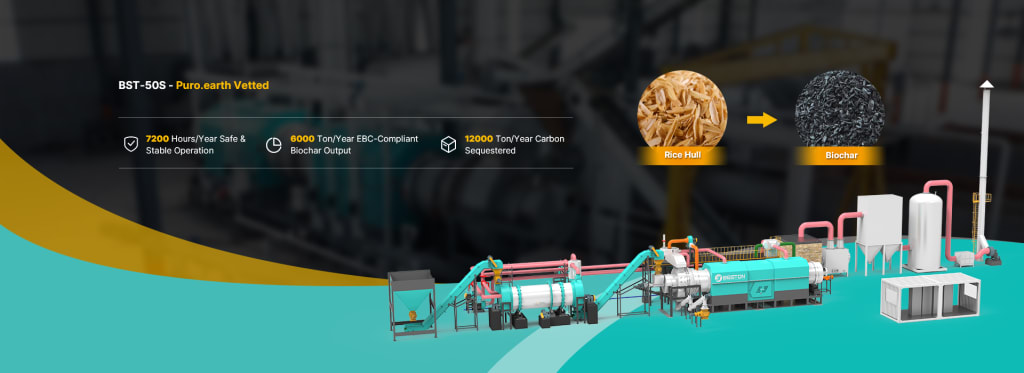
In the realm of modern agriculture, finding sustainable and innovative solutions is crucial. One such solution that has been gaining traction is the use of rice hull carbonizers. With the ever - increasing environmental concerns and the need for resource optimization, rice hull carbonizers offer a multi - faceted approach to enhancing agricultural practices.
A rice hull carbonizer is a specialized machine that utilizes high - temperature carbonization technology to transform rice hull waste into valuable by - products. The main process involves subjecting rice hulls, which are the outer protective coverings of rice grains, to a controlled environment where they are heated in the absence of oxygen. This process, known as pyrolysis, breaks down the complex organic compounds in the rice hulls into simpler components.
The raw material, rice hulls, are abundant in regions where rice is cultivated. After the milling process, a significant amount of rice hulls is generated as a by - product. Instead of being left to decompose or being burned in an uncontrolled manner, which can contribute to air pollution, rice hull carbonizers provide a more eco - friendly and productive alternative.
Products of Rice Hull Carbonization and Agricultural Applications
Biochar is one of the primary products obtained from the carbonization of rice hulls. It is a highly porous, stable form of carbon that has numerous benefits for the soil.
Soil Structure Improvement: Biochar's porous nature helps to improve soil structure. It creates channels within the soil, enhancing aeration and water infiltration. This is particularly beneficial in heavy clay soils, which tend to be compacted and have poor drainage. By adding biochar, the soil becomes more friable, allowing plant roots to penetrate more easily and access nutrients and water.
Nutrient Retention: Biochar has a high cation exchange capacity (CEC). This means it can attract and hold onto positively charged nutrients such as potassium (K⁺), calcium (Ca²⁺), and magnesium (Mg²⁺), preventing them from leaching away with water. As a result, plants have a more consistent supply of essential nutrients, leading to healthier growth and potentially higher yields.
Soil pH Regulation: Depending on the source and production process of biochar, it can have a buffering effect on soil pH. In acidic soils, biochar can help to raise the pH slightly, making it more favorable for a wider range of crops. In alkaline soils, it can help to moderate the pH, creating a more balanced environment for plant growth.
Carbon Sequestration: Biochar is a stable form of carbon. When added to the soil, it can remain there for centuries, effectively sequestering carbon dioxide from the atmosphere. This not only helps to mitigate climate change but also contributes to long - term soil fertility.
In some Asian countries, farmers have started using biochar produced from rice hull carbonizers in their vegetable gardens. They have reported a significant reduction in water requirements as the biochar - amended soil retains moisture better. Moreover, the incidence of soil - borne diseases has decreased, leading to healthier vegetable plants and higher - quality produce.
Looking to the future, the potential for rice hull carbonizers in agriculture is vast. With ongoing research and development, we can expect to see more efficient and cost - effective carbonizer designs. Additionally, as the demand for sustainable agricultural practices continues to grow, the use of rice hull carbonizers is likely to become more mainstream, contributing to a more environmentally friendly and productive agricultural sector.
In conclusion, rice hull carbonizers offer a range of benefits to agriculture, from improving soil health and fertility to providing a renewable energy source. By harnessing the power of this technology, farmers can take a significant step towards sustainable and profitable farming.
About the Creator
Bestonpyrolysis
Engaged in waste plastic/tyre/rubber recycling, oil sludge treatment, biomass recycling, sewage sludge management and paper recycling…
https://bestonpyrolysisplant.com/
Keep reading
More stories from Bestonpyrolysis and writers in Earth and other communities.
Interactions Between Plastic/Tire Pyrolysis Equipment and the Pyrolysis Oil Supply Chain
The demand for pyrolysis oil, a valuable byproduct of pyrolysis processes, has been gaining significant attention in recent years, especially as industries and governments strive to develop more sustainable practices in waste management and energy production. Pyrolysis, the process of decomposing organic materials such as plastic and tires in an oxygen-free environment, produces not only biochar and gas but also pyrolysis oil—a liquid fuel that can be refined or used as an energy source. This oil, often dubbed "liquid gold" due to its versatility, plays a crucial role in the evolving global energy transition and recycling sectors. In this blog post, we will explore the market demand for pyrolysis oil and delve into how pyrolysis equipment for plastics and tires interacts with the broader pyrolysis oil supply chain.
By Bestonpyrolysis5 months ago in Earth
Greenland: New Shipping Routes, Hidden Minerals – and a Frontline Between the US and Russia?
Once seen as a remote and largely isolated Arctic territory, Greenland is rapidly emerging as a focal point of global geopolitics. Climate change, melting ice, and technological advances are transforming the island into a strategic hub defined by new shipping routes, vast mineral resources, and growing rivalry between major powers, particularly the United States and Russia. As the Arctic opens up, Greenland’s geographic position and untapped potential are pushing it to the center of international attention, raising questions about security, sovereignty, and sustainable development. Melting Ice and the Opening of New Shipping Routes One of the most visible impacts of climate change in the Arctic is the reduction of sea ice, which is making previously inaccessible waters navigable for longer periods each year. New Arctic shipping routes, including passages near Greenland, promise shorter travel times between Europe, Asia, and North America. Compared to traditional routes like the Suez Canal, Arctic pathways can reduce shipping distances by thousands of kilometers, cutting fuel costs and emissions. For global trade, this could be transformative. Greenland’s coastal waters are increasingly important as potential transit corridors and support hubs for these routes. However, the expansion of Arctic shipping also raises concerns about environmental risks, maritime safety, and the lack of robust emergency infrastructure in the region. Hidden Mineral Wealth Beneath the Ice Beyond shipping, Greenland holds significant reserves of critical minerals, many of which are essential for modern technologies and the global energy transition. These include rare earth elements, lithium, graphite, uranium, and other strategic resources used in electric vehicles, wind turbines, batteries, and defense systems. As demand for these materials grows, Greenland is being viewed as a potential alternative to existing supply chains dominated by a small number of countries. This has increased interest from Western governments seeking to diversify mineral sourcing and reduce strategic dependencies. However, mining in Greenland is controversial. Local communities and policymakers must balance economic opportunities with environmental protection and cultural preservation. Greenland’s harsh climate and fragile ecosystems make resource extraction both technically challenging and politically sensitive. The United States’ Strategic Interest in Greenland The United States has long considered Greenland strategically vital, largely due to its location between North America and Europe. The US already maintains a military presence at Pituffik Space Base (formerly Thule Air Base), which plays a key role in missile warning systems and space surveillance. In recent years, Washington has renewed its focus on Greenland, emphasizing Arctic security, infrastructure investment, and cooperation with Denmark, which oversees Greenland’s foreign and defense policy. US interest is driven by several factors: protecting transatlantic security routes, countering rival powers in the Arctic, and ensuring access to critical minerals. Greenland is increasingly viewed as a frontline in maintaining Western influence in the High North. Russia’s Arctic Ambitions Russia, meanwhile, sees the Arctic as central to its economic and military strategy. It has invested heavily in Arctic military bases, icebreaker fleets, and energy projects, particularly along its northern coastline. Although Greenland is geographically distant from Russia’s main Arctic territories, Moscow closely monitors developments there. The island’s proximity to key Arctic sea lanes and North Atlantic routes makes it strategically relevant in any broader confrontation between Russia and NATO. As tensions between Russia and the West remain high, Greenland’s location places it near the intersection of competing security interests, increasing its geopolitical significance. Greenland Between Global Powers The growing attention from major powers puts Greenland in a delicate position. While the island seeks greater economic independence and development, it must navigate complex relationships with Denmark, the United States, and other international actors. Greenland’s government has emphasized the importance of maintaining control over its resources and ensuring that development benefits local populations. At the same time, geopolitical competition risks turning Greenland into a strategic chessboard rather than a partner in decision-making. This balancing act is becoming more difficult as Arctic competition intensifies. Environmental and Social Challenges Greenland is on the front lines of climate change. Melting ice sheets contribute to global sea-level rise, while local communities face changes to traditional livelihoods such as fishing and hunting. The expansion of shipping and mining could bring jobs and infrastructure, but it also threatens fragile ecosystems and raises concerns about pollution, habitat disruption, and long-term sustainability. Any future development in Greenland will require careful regulation, international cooperation, and meaningful engagement
By Aarif Lashari5 days ago in Earth




Comments
There are no comments for this story
Be the first to respond and start the conversation.