
The role of AI in climate change solutions
Climate change is one of the most pressing global challenges, and mitigating its effects requires innovative solutions.


Artificial Intelligence (AI) has emerged as a powerful tool in the fight against climate change. From optimizing energy usage to enhancing carbon capture technologies, AI’s potential to transform climate change solutions is vast. This article explores the role of AI in climate change mitigation and adaptation, highlighting its contributions in several key areas.
1. Energy Efficiency and Renewable Energy Integration
One of the primary drivers of climate change is the burning of fossil fuels for energy. AI can significantly improve energy efficiency by optimizing how we use energy. For example, AI-powered systems can predict energy demand, adjust consumption patterns, and manage the operation of grids more effectively. This helps reduce energy waste and lowers carbon emissions.
In renewable energy, AI plays a crucial role in optimizing the integration of solar, wind, and other green energy sources into the existing energy infrastructure. AI can predict renewable energy generation based on weather patterns, thus enabling better planning and energy distribution. For instance, AI algorithms can forecast the amount of sunlight or wind power available at any given time, allowing energy providers to make real-time adjustments, reducing reliance on non-renewable sources.
2. Smart Cities and Infrastructure
AI can enhance urban sustainability by enabling the development of smart cities. Through the integration of AI with the Internet of Things (IoT), cities can monitor and manage energy consumption, traffic patterns, waste management, and pollution levels. AI-based systems can optimize heating, cooling, and lighting in buildings, reducing overall energy consumption. For example, AI can automatically adjust lighting in public spaces or optimize heating systems based on occupancy data, leading to significant energy savings.
Furthermore, AI can be used to design and build more sustainable urban infrastructure. Through machine learning algorithms, engineers can model buildings and cities to maximize energy efficiency and minimize environmental impact. AI can also help design smarter transportation systems, reducing emissions from vehicles by optimizing routes and traffic flow, ultimately lowering the carbon footprint of urban areas.
3. Climate Modeling and Prediction
One of the significant challenges in addressing climate change is predicting its future impacts. AI can significantly improve climate modeling by analyzing vast amounts of climate data, identifying patterns, and making more accurate predictions. Traditional climate models require significant computational power and can sometimes struggle with handling complex interactions between environmental variables. AI, particularly machine learning, can identify trends and correlations within large datasets that humans might miss.
For example, AI has been applied to predict extreme weather events such as hurricanes, floods, and droughts with greater accuracy. Machine learning algorithms can analyze historical weather data and satellite imagery to identify early warning signs of these events, allowing communities to prepare and respond more effectively. By improving predictions, AI can help governments, businesses, and individuals better understand the risks posed by climate change and take proactive steps to mitigate those risks.
4. Carbon Capture and Sequestration
To combat climate change, it is crucial to reduce the amount of carbon dioxide (CO2) in the atmosphere. One of the promising solutions for this is carbon capture and sequestration (CCS), which involves capturing CO2 emissions from industrial processes and storing them underground. AI can play a significant role in enhancing CCS technologies by optimizing the efficiency of carbon capture processes and improving the monitoring of storage sites.
AI algorithms can help identify the best locations for storing CO2 by analyzing geological data and assessing the long-term stability of storage sites. Additionally, AI can optimize the operation of carbon capture plants, making them more cost-effective and efficient. Over time, as the technology improves, AI will play a crucial role in scaling up CCS to the levels needed to make a meaningful impact on global carbon emissions.
5. Sustainable Agriculture
Agriculture is both a contributor to climate change and a sector vulnerable to its effects. AI can help mitigate the environmental impact of farming by enabling precision agriculture. Through AI-powered drones, sensors, and satellite imagery, farmers can monitor crop health, soil moisture, and nutrient levels in real-time. This allows for more efficient water and fertilizer use, reducing waste and minimizing the environmental footprint of agricultural practices.
AI can also assist in reducing deforestation, a major contributor to climate change. By monitoring land use and detecting illegal deforestation activities, AI can help enforce regulations and preserve forests that act as carbon sinks.
6. Climate Change Research and Innovation
AI is also facilitating breakthroughs in climate change research. By automating data analysis and simulations, AI accelerates the pace of scientific discovery. For instance, researchers use AI to model the behavior of complex biological systems, which helps in the development of new materials for energy storage, carbon capture, and renewable energy technologies. AI is also being used to accelerate the design of more efficient solar panels, wind turbines, and batteries, helping reduce the costs associated with these green technologies.
Conclusion
AI is an indispensable tool in the fight against climate change. Its applications span across multiple sectors, from energy and urban planning to agriculture and carbon capture. By improving efficiency, enabling better predictions, and driving innovation, AI can play a pivotal role in mitigating the effects of climate change. However, its potential must be fully realized through investment in research, collaboration between stakeholders, and responsible use of AI technologies. As we continue to confront the global climate crisis, AI will undoubtedly be one of the most powerful allies in creating a more sustainable and resilient future for all.
About the Creator
Badhan Sen
Myself Badhan, I am a professional writer.I like to share some stories with my friends.
Keep reading
More stories from Badhan Sen and writers in Earth and other communities.
The chemistry behind fireworks
However, behind their vibrant spectacle lies a fascinating mix of chemistry and physics. The creation of fireworks involves understanding the chemical reactions that produce light, color, sound, and smoke. The science behind fireworks can be broken down into several core components: the combustion reactions, the role of metal salts in color production, the propulsion of the fireworks, and the creation of sound effects.
By Badhan Sen10 months ago in Earth
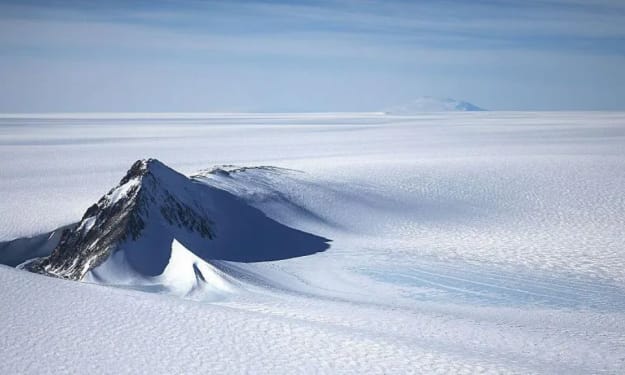
Landscape Beneath Antarctica's Icy Surface Revealed in Unprecedented Detail
For decades, Antarctica has been the Earth’s ultimate mystery — a vast expanse of ice covering almost 14 million square kilometers, hiding secrets beneath its frozen surface. Now, thanks to advanced radar technology and satellite mapping, scientists have produced the most detailed map yet of the continent’s hidden landscape, revealing mountains, valleys, subglacial lakes, and river systems that were previously invisible. This discovery is more than just a scientific curiosity. Understanding Antarctica’s topography beneath the ice is critical for predicting ice sheet stability, global sea-level rise, and climate change impacts. The new data could also shed light on Earth’s geological history and the ways in which life may survive in extreme environments. How Scientists Mapped the Hidden Terrain For years, researchers have relied on a combination of methods to peek beneath the ice: Ice-penetrating radar: Devices mounted on aircraft or satellites send radio waves through ice layers, which bounce back when they hit bedrock, revealing contours beneath kilometers of frozen water. Satellite gravimetry: Small variations in Earth’s gravitational field help infer the presence of mountains, valleys, and subglacial lakes. Seismic surveys: Explosions or controlled vibrations allow scientists to detect underground structures by measuring the way seismic waves travel through different materials. Using these techniques, a consortium of international researchers created a high-resolution map of Antarctica’s sub-ice topography, revealing features that rival the landscapes of continents that have been visible for millions of years. What’s Beneath the Ice? The map reveals a striking variety of features: Mountain ranges: Peaks rise more than 4,000 meters above the surrounding terrain, hidden beneath miles of ice. Some of these ranges may be older than the Rockies or the Alps. Deep valleys: Vast troughs and gorges, carved by ancient rivers or tectonic activity, provide clues about how the continent evolved over millions of years. Subglacial lakes: Scientists have identified hundreds of liquid water lakes trapped beneath the ice, including the famous Lake Vostok. These lakes remain liquid due to pressure and geothermal heat and may host microbial life isolated for millions of years. Subglacial river networks: Surprisingly, water flows beneath the ice in channels and rivers, slowly carving pathways that affect ice sheet movement. This intricate landscape challenges the perception of Antarctica as a flat, featureless ice sheet. Instead, it is a dynamic and complex environment, where hidden topography influences everything from ice flow to global sea levels. Why This Discovery Matters The importance of understanding what lies beneath Antarctica’s ice cannot be overstated: Predicting Ice Sheet Stability: Ice sheets move more quickly over smooth surfaces than over rugged terrain. Knowing where mountains and valleys lie helps scientists predict which areas of ice may collapse first, potentially raising sea levels faster than anticipated. Climate Change Models: Subglacial lakes and water channels lubricate the ice from below, influencing melting rates. Incorporating these features into models improves accuracy in forecasting future sea-level rise. Earth’s Geological History: The newly revealed landscape offers a window into Antarctica’s past — from tectonic shifts to ancient rivers and climates. This data helps reconstruct how continents drifted and climates evolved over millions of years. Search for Extreme Life: Subglacial lakes may harbor microbial life isolated for millions of years, providing insights into life in extreme environments, potentially even on other planets. Global Implications Antarctica may feel distant, but its ice sheets hold the key to global sea-level stability. Even small changes beneath the ice can have profound consequences for coastal cities around the world. With melting accelerated by climate change, understanding the terrain under the ice is crucial for planning and mitigation. Governments, scientists, and environmental organizations are now using this information to: Improve climate models for sea-level rise predictions Identify vulnerable regions of the ice sheet Guide future research missions to subglacial lakes and mountains The discovery also strengthens the case for continued international collaboration in Antarctica, where research and environmental protection are governed by treaties emphasizing peaceful scientific study. Challenges Ahead Mapping Antarctica is far from complete. Extreme weather, thick ice sheets, and logistical difficulties make the continent one of the hardest places to study. While radar and satellite technologies have advanced, field validation and deeper exploration remain difficult and expensive. Researchers also face ethical and environmental concerns. Drilling into subglacial lakes to sample microbial life, for instance, must be done carefully to avoid contamination. Antarctica’s fragile ecosystem demands that scientific progress balances discovery with protection. Looking to the Future The detailed map of Antarctica’s hidden landscape opens new possibilities for exploration and understanding: Ice Flow Predictions: With accurate topography, scientists can model how ice sheets will respond to warming climates more precisely. Resource Insights: While exploitation is restricted by international agreements, understanding subglacial mineral deposits can inform potential future uses. Extreme Environment Biology: Studying subglacial lakes could reveal new species adapted to cold, dark, and high-pressure environments, broadening our understanding of life on Earth. The data also strengthens international scientific cooperation, as multiple countries share findings and resources to better understand a continent that belongs to no single nation. Final Thoughts Antarctica’s ice may appear static and endless, but beneath it lies a vibrant and rugged landscape filled with mountains, valleys, lakes, and rivers. The new detailed mapping of this hidden world is a landmark achievement in Earth science, combining advanced technology, international collaboration, and the human drive to explore. By uncovering what lies beneath the ice, scientists are not just satisfying curiosity — they are equipping humanity with the knowledge to protect our planet, anticipate climate challenges, and understand the deep history of Earth itself. Antarctica’s secrets, once locked beneath kilometers of ice, are finally being revealed, and what we learn could reshape our understanding of the planet and our place within it.
By Muhammad Hassanabout 24 hours ago in Earth
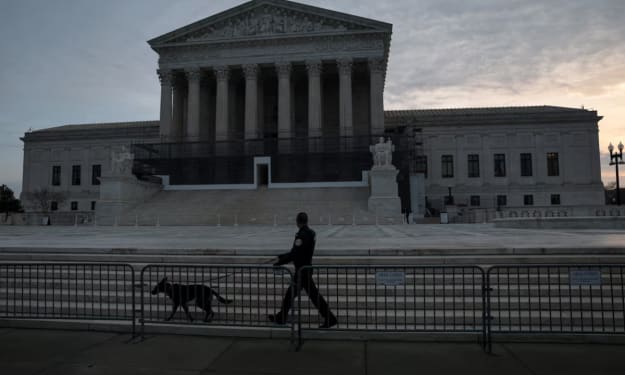
Supreme Court Set to Issue Rulings, with Trump Tariffs Case Still Pending
The U.S. Supreme Court is gearing up for a series of critical rulings that could have far-reaching effects on American politics, the economy, and ongoing legal controversies involving former President Donald Trump. Among these high-profile cases is the long-awaited decision on the Trump tariffs case, which remains unresolved and continues to draw national attention. A Pivotal Moment for the Supreme Court The Supreme Court, as the highest judicial body in the United States, has the power to shape not only legal precedent but also economic and political landscapes. Every term, the Court issues decisions that can influence everything from civil liberties to federal policies. This session, observers are particularly focused on cases involving trade, executive power, and regulations implemented during Trump’s administration. The Trump tariffs case, in particular, highlights the tension between presidential authority and congressional oversight. The case challenges certain tariffs imposed by Trump on imports from countries like China, Mexico, and the European Union, arguing that they exceeded the executive branch’s authority and bypassed proper legislative procedures. What the Trump Tariffs Case Is About During his presidency, Donald Trump frequently used tariffs as a tool to bolster U.S. manufacturing, address trade imbalances, and pressure foreign governments into renegotiating trade deals. While some praised these measures for protecting domestic industries, critics argued that they overstepped legal boundaries and caused economic strain on American consumers. The case currently pending before the Supreme Court examines whether Trump acted within his executive authority when imposing these tariffs. Legal analysts note that a ruling against Trump could set a precedent limiting future presidents’ power to unilaterally impose trade restrictions without congressional approval. Conversely, a ruling in his favor could reinforce broad executive powers in trade matters. Broader Implications for Trade and the Economy The Supreme Court’s decision is more than just a legal formality—it has significant economic implications. If the Court rules that the tariffs were unlawful, the U.S. could face demands to refund millions in duties collected, impacting businesses and international trade relations. Companies that relied on protective tariffs to compete in global markets might also face increased competition from foreign imports. On the other hand, upholding the tariffs could embolden future administrations to take aggressive action in trade disputes, potentially triggering new tensions with other countries. Investors, trade associations, and policymakers are closely monitoring these developments, as the ruling could influence stock markets, trade negotiations, and long-term economic strategies. Political Stakes Remain High Beyond economics, the Trump tariffs case has political dimensions. Donald Trump’s legal and political team is watching the case closely, as the outcome could influence his broader legal battles and political ambitions. While the case focuses on trade, it also touches on questions of executive authority, a topic central to debates about checks and balances in the U.S. government. Democrats and Republicans alike are analyzing the case for its potential impact on future administrations. Some lawmakers have expressed concern that a broad interpretation of executive power could set a dangerous precedent, allowing presidents to implement sweeping economic measures without sufficient legislative oversight. Other Supreme Court Decisions to Watch While the Trump tariffs case is the most high-profile, the Supreme Court is expected to issue rulings on several other major issues this session, including voting rights, environmental regulations, and federal agency authority. Each decision could have ripple effects across the nation, shaping laws and policies for years to come. Observers are particularly interested in cases that intersect with current political debates. With midterm elections approaching, the timing of these rulings could influence public opinion, political campaigns, and legislative priorities. What Comes Next For now, all eyes remain on the Supreme Court. Legal experts are divided on the likely outcome of the Trump tariffs case, with some predicting a narrow decision and others expecting broader implications. Regardless of the verdict, the ruling will be closely studied by policymakers, businesses, and citizens alike. In the meantime, companies affected by tariffs, trade advocates, and political analysts continue to prepare for potential scenarios. Whether the Court sides with Trump or challenges his administration’s actions, the ruling will shape the legal landscape for presidential authority and U.S. trade policy for years to come. Final Thoughts The Supreme Court’s upcoming rulings, particularly on the Trump tariffs case, underscore the enduring tension between executive authority, congressional oversight, and judicial interpretation. These decisions will not only influence the immediate legal battle but could also redefine the boundaries of presidential power and trade policy in the United States. For citizens, investors, and policymakers, understanding the implications of these rulings is crucial. As the nation waits for the Court’s verdict, one thing is clear: the outcome will resonate far beyond the courtroom, affecting politics, economics, and the balance of power in Washington, D.C.
By Muhammad Hassan3 days ago in Earth
Do You have a Support Network?
Life is harder when you’re on your own. Human beings are social creatures, and we usually feel better when we have support from a strong social network around us. For most people, it’s our families that hold us together like glue.
By Elizabeth Woodsabout 19 hours ago in Psyche


Comments (1)
AI does have its uses in many areas. Good job.