
The River That Remembered Everything
When a polluted British river began behaving like it had a memory, scientists discovered a hidden intelligence in nature—born from centuries of human neglect

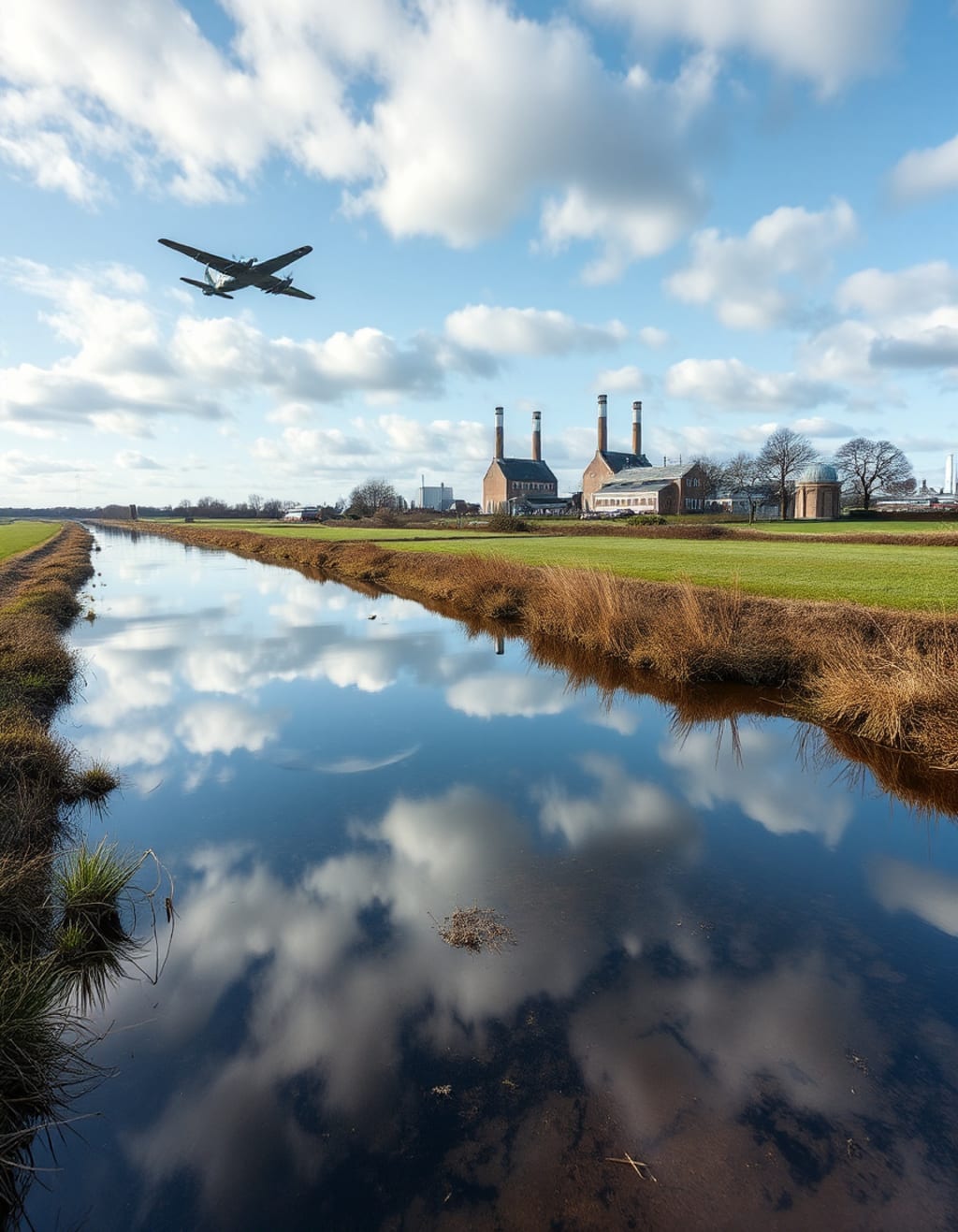
For most of its life, the River Tharne was ignored.
It wound quietly through Cumbria’s northern edge—twenty miles of reed-choked bends, flanked by sheep pastures and tired towns whose best days had drowned long ago.
The locals called it “The Sleeping Snake.” It had no waterfalls. No famous rapids. Just a slow, persistent crawl toward the Irish Sea.
But in April 2029, the Tharne did something no river should be able to do.
It changed direction.
Something Against Gravity
On the morning of April 9th, amateur kayaker Martin Fielding was paddling near Elvermouth Bridge when he noticed something strange. Leaves floated upstream. Tadpoles swam in reverse. A floating crisp packet passed him twice—against the wind.
Thinking it was a bizarre tide anomaly, Fielding posted a video online. It went viral within 36 hours.
That night, BBC Nature confirmed it: The River Tharne had reversed flow for nearly three miles, defying both gradient and gravity. It wasn’t due to rainfall, dam failure, or coastal surge.
It was something else.
A River with Triggers
Hydrologist Dr. Lena Hawthorn from the University of Lancaster led the emergency investigation.
Using drones and underground sensors, her team mapped the reversal and tracked unusual fluctuations in water chemistry.
One pattern stood out: every time the river changed direction, the chemical composition of the water shifted dramatically—releasing old toxins that had been buried in the sediment for decades.
Mercury from a Victorian tannery.
Traces of lead from post-war factories.
Even synthetic estrogens from 1990s pharmaceuticals.
“It was as if the river had stored them,” said Dr. Hawthorn. “And now, somehow, it was choosing to let them go.”
Water That Holds a Grudge
At first, the scientific community dismissed the idea as metaphor.
But it persisted.
In July, the Tharne reversed again—this time on the anniversary of the 1956 Elvermouth Chemical Spill, a forgotten disaster that killed hundreds of fish and several dogs. Locals had buried the story. But the river hadn’t.
Water samples taken during the reversal revealed nearly identical chemical markers to those from archived 1956 soil reports.
The Tharne wasn’t just holding toxins.
It was replaying them—as if remembering.
The Memory Hypothesis
Dr. Hawthorn partnered with neurobiologist Dr. Mitali Shah to explore an outlandish idea: Could the river behave like a memory system?
Their hypothesis drew from “distributed memory theory” in biology—where complex organisms store information across multiple, non-centralized systems. Octopuses store memory in their limbs. Slime molds remember routes without neurons.
Could sediment layers, microbacterial colonies, and pollutants function like data points?
“The river is not alive,” Dr. Shah clarified, “but the system behaves like it’s intelligent. It reacts, stores, and responds with something like intention.”
They called it: Hydrological Echo Memory.
Trigger Events
Over the following months, researchers identified nine reversal events on the Tharne. Each coincided with a historical trauma:
The 1943 RAF jet crash.
The 1978 pesticide leak from Loughridge Farm.
The 2005 suicide of an environmental activist near Riverbend Bridge.
Even a 2021 illegal dumping of pharmaceutical waste, previously unreported—now dredged up as proof.
Each event was followed by a release of targeted toxins, often matching the decade or pollutant involved.
The river was not just random.
It was telling a story.
Ecological Intelligence or Natural Revenge?
As the UK press began calling Tharne “The River That Remembers,” public opinion split.
Some saw it as a wake-up call: a wounded ecosystem pushing back.
Others feared it: was this natural revenge? Would other rivers do the same?
By September, rivers in Wales and the Highlands began showing localized sediment blooms, where chemical histories were spontaneously stirred and released. Early signs of what researchers now called “ecological cognition.”
But only the Tharne reversed course.
Only the Tharne chose its moments.
The AI Translation
To decode the pattern, an interdisciplinary team used AI to chart all historical environmental violations along the Tharne and match them to reversal events.
When fed into the model, the AI began predicting future reversals.
And on October 12, 2029, it predicted one with to-the-hour accuracy.
The river reversed near Bellcross, a site of an unrecorded coal fire in 1932. The AI had inferred it from an old shipping manifest and the mineral traces still embedded in the riverbed.
“This is no longer a metaphor,” said Dr. Hawthorn. “The river functions as a decentralized, reactive memory archive. It stores, forgets selectively, and recalls when triggered by certain variables—heat, moon phase, barometric pressure.”
The Water Tribunal
In 2030, the UK Department for Environment held an unprecedented hearing titled the Water Tribunal, aimed at acknowledging eco-traumas formally.
It was not a trial. There were no defendants. Just data, maps, river samples—and silence.
Local children read aloud the names of animals lost in the 1956 spill. Others released biodegradable flags with the years of each pollution event.
It was the first time a non-human memory system had been granted a voice in policy.
Protecting a Thinking River
By late 2030, the River Tharne was declared an Ecological Memory Site, the first of its kind. Dumping was criminalized. Sensors were embedded along its length to detect shifts in flow or composition. Any sudden changes were treated like health symptoms.
New legislation proposed creating “river archivists”—scientists whose job was not just to clean rivers, but to listen to them.
Meanwhile, artists began recreating the reversal patterns as musical scores, translating chemical spikes into haunting symphonies.
One was played at the Edinburgh Festival: Elegy for the Remembering River.
Are We Next?
In a final twist, the Tharne’s memory appeared to grow more sensitive over time. By 2031, it began reversing for events that hadn’t happened yet—forecasting based on similar past patterns.
One reversal occurred after the approval of a new fracking site 40 miles upstream—before any drilling began.
It was as if the river now understood the shape of harm.
Or worse: expected it.
Final Reflection
The River Tharne doesn’t speak.
It doesn’t write.
But it remembers—through pressure, flow, poison, silence.
It is our past carved into water.
It is memory without forgiveness.
And as the UK debates the ethics of ecological sentience—of what it means for nature to remember—we are left with a deeper, quieter fear:
If rivers remember what we do to them... what else does?
About the Creator
rayyan
🌟 Love stories that stir the soul? ✨
Subscribe now for exclusive tales, early access, and hidden gems delivered straight to your inbox! 💌
Join the journey—one click, endless imagination. 🚀📚 #SubscribeNow
Australia Horticulture Market 2026: Climate-Smart Farming, Export Demand & Agri-Tech Innovation
Australia Horticulture Market Overview Australia’s horticulture market plays a crucial role in the country’s agricultural economy, supplying fresh fruits, vegetables, nuts, flowers and nursery products to both domestic and international markets. The sector is widely recognized for high-quality produce, strong biosecurity standards and advanced farming practices. Growing consumer demand for nutritious foods, expanding export opportunities and continuous technological innovation in agriculture are driving sustained development across Australia’s horticulture industry.
By Amyra Singh8 days ago in Earth


Comments (1)
This is fascinating! The River Tharne changing direction is mind-blowing. I wonder what exactly causes these reversals. Is it related to the release of toxins? And how does it manage to go against gravity? It makes me think about the power and mysteries of nature. Can't wait to see if there are more strange happenings with this river.