
: "The Rise of Artificial Intelligence: What to Expect"
Transforming Industries: AI Applications and Innovations


Artificial Intelligence (AI) is no longer confined to science fiction; it is rapidly transforming various aspects of our lives. From autonomous vehicles and virtual assistants to personalized recommendations and advanced data analysis, AI is revolutionizing industries and reshaping the way we live and work. In this article, we explore the rise of artificial intelligence, its potential implications, and what we can expect in the future. By understanding the current landscape and anticipating the impact of AI, we can navigate this transformative era with informed perspectives.
Understanding Artificial Intelligence:
Artificial Intelligence refers to the development of computer systems capable of performing tasks that typically require human intelligence. These tasks include speech recognition, visual perception, decision-making, and problem-solving. AI technologies, such as machine learning and deep learning, enable computers to learn from data and improve their performance over time.
AI Applications in Various Industries:
AI is being adopted across diverse industries, revolutionizing processes and creating new opportunities. In healthcare, AI is aiding in medical diagnosis, drug discovery, and personalized treatment plans. In finance, AI-powered algorithms analyze market trends and make intelligent investment decisions. In transportation, autonomous vehicles are becoming a reality, promising safer and more efficient transportation systems. These are just a few examples of how AI is transforming industries and enhancing productivity.
Enhancing Human Productivity and Efficiency:
AI technologies have the potential to augment human capabilities and improve productivity. By automating repetitive and mundane tasks, AI frees up human workers to focus on more creative and strategic endeavors. AI-powered tools and software can assist professionals in data analysis, customer support, and decision-making, enabling them to make more informed choices efficiently.
Ethical Considerations and Responsible AI:
As AI becomes increasingly sophisticated and pervasive, ethical considerations become paramount. Issues such as algorithmic bias, data privacy, and the impact of AI on employment need careful attention. Developers, policymakers, and organizations must prioritize responsible AI practices, ensuring transparency, fairness, and accountability in AI systems.
AI and the Workforce of the Future:
The rise of AI has sparked concerns about the potential displacement of human workers. While some jobs may be automated, new opportunities will also emerge. It is crucial to embrace lifelong learning and reskilling to adapt to the changing demands of the workforce. Collaboration between humans and AI, where humans focus on tasks that require empathy, creativity, and critical thinking, will be essential.
The Evolution of AI: Advancements on the Horizon:
AI is a rapidly evolving field, and future advancements hold tremendous potential. Researchers are working on developing AI systems that can understand and generate natural language, exhibit human-level reasoning, and possess emotional intelligence. Quantum computing may also revolutionize AI capabilities by solving complex problems at an unprecedented scale.
Ethical and Legal Frameworks for AI:
As AI continues to advance, the development of robust ethical and legal frameworks is imperative. Discussions around privacy, accountability, liability, and the potential social impact of AI should involve policymakers, industry experts, and the public. These frameworks will ensure that AI technologies are developed and deployed responsibly, with considerations for societal well-being.
AI and Human-Centric Design:
To fully leverage the potential of AI, a human-centric approach is vital. AI systems should be designed with human values in mind, considering factors such as transparency, fairness, and user experience. Collaboration between AI experts, designers, and domain specialists will ensure that AI technologies align with human needs and aspirations.
Conclusion:
The rise of artificial intelligence promises remarkable advancements and transformative changes across industries and society as a whole. As AI continues to evolve, it is crucial to balance innovation with ethical considerations, ensuring responsible and beneficial implementation. By embracing AI technologies, understanding their implications, and actively participating in the development
About the Creator
Keep reading
More stories from GRACE MALLENS and writers in Earth and other communities.
"10 Easy and Delicious Recipes for a Healthy Lifestyle
Title: "10 Easy and Delicious Recipes for a Healthy Lifestyle" Introduction: In today's fast-paced world, maintaining a healthy lifestyle can be a challenge. However, one of the key pillars of a healthy lifestyle is a nutritious diet. With the right recipes, eating well can be both effortless and enjoyable. In this article, we present 10 easy and delicious recipes that are not only packed with nutrients but also satisfy your taste buds. Whether you're a seasoned cook or a beginner in the kitchen, these recipes will inspire you to embrace a healthier way of eating.
By GRACE MALLENS3 years ago in Earth
The Reality of the Illusion of Time
Recently, as I strolled along the short stretch to my strength training session, I aimlessly took in the row of tatty shops and shabby buildings along the route and passed an off-street, in which one of my sisters used to live, around thirteen years ago.
By Chantal Christie Weissabout 18 hours ago in Earth
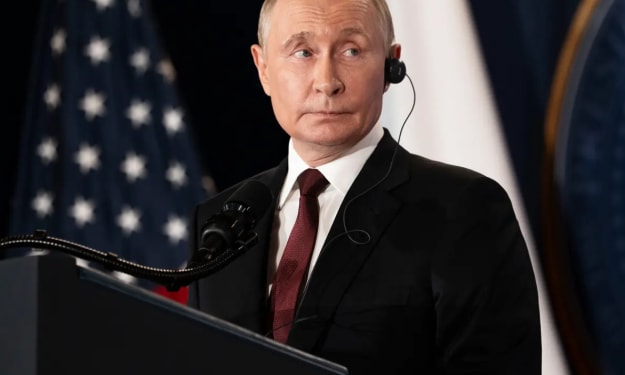
Why Putin Went Quiet When Challenged by Trump Over Venezuela
When U.S. forces captured Venezuelan President Nicolás Maduro in early January 2026, the world was stunned. Venezuela has long been a Russian ally, yet Russian President Vladimir Putin remained almost completely silent when challenged directly by U.S. President Donald Trump. Why would a leader so often outspoken on the world stage hold back in such a dramatic moment? Let’s unpack the story and explore what it means for global politics. A Bold Move That Shocked the World On January 3, U.S. forces executed a daring operation in Venezuela, taking Maduro into custody in New York to face charges including drug trafficking and narco‑terrorism. The operation was framed by the U.S. as a step to enforce justice, but critics saw it as an extraordinary overreach of power. Venezuela is no ordinary country for Russia. Since the days of Hugo Chávez, Moscow has cultivated close ties with Caracas, offering military support, energy deals, and diplomatic backing on the global stage. Past actions included Russian bombers visiting Venezuela and high-profile defense agreements. Given this history, many expected a fiery response from Putin. Yet, the Kremlin remained calm, issuing measured statements rather than sharp threats. Why Silence Was Strategic Experts suggest there are several reasons for Putin’s muted reaction, each revealing the careful calculation behind the Kremlin’s foreign policy. 1. Focus on the War in Ukraine Russia’s primary priority remains Ukraine. Engaged in a high-stakes military and diplomatic battle, Putin cannot afford distractions or new confrontations far from home. Escalating tensions with the United States over Venezuela could jeopardize Moscow’s position in Europe. A New York Times report highlighted that Russia is “subordinating all other interests to the war in Ukraine,” suggesting that even a high-profile ally like Venezuela takes a back seat to Moscow’s strategic goals. 2. Limited Military Options While Russia’s alliance with Venezuela is longstanding, much of the support has been symbolic rather than operational. Defense systems and military cooperation exist on paper, but Russia lacks the immediate ability to counter a U.S. operation thousands of miles away. Putin may have recognized that responding aggressively would be both ineffective and costly, potentially risking military and economic consequences that Moscow cannot afford. 3. Maintaining Diplomatic Channels with Washington With Donald Trump back in the White House since 2025, there has been cautious optimism in Moscow about recalibrating U.S.–Russia relations. Avoiding a dramatic confrontation over Venezuela keeps diplomatic channels open, allowing Russia to negotiate on other high-priority issues like Ukraine and sanctions relief. In other words, silence can be a calculated strategy, signaling restraint rather than weakness. 4. Russia’s Global Influence Is Waning The Maduro episode also highlights a broader geopolitical reality: Russia’s global reach has limits. Since the 2022 invasion of Ukraine, Moscow’s influence in regions like the Middle East and parts of the former Soviet Union has weakened. Venezuela remains one of its few high-profile allies outside Europe, but even there, Russia’s power is largely symbolic. By not escalating, Putin is acknowledging a practical truth: Russia cannot be everywhere at once, and some battles are not worth fighting. 5. Choosing Battles Wisely Some analysts emphasize that Putin’s quiet response is more about strategic prioritization than capitulation. In a world dominated by nuclear powers and volatile global politics, direct confrontation with the United States over Venezuela could spiral into a far larger crisis. By staying silent, the Kremlin may be signaling that it picks its battles carefully, focusing resources on Ukraine, where the stakes are highest. What This Means for the World Putin’s silence sends several messages: Russia is currently stretched, economically and militarily. Moscow is prioritizing Ukraine over symbolic allies. Strategic restraint is sometimes more powerful than public confrontation. The limits of Russian influence are becoming more visible to the world. This episode reflects a new reality in geopolitics: power is as much about choosing when not to act as when to assert force. The Bigger Picture The capture of Maduro is a defining moment not just for Venezuela, but for global politics. It shows the United States asserting power in a way not seen for decades, while Russia’s quiet reaction underscores its current limits and priorities. For observers, Putin’s silence is a lesson in modern geopolitics: even the most assertive leaders exercise restraint when stakes are high and risks are global. In the end, the Maduro affair reminds us that in today’s world, the loudest response is not always the most effective one — sometimes, quiet calculation speaks volumes. Sources and Further Reading The US capture of Maduro reveals Russia’s weakness – Atlantic Council ‘It sends a horrible signal’: US politicians react to capture of Nicolás Maduro – The Guardian Russia slams 'neocolonial threats' against Venezuela – Reuters
By Muhammad Hassan4 days ago in Earth
A Dart at Dusk
Seconds ago, the sullen sun set on the two of us… my exuberant furry companion and me. A fresh breeze embraces us, delivering welcome relief from the day’s oppressive heat. His typical stumbling and staggering along — apace with a sloth — has turned into trip-trapping, high-stepping, almost skipping along.
By Angie the Archivist 📚🪶about 23 hours ago in Petlife



Comments
There are no comments for this story
Be the first to respond and start the conversation.