
The Rise and Fall of Sea Scorpions: Ancient Apex Predators of the Seas
From Apex Predators to Extinction: The Fascinating Saga of Sea Scorpions

Introduction:
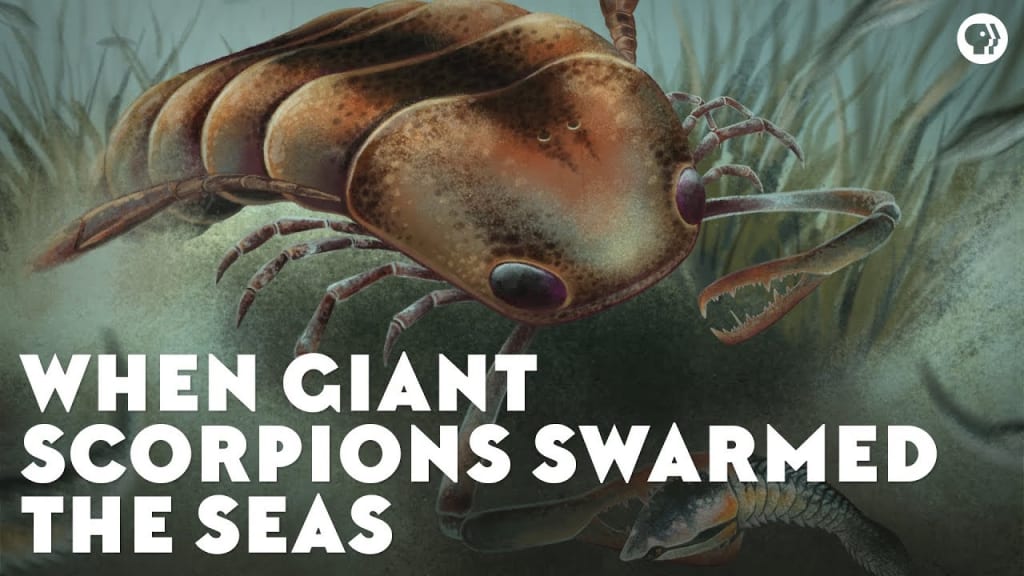
In the early Devonian Period, some 400 million years ago, Earth was a vastly different place. Shallow seas teeming with exotic creatures like rugose corals, crinoids, and jawless fish surrounded the continents. Dominating these ancient waters were apex predators known as sea scorpions, or eurypterids. They thrived for over 200 million years, evolving into various shapes and sizes, with some even becoming the largest arthropods ever recorded. However, as the Devonian period progressed, new competitors emerged, leading to their eventual decline. In this blog, we'll explore the fascinating story of the sea scorpions, their evolutionary adaptations, and their eventual extinction.
The Apex Predators of the Sea:
Sea scorpions were formidable hunters, with their crushing claws and unique strategies for survival. They prowled the seas of the late Silurian and early Devonian, making them a dominant force in marine ecosystems.
The Advent of Placoderms:
The Late Devonian saw the rise of armored jawed fish known as placoderms, which soon became the dominant predators in these seas. The competition forced sea scorpions to adapt, leading to the divergence of two distinct lineages, each with its own survival strategies.
Eurypterids and Their Evolutionary Strategies:
The eurypterids developed various adaptations to cope with the rise of placoderms. Some evolved crushing claws to trap and kill prey, while others developed flattened tails for efficient swimming. Additionally, they developed a second respiratory system called "kiemenplatten," allowing them to venture onto land for short periods.
The Decline of Eurypterids:
While the sea scorpions were diverse and plentiful during their peak, the placoderms' dominance eventually caused a decline in their diversity. The eurypterids struggled to compete with these new powerhouse predators, and within the first 10 million years of the Devonian, over 50 percent of their species vanished.
Pterygotids -
The Giant Sea Scorpions: Despite their decline, some eurypterids managed to persist and evolve into a family of giant sea scorpions known as pterygotids. These massive predators, such as Jaekelopterus, were well-equipped with forward-facing eyes, paddle-like appendages for swimming, and powerful raptor-like claws. However, even their adaptations couldn't save them from the changing marine environment.
The Survival of Stylonuria:
While the pterygotids struggled, another suborder of sea scorpions, known as Stylonuria, took a different path. They avoided direct competition with placoderms by moving inland to brackish and freshwater ecosystems, where there were fewer predators. This adaptation allowed them to persist for millions of years.
Hibbertopterus -
The Last of the Giant Sea Scorpions: During the Carboniferous Period, the last remaining giant sea scorpion, Hibbertopterus, was found in muddy river banks. This creature had spiny sweep-feeding appendages and a tank-like appearance, combing the sediment for food. Hibbertopterus eventually disappeared, marking the end of the giant marine eurypterids.
The End of an Era:
By the end of the Permian Period, around 210 million years ago, the last eurypterid, Campylocephalus, succumbed to the catastrophic end-Permian extinction event. This mass extinction wiped out more than 96 percent of marine species and 70 percent of land species, bringing the 210 million year reign of the eurypterids to an end.
The Legacy of the Sea Scorpions:
While sea scorpions may be gone, their ancient lineage lives on in their modern descendants, the arachnids, sea spiders, and horseshoe crabs. These creatures serve as living reminders of the sea scorpions' reign as the most fearsome and diverse arthropods in Earth's history.
Conclusion:
The story of the sea scorpions is one of resilience, competition, and adaptation. For millions of years, they ruled the ancient seas, evolving unique strategies to survive. However, the rise of placoderms and the changing marine environment ultimately led to their decline and extinction. The legacy of the sea scorpions lives on in their modern-day relatives, reminding us of the ever-changing nature of life on Earth and the remarkable diversity that has shaped our planet's history.
About the Creator
Rohit Singh
Software developer, part-time content creator, and tech enthusiast.
Unleashing creativity and embracing tech. Join me on this thrilling journey! 🚀
Keep reading
More stories from Rohit Singh and writers in Earth and other communities.
The Fascinating World of Money: From Currency to Fiat and the Power of Belief
Introduction: Money is an integral part of our daily lives, facilitating transactions and serving as a medium of exchange. But how often do we ponder the true value of money and the journey it takes from its creation to its circulation? In this blog, we will delve deeper into the captivating world of money, exploring its evolution from physical currency to fiat money, and the significant influence that our beliefs have on its value and stability.
By Rohit Singh2 years ago in Earth
Tiny Lion Cubs Struggle To Keep Up With Mom
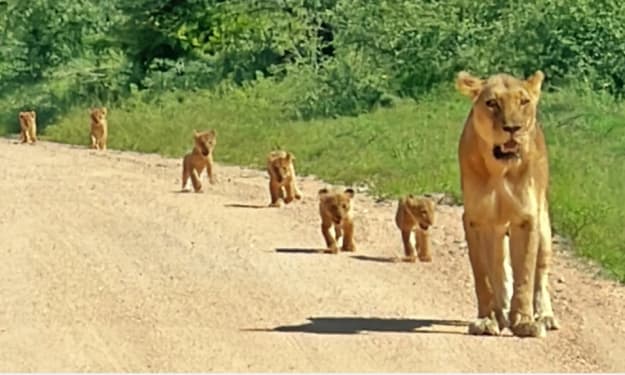
In the heart of the African savannah, life is a constant lesson for young animals. Few scenes are as endearing — or as heartwarming — as tiny lion cubs trying to keep pace with their mother. These little bundles of fur face a world full of challenges, from learning to hunt to avoiding dangers, all while depending on the guidance and protection of their experienced mom. Watching cubs wobble and tumble as they attempt to keep up with their mother reminds us that growing up, even in the wild, is a journey full of struggle, determination, and adorable missteps. The Early Days of Lion Cubs Lion cubs are born blind and helpless, usually in litters of two to six. For the first few weeks, they rely entirely on their mother for warmth, food, and safety. Even after opening their eyes and beginning to explore, the cubs are far from independent. The first months are crucial. Cubs learn social cues, hunting basics, and survival skills simply by watching their mother and the pride. But as anyone who has observed them knows, there’s often a huge gap between observation and action. Tiny cubs often struggle to match their mother’s pace, especially when she moves through long stretches of savannah or leads the family on patrols. A Mother’s Role in the Wild For a lioness, raising cubs is a full-time commitment. She hunts, defends her territory, and teaches her young, all while staying alert to predators such as hyenas, leopards, and even rival lions. The cubs, meanwhile, attempt to mimic her every move — often with clumsy yet charming results. A mother lion’s patience is remarkable; she frequently slows down, nudges them along, or stops to ensure no cub is left behind. These moments, while stressful for the tiny cubs, are vital learning opportunities. Struggling to Keep Up: Why It’s So Hard There are several reasons why tiny lion cubs have trouble keeping pace with their mother: Short Legs, Big Steps: Lion cubs’ legs are tiny and their coordination is limited, making it difficult to cover the same distance as an adult lioness. Curiosity: Cubs are naturally curious. A single butterfly or rustling bush can distract them, leaving mom to pause repeatedly. Energy Levels: Young lions tire quickly. Even with frequent naps, the cubs’ stamina is far lower than their mother’s. Learning Through Play: Play is not just fun; it teaches hunting, balance, and social skills. Running off to pounce on a sibling or chase an insect is all part of their education. Despite these challenges, the cubs’ determination to keep up demonstrates their resilience and growing understanding of the wild world. Lessons in Teamwork and Survival Every cub struggling to keep up is also learning crucial survival skills. The journey across the savannah is more than a test of speed — it’s a lesson in: Coordination: Cubs learn how to move efficiently across different terrains. Patience: They begin to understand the rhythms of adult life and the pace required for survival. Social Skills: Staying with the group teaches cubs how to interact with siblings and the pride, which is essential for their future roles. Observation: By following their mother, cubs study hunting techniques, territorial behavior, and predator awareness. Even the moments when cubs stumble or lag behind are essential for their development. These experiences prepare them for independence, which comes sooner than many might expect. The Cutest Moments in the Wild Anyone who has watched tiny lion cubs knows that their struggles are often irresistibly cute. Video clips from wildlife reserves frequently show cubs toddling along, tumbling over each other, or getting distracted mid-step. Observers often comment that these little stumbles reveal personality, determination, and playfulness, making them one of nature’s most heartwarming spectacles. While their mother is serious and focused, the cubs inject a sense of humor and lightness into life on the savannah. Why This Matters The struggles of lion cubs aren’t just adorable — they’re vital for understanding wildlife behavior. Conservationists and animal behaviorists use these moments to study growth patterns, social structures, and survival strategies in lion populations. These observations also highlight the importance of preserving natural habitats. Cubs must learn in a safe environment to survive; habitat loss, poaching, and climate change make these early struggles even more dangerous. Protecting the African savannah ensures that future generations of lions can experience the same lessons and playful tumbles. The Road to Independence Within a year, these tiny cubs will be more agile, faster, and more confident. By the time they reach two to three years old, males may begin to leave the pride, while females often stay and become caretakers themselves. Every misstep, tumble, and lagging moment is part of the journey toward strength, coordination, and independence. Watching them now gives us a glimpse of the challenges they will overcome, and the survival skills they will carry for life. A Celebration of Motherhood Ultimately, these scenes remind us of the incredible bond between mother and cubs. Her patience, vigilance, and teaching are the foundations of their future. The cubs’ struggles highlight the trials of growing up, while their determination showcases the resilience and beauty of wildlife. For those observing, it’s a powerful lesson in care, guidance, and perseverance, not just in lions but in the natural world as a whole. Final Thoughts Watching tiny lion cubs try to keep up with their mother is both entertaining and enlightening. It’s a story of growth, struggle, and resilience — a reminder that even the fiercest creatures start small, learning step by step. These little lions capture hearts while teaching life lessons: patience, determination, teamwork, and the importance of guidance. As they tumble and waddle across the savannah, they show us that growth is a process, one adorable misstep at a time. For wildlife enthusiasts, animal lovers, and anyone enchanted by nature, these tiny cubs are proof that even in the wild, love, care, and persistence are universal truths.
By Aarif Lashariabout 15 hours ago in Earth
Microbiota, microbiome or microflora: how to speak correctly and why it is for health.
You've probably heard the phrase, "We are what we eat." But modern science says more precisely: we are also those who live in us. Until 2016, it was believed that there are many times more bacteria in our body than our own cells. The latest calculations by mathematicians show that we divide the body with our microorganisms by about 50/50: about 30 trillion of our cells versus 38 trillion bacterial ones.
By Yaroslav Gorohov4 days ago in Earth



Comments
There are no comments for this story
Be the first to respond and start the conversation.