
The power of money
The power of money,money is power
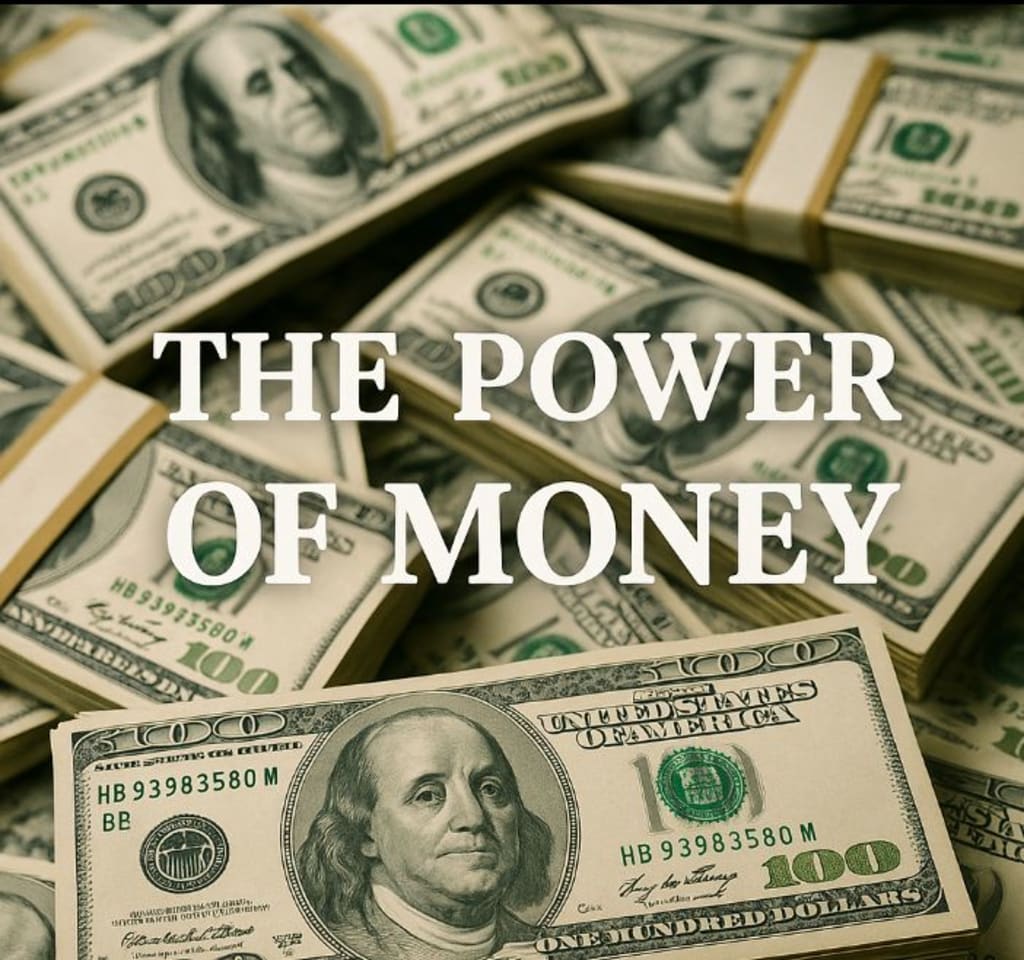
The Power of Money
Money is one of the most powerful forces in the modern world. It influences almost every aspect of our lives, from the choices we make daily to the broader structures of society and the global economy. While it is often said that “money can’t buy happiness,” there is no denying that it can buy freedom, comfort, security, and access to opportunities. The power of money lies not just in its purchasing ability but also in its capacity to shape lives, influence decisions, and dictate the direction of entire nations.
The Influence of Money in Daily Life
In everyday life, money serves as the cornerstone of survival. It allows individuals to secure basic needs such as food, shelter, clothing, and healthcare. Without sufficient financial resources, people are often trapped in cycles of poverty that are incredibly difficult to break. Conversely, those with wealth enjoy not only material comfort but also access to better education, healthcare, and social mobility.
Money gives people the freedom to make choices that are not available to those living paycheck to paycheck. For instance, a financially secure person can choose to leave a toxic job, pursue a passion, or travel the world. They can afford to invest in themselves through education, fitness, or creative pursuits. This freedom to choose is one of the most significant, yet often overlooked, powers of money.
Economic Power and Social Status
Beyond individual needs, money also defines social status and power. Wealth has always played a critical role in shaping hierarchies, whether in historical monarchies, capitalist economies, or corporate boardrooms. Today, billionaires and corporate executives often wield more influence than elected officials. Their wealth allows them to lobby for policies, influence elections, and sway public opinion through media ownership.
In many societies, wealth is also associated with respect and admiration, regardless of how it was acquired. A rich individual is often presumed to be intelligent, hardworking, or even morally superior, despite the fact that wealth is frequently inherited or acquired through privilege. This societal perception adds another layer to the power of money: it doesn't just affect material conditions, but also shapes how people are viewed and treated.
Money as a Tool for Change
Despite its often controversial role, money can also be a tool for positive change. Philanthropy, social entrepreneurship, and impact investing demonstrate how wealth can be used to address social issues and improve lives. High-profile donations from billionaires, such as those by Warren Buffett or MacKenzie Scott, have fueled major advances in education, healthcare, and environmental conservation.
Moreover, even on a smaller scale, money enables individuals to support causes they care about—whether it's donating to a local charity, funding a community project, or helping a friend in need. Financial contributions often sustain the operations of non-profits, activists, and organizations working to create a better world.
The Dark Side of Money
However, the power of money is not without its dark side. Greed, corruption, and inequality are often fueled by an obsession with wealth. In the pursuit of profit, businesses may exploit workers, harm the environment, or engage in unethical practices. Political corruption, too, is frequently driven by financial gain, undermining democracy and justice.
On a personal level, the relentless chase for money can lead to stress, anxiety, and a loss of purpose. Many individuals find themselves stuck in jobs they dislike or making sacrifices that compromise their values—all for the sake of financial gain. This contradiction—that money can bring both freedom and bondage—is one of the most complex aspects of its power.
Money and Happiness
While money can provide comfort and opportunities, research consistently shows that beyond a certain point, it does not lead to greater happiness. What matters more is how money is used. Spending on experiences, helping others, and achieving a sense of security tends to bring more satisfaction than acquiring luxury goods or trying to keep up with others.
This suggests that the true power of money lies not in how much of it one has, but in how it is managed and spent. Financial literacy, discipline, and mindful spending can turn even modest incomes into tools for fulfilling lives.
Conclusion
The power of money is immense, far-reaching, and deeply embedded in every aspect of human society. It can be a source of liberation or oppression, a vehicle for change or a cause of conflict. Understanding its influence is essential—not only to make better financial decisions but also to critically examine the world around us.
In a world where money often speaks louder than words, the challenge is to ensure that its voice is used wisely. Whether in personal life, business, or politics, the ethical use of money holds the potential to transform not just bank accounts, but lives and societies for the better.
About the Creator
Keep reading
More stories from Noor Hussain and writers in Earth and other communities.
Whispers of the Wild: A Journey Through the Natural Forest Park
In a world increasingly dominated by concrete jungles and digital distractions, the gentle embrace of nature feels like a lost language — one that whispers, rather than shouts. "Whispers of the Wild: A Journey Through the Natural Forest Park" invites you to reconnect with this language, to listen to the soft stories told by the rustling leaves, the babbling brooks, and the quiet footfalls of creatures unseen.
By Noor Hussain8 months ago in Earth
Iowa Weather Alert: Strong Winds Ease Tonight, But Winter Storm Could Bring Blizzard Conditions Sunday
Residents across eastern Iowa are experiencing an active and rapidly changing weather pattern this weekend. While strong winds are expected to gradually diminish Friday evening, meteorologists are warning that a significant winter storm could impact the region beginning Sunday, potentially bringing snow, powerful winds, and dangerous travel conditions.
By Omasanjuwa Ogharandukun3 days ago in Earth


Comments
There are no comments for this story
Be the first to respond and start the conversation.