
The Pompeii Disaster Was Nothing Like We Imagined
Beneath the ashes, a story untold—where time froze, but truth burned anew.

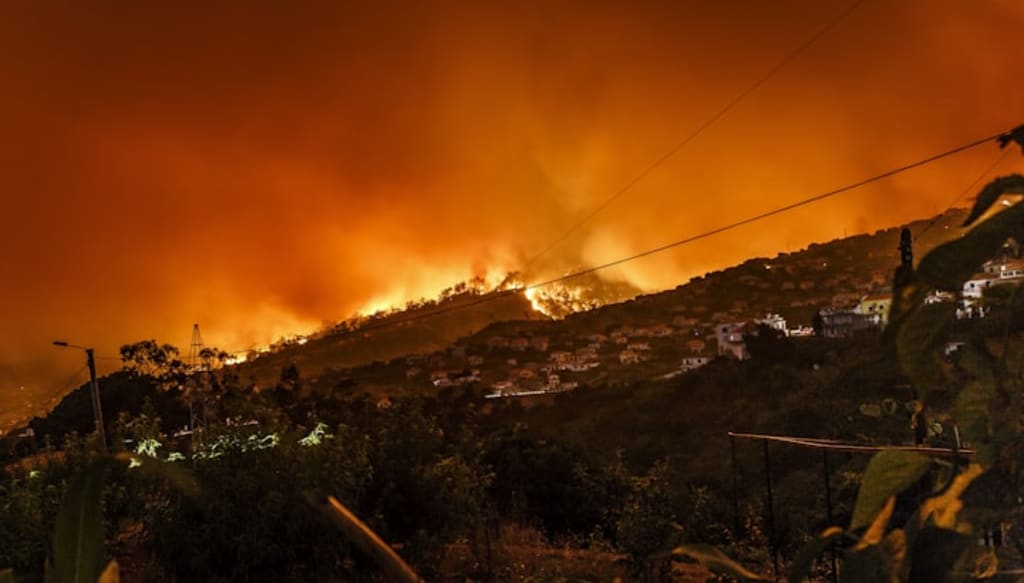
You're walking through a bustling town near the Bay of Naples. It looks full of life, energy, and healthy food. Look at these flatbreads that might have been ancient pizza, no less. The people of Pompei are living their best lives. But all of that comes to a fiery halt in 79 CE. That's when Mount Vuvius, that unassuming mountain looming over the city, decides it's time to make history.
And the result is a tragic story that archaeologists are still piecing together 2,000 years later. Now, if you think Pompei was some boring, dusty old place, well, think again. This was a lively, buzzing town. There were farmers bringing in fresh produce, merchants selling their goods, bakers cranking out bread, and pizza-like flatbreads, and gladiators gearing up for fights in the amphitheater. The people of Pompei loved decorating their homes with fresco, mosaics, and statues. And food was a big deal. Pompei was home to some of the earliest restaurants called Thermoplia, where people could grab hot meals on the go. But let's get back to the fateful day when this beautiful, simple life ended. The saddest thing is that the people of Pompei had warnings. They just didn't know it. Around 4 days before Vubvius erupted, there had been minor tremors, but the locals were used to earthquakes. They had a massive one in 62 CE that destroyed lots of buildings, but they rebuilt the town and kept living there. No one thought, "Hey, maybe that giant mountain is the problem." So, by the time 79 CE rolled around, Pompei was back to normal. Or so they thought.
Now it's the morning of the eruption.
Just another regular day. People are working, shopping, and chilling in the baths. And then out of nowhere, the suvius erupts. It was a catastrophic explosion that shot a plume of ash, gas, and rocks 20 m into the sky. Plenny the younger, a Roman writer who watched this disaster unfold from across the bay, wrote that it looked like a pine tree of fire and smoke rising into the heavens.
Suddenly, it began raining with ash.
First, it was a drizzle. Then, it started coming in buckets. Gray, heavy rain that didn't let you breathe. Then, hail began falling from the sky. But it wasn't hail. Those were pummestones, light chunks of volcanic rock. They were smashing roofs and windows and piling up in the streets. That's when people started panicking. Some of them decided to escape, so they ran from the town.
Others thought the walls of their homes would protect them. Well, they didn't.
Soon, things turned even worse. The ash had covered Pompei streets and buildings were collapsing under its weight. But the real nightmare came early the next morning. Pyrolastic flows, a fatal avalanche of superheated gas, ash, and rock that was racing down the side of a volcano at more than 200 mph. The heat alone around 1,000° F instantly finished the life of anyone who ended up in the way of the flow. When the pyrolastic flows hit Pompei, it was unfortunately game over for the town. Those who decided to stay in the city didn't stand a chance. The people were trapped so quickly that their bodies were left frozen in their last moments. Some shielding their faces, others holding loved ones. In one bakery, archaeologists found the skeletons of three people who had stayed behind. They thought the oven stone walls would protect them, but those just weren't strong enough to resist the elements.
When the eruption finished, Pompei was covered with 20 ft of volcanic debris.
What archaeologists eventually found when they uncovered the town was both mesmerizing and terrifying at the same time. Because Pompei was buried so suddenly, everything remained preserved.
homes, streets, art, food, and even people. These days, scientists are rethinking what we know about the victims of the Pompei disaster, thanks to new DNA evidence. Apparently, a lot of our assumptions about who these people were might be way off. A recent study by researchers from the US and Italy has shaken things up.
They found that some of the victims who they assumed were family members weren't related at all. On top of that, the gender of some individuals was misidentified. The researchers believe that older interpretations were influenced by modern ideas about gender and relationships which might have clouded the actual history. One of the study's co-authors from the University of Florence pointed out that conclusions based on limited evidence often reflect the biases of the time.
Back then, researchers had to rely on the physical appearance of casts to make their guesses. Now, with DNA evidence, the story looks very different. Let's look at the case of the so-called family found in the house of the golden bracelet, which was discovered in 1974 on a Pompei hillside. This group of four victims was named after an elaborate piece of jewelry was found on one of them. Based on the cast, one of the figures who was holding a child was assumed to be a mother, but the DNA results revealed this person was in fact a man. Even more surprising, none of the individuals were related, as scientists thought previously. Not surprising given the extreme confusion and terror the people experienced as they desperately took shelter anywhere they could.
Another interesting finding involves a pair of victims once thought to be sisters or a mother and daughter. DNA evidence now suggests that one of them was biologically male. Altogether, the researchers have analyzed the remains of 14 individuals for this study, and this is just a small portion of more than 1,000 victims of Mount Vuvius's eruption that have been found so far.
Archaeologists in Pompei have also made one more discovery. Look at this figure.
Initially, everyone believed that this man had been crushed by a massive boulder, a stone block that might have been part of a door frame during the eruption. His skull, with its mouth open, as if in a final gasp, was found near his body. He was probably trying to escape all the chaos when it happened.
But new evidence suggests that wasn't the case. His demise was likely the result of asphyxiation from a pyrolastic flow. For a long time, people thought Vuvius erupted on August 24th. That's what some evidence seemed to suggest.
But over the years, archaeologists started finding evidence that pointed to a later date. For example, they found graffiti dating back to late October and food remains such as pomegranates. Such products wouldn't have been around in August yet. Plus, they found heating brazers in homes. Who would need extra heat in the summer of Italy? So, most experts agree that the eruption happened in late October. Now, it turns out that not everyone in Pompei passed away.
Scientists think that 15,000 people lived in the town and only about 2,000 of them didn't survive the disaster. It means thousands of people managed to escape, but at the same time, their lives changed forever. They didn't have homes to come back to. Imagine fleeing your home with nothing but the clothes on your back, leaving behind everything you've ever known. Some survivors made it to nearby cities like Naples, but they had to start over from scratch. But recently, archaeologists made a pretty cool discovery, a fresco of a flatbread that might have been the ancient ancestor of pizza. Researchers found this painting in a house near a bakery.
It shows a round bread sitting on a silver platter next to a goblet. They think people might have eaten this bread with fruits like pomegranates or dates or maybe topped with spices or a kind of pesto. But the coolest part is that Pompei is just 14 miles from Naples, which is the modern home of pizza. The director of Pompei pointed out how this discovery connected a simple poor man's dish from ancient times to the modern pizza we all know and love. Today, Pompei is one of the most famous archaeological sites in the world. Every year, new discoveries help us understand Roman life of those times even better. History is not just etched in ruins—it lingers in the air, waiting for truth to unearth its secrets. Pompeii was a story of fire and ash, of frozen agony and lost whispers. Yet, as the dust of time settles, the tale twists, revealing an ending far more chilling than we once believed. The volcano did not simply bury a city; it sculpted a tragedy we failed to see.
But if the past deceives, what else have we misunderstood? Let me know in the comment section and don't forget to subscribe and like. Thanks for reading untill next time.
About the Creator
Keep reading
More stories from taylor lindani and writers in Earth and other communities.
The Next Megaquake Is Coming, Scientists Warn
On January 26th, 1700, one of the biggest earthquakes in history hit off the coast of the United States. It had a magnitude of 9, which puts it in the top 10 most powerful earthquakes ever recorded. This earthquake triggered a huge tsunami and changed the coastline all the way from Southern British Columbia down to Northern California forever. Back then, the area wasn't very populated. But thanks to some clever research, scientists figured out exactly what happened that day by looking at old geological records, tree rings, and even some history from Japan. On the same day as the earthquake, a massive tsunami also hit Japan's eastern coast. For a long time, no one connected the two. But in the 1980s and 90s, researchers realized the tsunami in Japan had been caused by the earthquake in the Pacific Northwest.
By taylor lindani10 months ago in Earth
The Ghost Metal of Cyprus
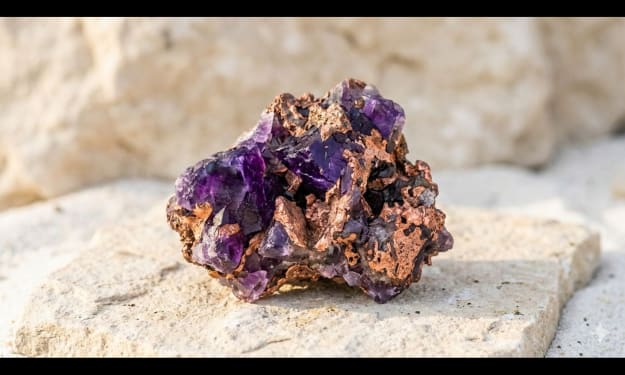
She almost put it back. A geologist crouching in the dry scrubland outside Lakia, Cyprus, turned a small rock over in her hand and nearly dismissed it. The colour was wrong. Gold is not supposed to look like that. It was not yellow. It was not even close.
By CurlsAndCommas2 days ago in Earth



Comments
There are no comments for this story
Be the first to respond and start the conversation.