
The Origins of the Zombie Myth: From Ancient Texts to Modern Fears
The First Zombie Tale: Unearthing Ancient Lore

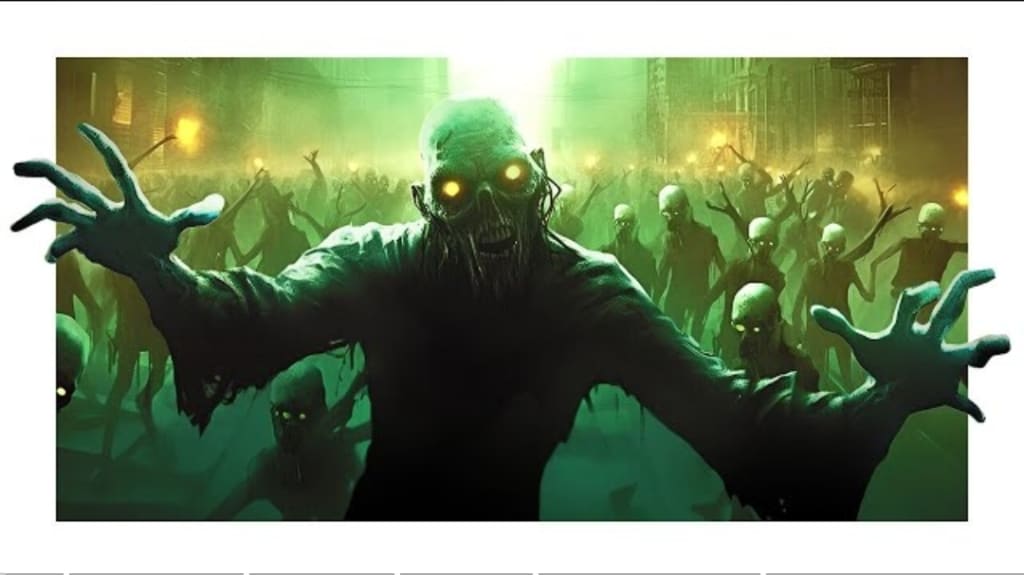

**The First Zombie Tale: A Glimpse into History**
Did you know the first zombie story was written over 4,000 years ago? It was in an ancient language called Akkadian and was discovered in 1849 in the ruins of Nineveh, part of the ancient Assyrian empire. For 23 years, the meaning of the text remained a mystery until a scholar named George Smith cracked the code. He discovered that the text was part of the *Epic of Gilgamesh*, one of the oldest written works known to humanity.
The *Epic of Gilgamesh* tells the story of a Sumerian king named Gilgamesh, who finds himself facing a situation eerily similar to a zombie apocalypse. This first mention of a zombie-like scenario comes from Ishtar, the goddess of love, after Gilgamesh refuses her marriage proposal. In a fit of anger, she threatens to unleash the dead from the underworld, allowing them to feast on the living. She imagines a world where the dead far outnumber the living.
This is considered the first reference to a "zombie apocalypse" in world literature. It has the key elements: reanimated humans who feed on the living, and a chaotic, dangerous scenario. However, some argue that these creatures in the *Epic of Gilgamesh* are not zombies as we understand them today. There are notable differences.
### Differences Between Ancient and Modern Zombies
1. **Appearance**: The first reanimated humans in films appeared in the 1932 movie *White Zombie*. In this film, the "zombie" is a woman who, after being turned into one, has a pale face, a soulless look, and a strange walk. Later films like *World War Z* made zombies even more horrifying, with advanced makeup and visual effects.
In contrast, the creatures in the *Epic of Gilgamesh* are described as bird-like beings covered in feathers, not mindless, pale humans craving flesh. They also feed on dirt, not brains.
2. **The Cause of the Apocalypse**: In the *Epic of Gilgamesh*, Ishtar's threat involves bringing the dead back from the underworld, raising spirits to terrorize the living. This is akin to classic zombie tales, where the dead rise from their graves. However, modern zombie stories often use more scientific or believable causes, like viruses, toxins, or mutations.
For example, in the video game *The Last of Us*, the outbreak is caused by a fungal pathogen that infects humans. This fungus actually exists and parasitizes insects in nature, making the scenario feel more realistic.
### Are They Really Zombies?
Some argue that Ishtar's threat was about something else, not zombies. In Mesopotamian mythology, there were spirits called *aimu*—the ghosts of people who hadn't been properly buried. These spirits were said to be vengeful and harmful to the living. Some believe Ishtar's warning was about these spirits, not zombies.
Another important point is that the word "zombie" wasn't used back then. The term was first recorded in English in 1838 and most likely comes from the Congo word "zombi," meaning soul. Zombies, in the early usage, referred to corpses brought to life through magic, not a goddess' wrath.
### Zombies and Human Fears
The idea of the undead isn’t just about fear of monsters but rather reflects our fears of death and decay. Ancient civilizations had a natural fear of rotting corpses, especially if someone died from a contagious illness. They worried that the infected bodies might spread disease, which may have contributed to zombie-like stories.
Modern zombie tales still tap into these fears, but they evolve with each generation, often reflecting current societal anxieties. Today, we might worry more about pandemics or the collapse of society than about the threat of reanimated corpses.
### The Enduring Appeal of Zombies
Zombie stories have endured for centuries because they resonate with something deeply human. Zombies were once part of folklore, reflecting fears of disease, death, and the unknown. But today, the appeal of zombies goes beyond mere horror.
The idea of a zombie apocalypse taps into our primal fear of losing control. In many stories, zombies represent the breakdown of society—ordinary people turning into monsters, civilization collapsing, and the world becoming a chaotic wasteland.
In more recent zombie tales like the 2017 film *The Cured*, even those who survive the zombie plague struggle with reintegration into society. The cure might fix their physical state, but they can't erase the horrors they committed as zombies. This adds psychological depth to the genre, showing that even after the "zombie" state ends, the trauma remains.
### The Zombie Phenomenon Today
Zombies might seem less terrifying today, thanks to advances in medicine and science. People might assume that experts could easily handle a real-life zombie outbreak, curing the infected or stopping the spread. But the cultural fascination with zombies persists. From books to movies, to video games, these creatures remain a symbol of our fears and a source of entertainment.
Zombies will never go away entirely, whether they’re in stories of reanimated corpses or mutated virus outbreaks. They will continue to evolve, just as we do. As long as we continue to fear death, decay, and societal collapse, zombies will always have a place in our culture.
About the Creator
Nora Ariana
Empowering through stories and sound igniting purpose, sparking growth, and awakening the power within.
Keep reading
More stories from Nora Ariana and writers in Earth and other communities.
A goal is a dream with a deadline
A goal is a dream with a deadline. This powerful quote reminds us that without action, dreams remain just that wishes floating in our imagination. But when we set a timeline and commit to achieving them, they evolve into goals, bringing clarity, direction, and purpose. Many people go through life holding on to dreams, hoping they will come true someday. But someday is not a day on the calendar. Dreams without structure often fade with time or get buried under the weight of daily responsibilities. Turning a dream into a goal is what separates those who achieve from those who continue to wish.
By Nora ArianaExclusive • 9 months ago
Do Not Touch the Roses
There is a quiet power in the phrase “Do Not Touch the Roses.” It sounds like a warning, but it feels like an invitation — one that asks us to pause, admire, and respect something without claiming it. Roses have long symbolized love, beauty, and passion, yet they are also guarded by thorns. That contradiction makes them the perfect metaphor for many of life’s most meaningful things.
By Aarif Lashariabout 16 hours ago in Earth
Honey, I Shrunk the Datacentres: Is Small the New Big?
When most people think of datacentres, they picture sprawling warehouses full of servers, humming fans, and mountains of cabling. These massive facilities power everything from Netflix streams to artificial intelligence, but they also consume enormous amounts of energy and space. Now, a new trend is emerging: micro-datacentres. Tiny, modular, and often portable, these “datacentre in a box” solutions are challenging the old assumption that bigger is always better. Could small really be the new big in the world of computing? What Are Micro-Datacentres? Micro-datacentres are compact computing hubs designed to perform the same essential functions as traditional datacentres but in a fraction of the space. Think of them as miniaturized cloud factories — smaller, energy-efficient, and often placed closer to the users they serve. Key characteristics include: Compact size: Often no larger than a shipping container or even a cabinet. Energy efficiency: Use less power by focusing on localized computing needs. Modularity: Can be scaled horizontally by adding more units rather than expanding a single huge facility. Edge computing readiness: Positioned closer to where data is generated, reducing latency for IoT devices, AI applications, and streaming services. In short, micro-datacentres take the power of traditional computing and shrink it to fit modern, flexible infrastructure demands. Why Companies Are Embracing Smaller Datacentres There are several reasons the tech world is warming up to smaller datacentres: Energy and Cost Savings – Traditional datacentres consume massive amounts of electricity, sometimes as much as a small town. Micro-datacentres use less power and generate less heat, reducing both energy bills and cooling costs. Local Speed and Low Latency – For applications like AI, gaming, and streaming, milliseconds matter. By placing computing resources closer to users, micro-datacentres reduce latency and improve performance. Flexibility and Rapid Deployment – Big datacentres take years to build. Micro-datacentres can be deployed in weeks, allowing companies to respond quickly to spikes in demand or to expand into new regions. Resilience and Redundancy – Smaller, distributed units reduce the risk of a single point of failure. If one micro-datacentre goes down, others can pick up the load. Sustainability Goals – With energy efficiency at their core, micro-datacentres are often paired with renewable energy, making them an attractive option for companies seeking greener operations. From Data Warehouses to Data Cabinets Historically, the datacentre arms race has been about size. Companies like Amazon, Google, and Microsoft built massive facilities housing hundreds of thousands of servers. These centers achieved economies of scale but came with high energy use, long construction timelines, and heavy regulatory scrutiny. Micro-datacentres, on the other hand, flip the script: instead of one mega-facility, you deploy many smaller units closer to users. This is sometimes called edge computing, and it’s particularly useful for AI applications, smart cities, and the Internet of Things (IoT). Imagine self-driving cars, smart traffic lights, or factory robots. These devices generate enormous amounts of data that can’t be efficiently sent to a distant datacentre for processing. A nearby micro-datacentre solves the problem in real-time, enabling faster decisions and smoother operations. Real-World Examples Several companies are already experimenting with smaller datacentres: Google’s Edge Nodes: Google has deployed compact datacentres in regional locations to speed up cloud services. Microsoft Azure Stack Edge: A modular datacentre solution that brings cloud computing capabilities closer to businesses. Amazon Web Services (AWS) Snowcone: A portable computing and storage unit that can operate in remote or temporary locations. Even municipalities and hospitals are exploring micro-datacentres for localized applications like traffic management, healthcare data storage, and emergency services. Challenges of Going Small While micro-datacentres have many advantages, they’re not without challenges: Limited capacity: They can’t match the raw scale of traditional datacentres, so some large-scale AI training tasks still require mega-facilities. Security concerns: Smaller units distributed across many locations require robust cybersecurity protocols. Maintenance and monitoring: Managing multiple small units can be more complex than running a centralized datacentre. Energy trade-offs: If not designed efficiently, multiple micro-datacentres can sometimes use more energy than a single optimized large facility. Despite these challenges, many experts argue that the benefits — speed, flexibility, and reduced environmental impact — outweigh the downsides for many applications. Why “Small” Could Be the Future The rise of micro-datacentres signals a broader shift in how we think about computing infrastructure. Instead of centralized, monolithic powerhouses, the future may look like a network of small, smart, and sustainable units. This trend aligns with several larger tech movements: Edge computing – Computing closer to the user or device. Green technology – Reducing energy consumption and carbon footprints. AI proliferation – Handling massive data loads locally to enable faster processing. For companies, governments, and communities, the message is clear: smaller doesn’t mean weaker — it can mean smarter, faster, and more adaptable. Conclusion: Small but Mighty Micro-datacentres may not replace all mega-facilities, but they are carving out an essential niche in the computing ecosystem. They offer speed, flexibility, and sustainability that large datacentres can’t always provide, particularly for localized applications and edge computing. As technology evolves and energy concerns intensify, these “datacentres in a box” could become a core component of how we process, store, and access data in the 21st century. So the next time someone asks if small is the new big, the answer might just be yes — at least when it comes to datacentres.
By Muhammad Hassan6 days ago in Earth
Wild Card Weekend Recap: What Happens Now?
I think I figured out why I love Wild Card Weekend so much. It's because it's the first playoff anything of the calendar year. The NFL season starts in the fall, and once upon a time, the champion was crowned either on or slightly before New Year's. The evolution of the NFL schedule has resulted in the playoffs starting just into the New Year, and currently, the final week of the season falls on the first weekend of the New Year, with Wild Card Weekend coming a week after that. So yes, chronologically, the NFL's Wild Card Weekend serves as the first playoff anything of the calendar year.
By Clyde E. Dawkins7 days ago in Unbalanced




Comments
There are no comments for this story
Be the first to respond and start the conversation.